
As an Amazon Associate we earn from qualifying purchases at no extra cost to you. Product prices and availability are accurate as of the date shown and are subject to change.


When you shoot video—family trips, freelance client work, short films—your footage is the one asset you can’t re-shoot once it’s gone. So the decision isn’t really “which gadget do I like,” it’s “how do I make sure 500 GB of irreplaceable 4K files survives a dropped bag, a stolen laptop, or a drive that quietly dies.” That’s the real choice between a NAS (network-attached storage) and an external hard drive for footage backup. One is a small always-on computer that serves files to every device in your house; the other is a sealed portable drive you plug in, copy to, and toss in a drawer. Both work. They work very differently, and they cost very differently over time.
Top 3 picks at a glance
Quick Verdict
If you edit on one computer and your total footage library is under about 4 TB, a portable external hard drive is the smarter buy—cheaper up front, zero maintenance, done in ten minutes. If you shoot regularly, work from more than one device, or want backups that run themselves without you remembering, a 2-bay NAS earns its higher price. A reasonable middle path for serious creators: use both, with the NAS as your working archive and an external drive as your offline copy.
Side by Side
| Factor | External Hard Drive | 2-Bay NAS |
|---|---|---|
| Setup comfort | Plug into USB, drag files, done in minutes | Initial setup takes 30–90 minutes; app-based afterward |
| Capacity range | Typically 1–5 TB portable; desktop drives go higher | Diskless units accept 2 × 4–20 TB drives (drives sold separately) |
| Price range | ~$70–$220 for portable drives | ~$130–$500+ for the unit, plus $90–$300 per drive |
| Maintenance | Essentially none | Firmware updates, occasional reboot, drive health monitoring |
| Space needed | Pocket-sized; roughly 4.2 × 3.2 × 0.9 in, ~0.5 lb | Shelf unit; roughly 7–9 in wide, 5–8 in tall, 3–5 lb |
| Noise & power | Off when unplugged; silent | Always on; roughly 10–30 W, faint fan hum |
| Multi-device access | One computer at a time | Whole household plus remote access over the internet |
| Resale value | Low; used drives carry trust concerns | Moderate; units resell, though drives usually stay with you |
| Redundancy | None unless you buy two | RAID 1 mirroring optional with two drives |
| Best for | Single-computer users, simple archives | Creators, remote workers, multi-user homes |
Where NAS Wins
Automatic backups. A NAS is a small computer that stays connected to your network. Software can mirror your footage folder every night, so backups happen whether you remember or not. With an external drive, the backup only exists if you actually plugged the drive in this month—a habit most people don’t keep.
Redundancy. In a 2-bay NAS running RAID 1, every file is written to two drives at once. If one drive fails, your footage survives on the other, and you swap the dead drive without losing anything. A single external drive is a single point of failure; there is no backup of the backup.
Access from anywhere. Footage on a NAS is available to your desktop, laptop, phone, and tablet simultaneously. If you travel or work remotely, most NAS systems offer secure remote access, so you can pull a clip from a hotel room without carrying anything.
Whole-home value. Beyond footage, a NAS doubles as a media server, a shared photo library, and general family cloud storage. The cost spreads across more uses than a dedicated backup drive.
Scalability. When your library grows, you swap in larger drives. You don’t buy a new device every two years the way you might stack multiple external drives.
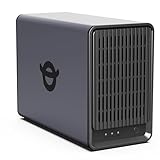
A unit like the UGREEN NAS DXP2800 2-Bay sits in this category—a higher-end option (around $383 before drives) aimed at advanced home users, remote workers, and creators who want polished software and remote access out of the box. On the budget end, the Yxk Zero1 2-Bay Desktop NAS (diskless, $129.99) shows how inexpensive the entry point to NAS has become, though you’ll still need to add at least one drive.
Where External Hard Drive for Footage Backup Wins
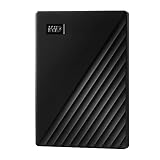
Price and simplicity. A WD 2TB My Passport portable drive costs about $132 and requires nothing but a USB port. There’s no software ecosystem to learn, no network to configure, no account to create. For a one-time archive of finished projects, it’s the honest answer.
Portability. A portable drive weighs roughly half a pound and fits in a jacket pocket. If you offload footage on location—in the field, at an event, at a relative’s house—an external drive is the only realistic option. No NAS travels with you.
Offline security. A drive that sits unplugged in a drawer is immune to ransomware, network intrusion, and lightning strikes on your router. Many drives, including the My Passport line, include password protection and backup software with ransomware defense as a second layer. For an offline copy of your most precious footage, that air gap is a genuine feature, not a compromise.
Silence and near-zero power. An external drive consumes nothing when unplugged. A NAS runs 24/7 at roughly 10–30 W—about $15–$40 per year in electricity depending on your rates—and produces a faint fan noise you’ll notice in a quiet room.
No technical ceiling. If you can drag a folder, you can use an external drive. NAS setup involves apps, user accounts, RAID decisions, and occasionally port-forwarding headaches. For less technical households, that friction never goes away entirely.
The WD 5TB My Passport (around $213) hits a sweet spot here—enough capacity for a serious backlog of footage in the same pocketable chassis.
Cost Over 5 Years
External hard drive path: one WD 5TB My Passport at ~$213, plus possibly a second drive at ~$130 around year three as your library grows. Total: roughly $215–$350 over five years, plus essentially zero electricity.
NAS path: a 2-bay unit at $130–$400, plus two 4–8 TB drives at roughly $90–$180 each. Call it $310–$760 up front. Add electricity at ~$15–$40/year ($75–$200 over five years), and possibly one replacement drive in year four or five. Realistic five-year total: roughly $400–$1,000, depending entirely on how much drive capacity you buy.
The NAS costs more, but it buys automation, redundancy, and household-wide access. The external drive costs less and asks nothing of you except the discipline to plug it in. If prices narrow your choice, note that by 2026 budget diskless NAS units and large portable drives have both gotten cheap enough that a hybrid setup—NAS for working files, one external drive for offline backup—costs about what a mid-range NAS alone did a few years ago.
Which One for Your Home
Small apartment
Space and noise matter, and so does not overbuying. A 5 TB portable external drive like the WD My Passport covers most single-person footage libraries, weighs half a pound, and disappears into a drawer. If your editing is occasional and your archive is under 4 TB, skip the NAS for now—you can always add one later and copy everything over.
Family with kids and pets
A spinning portable drive on a coffee table is one paw or one spilled juice box away from disaster. This is where a small NAS on a high shelf pays off: it’s out of reach, backs up every family phone and laptop automatically, and keeps a decade of videos in one mirrored place. A compact 2-bay unit tucked next to your router also handles everyone’s photo backups, not just footage. Keep one portable drive as an offline copy of the irreplaceable stuff, stored somewhere the toddler can’t reach.
Rental
You can’t run ethernet through the walls, but Wi-Fi-connected NAS units work fine on rental routers, and you take the whole setup when you move. A budget diskless 2-bay like the Yxk Zero1 plus one or two drives is a renter-friendly investment that moves with you. If you’d rather not touch network settings at all, a pair of external drives—one primary, one rotated to a drawer or a relative’s house—delivers surprisingly solid protection with zero setup.
Long-term home
If you’re staying put for five-plus years and your footage library will only grow, invest in the NAS now. Pick a 2-bay unit with room for large drives, run RAID 1, and let it quietly archive the next decade of footage. Add one external drive a year for an offline copy of finished projects, stored separately. That two-layer approach is what working videographers actually use, and it protects against drive failure, theft, and accidental deletion all at once.
FAQ
Is a NAS really safer than an external hard drive?
For day-to-day protection, yes—RAID 1 in a 2-bay NAS means a single drive failure doesn’t lose anything, and automated backups don’t depend on your memory. But no setup inside your home protects against fire or theft. The gold standard is a NAS plus one external drive stored offline somewhere else.
Can I use an external hard drive for 4K video editing, not just backup?
You can, but check the drive type. Portable spinning drives work for 1080p and lighter 4K editing; heavy 4K multicam work wants a fast SSD or a NAS with 2.5GbE networking. For pure backup, any USB 3.0-class drive is fine—the transfer just takes as long as the drive allows.
How much storage do I need for footage backup?
Rough math: 4K footage runs about 400–700 MB per minute at typical consumer bitrates, so an hour is 25–40 GB. Add a 50% headroom margin, then buy the capacity above that. If you shoot a few hours a month, 2–5 TB covers years; if you shoot weekly, start at 8 TB or plan for a NAS you can expand.
Do I need special drives for a NAS?
NAS drives run 24/7, so drives rated for continuous operation (often labeled NAS or NASware) are recommended, and you’ll want matching capacities if you use RAID 1. Standard external portable drives aren’t designed for always-on duty—that’s a real distinction, not marketing. Budget roughly $90–$180 per 4–8 TB NAS-rated drive on top of the unit’s price.
Related guides
- Usb vs Xlr Microphone for Beginner Streamers: Which Is Right for Your Home
- Dynamic vs Condenser Microphone for Streaming: Which Is Right for Your Home
- Best Budget Green Screens for Small Apartments: Tested and Ranked: 8 Tested (2026)
- Best Usb Microphones for Streaming on Mac: Tested and Ranked: 8 Tested (2026)


