
Designing a live streaming setup inside a home office or bedroom requires balancing broadcast functionality with home decor. When evaluating a curved monitor vs flat monitor for live streaming, content creators face a practical dilemma that extends beyond refresh rates and color gamuts. A monitor isn’t just a display; it is the physical center of your desk, dictating your posture, how your background lighting reflects on camera, and how much surface space remains for your audio interface, microphone boom arm, and stream controller.
Choosing between a curved panel and a traditional flat panel affects how comfortably you can manage Open Broadcaster Software (OBS), game feeds, and live chat during a four-hour broadcast. A curved display wraps visual content around your peripheral vision, while a flat display offers predictable mounting geometry and crisp clarity for multi-screen configurations. Looking closely at physical footprint, cable management, room aesthetics, and long-term ergonomics reveals which display style best fits your living space.
As an Amazon Associate we earn from qualifying purchases at no extra cost to you.


Top 3 picks at a glance
Quick Verdict
If you stream from a single primary screen and want an immersive, low-strain experience that keeps your chat windows and broadcast controls within easy sightlines, a curved monitor is the superior choice. Its arc maintains a consistent focal distance across the entire panel, reducing eye fatigue and neck rotation during long broadcasts.
However, if your streaming setup relies on a dual-monitor arm, top-mounted ring lights, or webcams that must sit perfectly level, a flat monitor remains the more practical workhorse. Flat monitors mount closer to the wall, cost less upfront, and fit easily on shallow home office desks under 24 inches deep.
Side by Side
| Feature / Attribute | Curved Monitor | Flat Monitor |
|---|---|---|
| Eye Comfort & Ergonomics | Superior edge-to-edge focal depth; minimizes neck turning on large panels. | Standard focal tracking; requires more head turning on screens 32″ and above. |
| Desk Space Needed | Requires 26–30 inches of desk depth due to forward-protruding corners. | Requires 20–24 inches; sits flush against back walls or monitor arms. |
| Multi-Monitor Setup | Can create awkward gaps at screen joints unless matched precisely. | Seamless edge-to-edge alignment across two or three displays. |
| Accessory Mounting | Webcams and key lights may tilt slightly downward on severe curves. | Mounts stream lights, webcams, and teleprompters completely level. |
| Ambient Light Reflection | Bends light from side lamps away from the viewer’s direct sightline. | Prone to direct glare from overhead room fixtures and bright windows. |
| Price Range | $130 to $1,200+ depending on curve radius and refresh rate. | $80 to $900+; wider availability of ultra-budget entry points. |
| Maintenance & Care | Requires gentle wiping along the arc; more vulnerable to edge impacts. | Simple surface cleaning; flat glass pane is easier to dust quickly. |
| Resale & Versatility | Popular with gamers, but less favored for precision graphic editing. | High universal demand for general office work, editing, and gaming. |
| Best For | Single-screen immersive streaming, gaming, and single-desk studios. | Multi-display broadcast setups, compact desks, and co-hosted streams. |
Where Curved Monitor Wins
Curved monitors excel at creating a cohesive, single-screen workspace. For streamers who prefer operating from a single large panel—such as a 27-inch or 32-inch display—a curved screen pulls the outer edges toward your eye, matching the natural curvature of the human eye. This geometry allows you to glance at live chat pinned in the upper corner of your OBS window without tilting your head away from your broadcast camera.
Entry-level curved options, like the Samsung 27″ Essential S3 (S36GD) Series FHD 1800R Curved Computer Monitor (priced around $138.21), demonstrate how an 1800R curvature radius brings peripheral elements into focus without taking over the entire room. Stepping up in scale, a display like the Samsung 32″ S3 (S39GD) Series FHD 100Hz Curved Monitor (priced at $149) offers extended screen real estate where the gentle curve actively prevents visual distortion at the far edges.
From an interior design perspective, curved monitors soften the harsh angular lines of a standard computer setup. When placed on a wooden writing desk or modern floating workstation, a curved screen adds a refined, sleek architectural element to your room backdrop. Furthermore, because the outer edges angle inward, curved screens reflect ambient side lighting away from your eyes, making them easier to position in rooms with large side windows.
Where Flat Monitor for Live Streaming Wins
When analyzing a curved monitor vs flat monitor for live streaming from a practical rig standpoint, flat monitors hold a clear advantage in equipment modularity. Streamers frequently attach hardware directly to their screens: webcams, ring lights, mini teleprompters, and stream controllers. Flat panels offer uniform top bezels that hold clamp-on accessories level without forcing webcams to point downward at an unwanted angle.
Flat monitors are also ideal for multi-screen arrangements. If your broadcast strategy uses two 24-inch screens—one dedicated to full-screen gameplay and another for OBS, Spotify, and chat feeds—flat panels push flush against one another without leaving dead air behind the hinges. Flat screens are significantly lighter and thinner as well, making them easier to mount on slim gas-spring desk clamps close to a back wall, saving valuable desk surface.
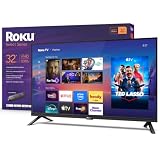
Budget versatility is another major victory for flat displays. Streamers running multi-device spaces often pair a primary gaming monitor with affordable secondary displays. Compact smart panels, such as the Roku 24-Inch Select Series Smart TV 720p HD TV (priced near $99.99) or the Roku 32-Inch Select Series Smart TV (priced near $129.99), offer budget-friendly auxiliary display options for viewing stream health stats or secondary media feeds on dedicated side tables.
Cost Over 5 Years
Understanding the long-term cost of a monitor setup involves looking beyond the initial sticker price. Owners should factor in power consumption, mounting hardware costs, and physical durability over a five-year lifespan.
- Initial Monitor Purchase: Flat displays generally range from $90 to $350 for reliable full-HD and quad-HD options. Comparable curved displays start around $130 and scale up to $600 for high-refresh ultrawide models.
- Mounting & Furniture Support: A standard flat-screen desktop arm costs between $30 and $50. Curved displays, especially models 32 inches and larger, weigh between 12 and 22 lbs and feature a forward-shifted center of gravity. This requires heavy-duty gas-spring desk mounts ranging from $70 to $130 to prevent screen droop.
- Electricity Consumption: Running a typical 30-watt panel for 6 hours daily during stream prep, broadcasting, and video editing consumes roughly 65 kWh per year. At an average U.S. residential rate of $0.16 per kWh, powering either display style costs approximately $10.40 per year, or $52 over five years. Ultra-bright curved HDR panels operating at 45 to 60 watts can raise this total to $80–$100 over five years.
- Total TCO (5-Year Estimate): A single flat monitor setup averages $180 to $450 total. A single curved monitor setup averages $250 to $800 total, accounting for heavier mounting hardware and higher initial purchase costs.
Which One for Your Home
Small Apartment Desk Setup
If your streaming setup sits in a living room corner or a bedroom nook with a desk depth under 24 inches, choose a flat monitor. Flat panels can sit less than two inches from the back wall on a basic stand or wall bracket. A curved panel will protrude 5 to 8 inches forward into your workspace, crowding your keyboard, mousepad, and microphone stand.
Family Home with Kids or Pets
In high-traffic shared living spaces, flat monitors mounted on heavy-base stands or clamped securely to heavy desks offer better stability. Curved panels have delicate outer corners that are vulnerable to accidental bumps when family members or pets pass by your desk. Flat screens are also easier to wipe clean with a microfiber cloth when dust and smudges accumulate.
Rental Property or Flexible Space
For renters who move frequently or balance working and streaming from the same room, flat monitors offer simpler packing and transport. Their flat profile fits neatly into standard boxes with minimal padding required. Curved monitors require specialized curved foam inserts during moves to prevent structural stress along the panel arc.
Dedicated Long-Term Home Office Studio
If you have a dedicated room with custom lighting and a spacious desk (28 to 36 inches deep), a 32-inch curved monitor creates a clean focal point for your room decor. It keeps your cable routing contained behind a single central column and offers an elegant backdrop appearance for your 2026 home studio layout.
FAQ
Does a curved monitor distort video editing or stream overlays?
Curved monitors can make straight lines appear slightly bent to graphic designers and video editors who are new to the format. However, for live streaming management and general video rendering, your eyes quickly adapt, and final broadcast outputs remain completely straight for your viewers.
Can you easily mount webcams and key lights on a curved screen?
Yes, but you must select clip-on lights and webcams with flexible tension hinges. Because the top edge of a curved monitor angles forward at the ends, rigid clip mounts may sit at a slight angle or tilt the camera lens down toward your desk.
Is a flat monitor better if I use a dual-screen streaming setup?
Flat monitors are generally superior for dual-screen setups because their flat bezels butt together seamlessly. Dual curved monitors can work well, but they require precise angle matching to prevent a awkward visual break where the two curved edges meet.
Do curved monitors take up more depth on a home office desk?
Yes. Due to the forward arching edges and deeper stand bases needed to balance the display’s center of gravity, a curved monitor typically occupies 3 to 5 inches more desk depth than a flat monitor of the same screen size.


