
Many aspiring streamers and remote professionals make the same expensive mistake: they purchase a highly sensitive condenser microphone because they heard it offers “studio-quality” sound. Within minutes of going live, however, their audience is treated to the hum of the refrigerator, the clatter of mechanical keyboard switches, and the rumble of distant traffic. Condenser microphones are designed for acoustically treated, soundproofed rooms. For the average home office or gaming corner, a dynamic microphone is the superior choice.
Dynamic microphones are naturally less sensitive, featuring a tighter pickup pattern that rejects off-axis background noise. They give your voice that warm, intimate “radio broadcast” quality while keeping your stream’s audio clean. But with hundreds of options on the market—ranging from budget-friendly plug-and-play USB models to high-end broadcast-standard XLR setups—finding the right one can be overwhelming. Here is how to choose a dynamic microphone for streaming that fits your desk, your budget, and your workflow.
As an Amazon Associate we earn from qualifying purchases at no extra cost to you. Product prices and availability are accurate as of the date shown and are subject to change.

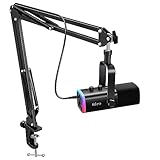


Top 3 picks at a glance
Decide These 3 Things First
Before diving into specifications and price tags, you must establish the foundation of your audio setup. Answering these three questions will instantly eliminate 70% of the options on the market, saving you hours of research.
- USB, XLR, or Hybrid? USB microphones plug directly into your computer and are incredibly easy to configure, making them perfect for beginners. XLR microphones require an external audio interface or mixer, offering superior sound customization and future upgrade paths. Hybrid microphones (featuring both USB and XLR ports) offer the best of both worlds, letting you start simple and upgrade your gear later.
- How Will You Mount It? Dynamic microphones are heavy and must be positioned close to your mouth (typically 2 to 6 inches away) to sound their best. You need to decide if your desk setup can accommodate a heavy desktop stand, or if you need to invest in an adjustable boom arm to keep the microphone close to your face without blocking your view of the monitor.
- What is Your Room’s Noise Profile? If you stream in a noisy living room or a space with hardwood floors and high ceilings, you will need a microphone with an exceptionally tight cardioid or supercardioid pickup pattern. If your room is carpeted and relatively quiet, you have more flexibility in your microphone selection.
1. Physical Size and Desk Footprint
A microphone’s physical presence on your desk affects both your comfort and your stream’s visual layout. Dynamic microphones are generally larger and heavier than their condenser counterparts due to the internal copper coils and magnets used to capture sound.
Most standard dynamic streaming microphones measure between 5.5 and 8.5 inches in length and 2.0 to 2.5 inches in diameter. When choosing a microphone, consider how its size will impact your line of sight. A massive broadcast microphone can block your view of your monitors or obscure your face on your webcam or facecam.
Weight is another critical factor. Dynamic microphones typically weigh between 1.1 and 2.2 pounds (500 to 1000 grams) once you factor in the microphone capsule, the metal housing, and the mounting bracket. If you plan to use a boom arm, ensure the arm’s tension springs can support the specific weight of your microphone. Cheap boom arms often sag under the weight of a 1.8-pound microphone, while heavy-duty arms are rated to hold up to 4.0 pounds without slipping.
2. Materials and Body Construction
The materials used to build a microphone dictate its durability, its aesthetic appeal on camera, and its resistance to physical noise. If you accidentally bump your desk or touch the microphone stand during a stream, those physical vibrations can travel up the microphone and create a loud, low-frequency thud in your stream’s audio.
Premium dynamic microphones feature all-metal construction, utilizing zinc alloy or anodized aluminum housings. Metal bodies add weight, which naturally dampens external vibrations. They are also incredibly durable, easily surviving accidental drops or rough travel.
Budget-tier microphones often use ABS plastic for the outer shell to keep costs down. While plastic microphones are lightweight (often weighing under 0.6 pounds), they are more susceptible to transmitting handling noise and can feel cheap in hand. If you choose a plastic-bodied microphone, look for one that includes a robust shock mount to isolate the capsule from desk vibrations.
3. Mounting and Vibration Isolation
How a microphone attaches to your stand or boom arm is crucial for ease of use and audio clarity. Look for microphones that feature built-in yoke mounts or integrated shock mounts. A yoke mount (the U-shaped metal bracket that holds the microphone from both sides) allows you to tilt the microphone at precise angles, which is essential for proper dynamic microphone positioning.
Pay close attention to the threading size on the mount. Standard microphone stands and boom arms use either 3/8-inch or 5/8-inch threads. High-quality microphones include a brass or steel adapter that accommodates both sizes. Avoid plastic threading inserts, as they easily strip over time when you rotate or adjust the microphone.
An internal shock mount is another invaluable feature. This is an internal suspension system that cradles the delicate microphone capsule in rubber bands or silicone gaskets, isolating it from the outer shell. If a microphone lacks internal isolation, you will need to purchase an external shock mount, which typically adds 2.5 to 3.5 inches to the microphone’s overall width and costs an additional $15 to $40.
4. Performance, Sensitivity, and Gain Requirements
Dynamic microphones operate on electromagnetic induction, which makes them incredibly durable but also means they have low output sensitivity. Sensitivity is measured in decibels relative to 1 volt per pascal (dBV/Pa). Most dynamic streaming microphones have a sensitivity rating between -50 dBV/Pa and -60 dBV/Pa (where numbers closer to zero are more sensitive).
This low sensitivity means you need to apply a significant amount of gain to raise your voice to a clean, audible level. If you choose a traditional XLR dynamic microphone, your audio interface must be capable of providing at least 50 dB to 60 dB of clean, low-noise gain.
Cheap audio interfaces often introduce a noticeable “hiss” when turned up past 80% of their maximum volume. If your interface lacks clean gain, you may need to purchase an inline microphone preamplifier (such as a Cloudlifter or FE some other signal booster), which costs an additional $70 to $150. If you want to avoid this headache, look for hybrid USB/XLR microphones, which feature built-in preamps that deliver perfect gain levels when used in USB mode.
5. Price Tiers and What You Get
As we look toward streaming setups in 2026, the market has segmented into three distinct price tiers, each offering a specific balance of features, build quality, and audio performance.
- Budget ($50 to $80): This tier is dominated by hybrid USB/XLR microphones like the FIFINE AM8 and K688. These microphones feature plastic or lightweight aluminum bodies, basic RGB lighting, and physical mute buttons. They are plug-and-play, offer decent internal capsule isolation, and are perfect for beginners who want great sound without buying an external audio interface.
- Mid-Tier ($90 to $180): In this range, you find microphones like the MAONO PD200W. These models feature all-metal construction, improved internal shock mounting, companion software for advanced equalization (EQ) adjustments, and hybrid connections. They offer a more refined, broadcast-ready sound signature with less self-noise.
- Premium ($200 to $400+): This tier includes industry-standard broadcast microphones like the Shure SM7B or Electro-Voice RE20. These are strictly XLR microphones designed for professional studios. They offer pristine audio fidelity, heavy-duty steel construction, internal pop filters, and customizable frequency-response switches on the back of the microphone. They require a high-quality audio interface and a sturdy boom arm.
6. Warranty and Brand Support
A microphone is an investment in your content creation journey, and you want to ensure it is protected. Standard warranties for consumer-grade USB and hybrid microphones typically run for 12 months. Premium brands often extend this to 24 months, with some broadcast legends offering up to 5 years of coverage on their capsules.
Beyond the warranty period, consider the availability of replacement parts. Over months of daily streaming, foam windscreens will degrade, shock mount rubber bands will stretch, and mounting knobs can get misplaced. Brands with robust support systems sell replacement windscreens (usually $5 to $10) and mounting hardware directly on their websites, ensuring you do not have to buy a completely new microphone over a lost screw.
7. Out-of-the-Box Delivery and Assembly
When your microphone arrives, you want to get up and running quickly. Check the packaging list to see what accessories are included. Many budget microphones are sold as complete kits (sometimes labeled with a “T” or “Kit” suffix, like the FIFINE AM8T), which include a matching desktop stand or a basic boom arm, a USB-C cable, and a windscreen.
If you buy a standalone microphone, you will need to purchase your own cables and stands. Ensure your USB-C or XLR cable is long enough for your desk layout; a standard 6.5-foot (2-meter) cable is usually sufficient for desktop stands, but you will need a 10-foot (3-meter) cable to route neatly through the cable-management channels of a long-reach boom arm. Desk clamps for included stands typically fit desk thicknesses up to 2.1 inches (5.3 cm), so measure your desk’s edge before purchasing.
Spec Checklist
Use this quick-reference table to compare what features you should expect across the three major price points when choosing your dynamic streaming microphone.
| Feature / Spec | Budget ($50 – $80) | Mid-Tier ($90 – $180) | Premium ($200 – $400+) |
|---|---|---|---|
| Connection Type | Hybrid USB & XLR | Hybrid USB & XLR with App | Strictly XLR (Analog) |
| Housing Material | ABS Plastic or Light Aluminum | Zinc Alloy / Anodized Aluminum | Heavy-Duty Steel / Brass |
| Weight (Mic Only) | 0.6 lbs to 1.1 lbs | 1.2 lbs to 1.6 lbs | 1.7 lbs to 2.2 lbs |
| Sensitivity Range | -52 dB to -56 dBV/Pa | -50 dB to -54 dBV/Pa | -56 dB to -59 dBV/Pa |
| On-Board Controls | Physical Mute, Gain Dial | Smart Dial, Mute, RGB Control | None (Controlled via Mixer) |
| Frequency Response | 50 Hz – 16,000 Hz | 40 Hz – 18,000 Hz | 50 Hz – 20,000 Hz (Flat) |
| Included Accessories | USB Cable, Basic Stand | USB Cable, Shock Mount | Switch Cover, Windscreen Only |
Red Flags to Avoid
As you shop for a dynamic microphone, keep an eye out for these warning signs that indicate a product might not live up to your streaming expectations:
- No Headphone Jack on USB Models: If you are buying a USB dynamic microphone, it must have a built-in 3.5mm headphone jack for “zero-latency monitoring.” Without this, you cannot hear your own voice in real-time without a disorienting delay introduced by your computer’s operating system.
- Extremely High Sensitivity Ratings: If a listing claims a microphone is “dynamic” but boasts a sensitivity rating of -30 dBV/Pa or higher, it is likely a mislabeled condenser microphone. A true dynamic microphone will always have a lower sensitivity rating (typically -50 dB to -60 dB).
- Proprietary Mounting Hardware: Avoid microphones that use unique, proprietary mounting brackets that cannot be removed. If the bracket breaks or you want to switch to a standard shock mount, you will be unable to mount the microphone to a standard boom arm.
- Lack of Physical Mute Indicator: For streamers, a visual mute indicator (like an LED light that turns red when muted) is essential. Microphones without clear visual feedback lead to embarrassing “you’re muted” chat spam or accidental hot-mic situations.
FAQ
Why choose a dynamic microphone over a condenser for streaming?
Dynamic microphones are far better at rejecting background noise. Their capsules require more acoustic pressure to move, meaning they naturally ignore quiet, distant sounds like keyboard clicks, PC fan whirls, and traffic. This ensures your voice remains the absolute focus of your stream, even in untreated rooms.
Do I need an external audio interface for a dynamic microphone?
You only need an audio interface if your dynamic microphone is strictly XLR. If you choose a hybrid USB/XLR dynamic microphone, you can plug it directly into your computer’s USB port. The microphone’s internal electronics will handle the analog-to-digital conversion without any extra equipment.
How close do I need to sit to a dynamic microphone?
To get the best audio quality and the warmest tone, you should stay within 2 to 6 inches (5 to 15 cm) of the microphone capsule. If you back away further than 8 inches, your voice will drop off significantly in volume, and you will have to increase the gain, which will introduce background noise.
Will a dynamic microphone completely block out my mechanical keyboard?
While dynamic microphones will dramatically reduce the sound of your keyboard compared to a condenser microphone, they cannot block it out entirely if the keyboard is positioned directly behind the microphone. To achieve absolute silence, pair your dynamic mic with a cardioid pickup pattern, place the keyboard directly behind the microphone’s dead zone (the rear of the mic), and use a digital noise gate in your streaming software.


