
If you have ever listened back to a clip of your gameplay only to hear the loud, metallic clack of your mechanical keyboard, the hum of your PC’s graphics card fans spinning at 2,200 RPM, or the distant murmur of traffic outside your window, you are not alone. Standard gaming setups are acoustic nightmares. Unlike professional recording studios with soft, sound-absorbing walls, the typical home gaming space consists of hard drywall, glass windows, and flat wooden or laminate desks that reflect sound waves in every direction.
This brings us to a crucial gear decision. While condenser microphones have dominated the streaming and gaming market for years, dynamic microphones are rapidly taking over. But is a dynamic microphone worth it for gaming, or is it an unnecessary expense for your desktop setup?
As an Amazon Associate we earn from qualifying purchases at no extra cost to you.

The Short Answer
Yes, a dynamic microphone is absolutely worth it for gaming, on one condition: you play in a typical, untreated room with background noise. If your gaming desk shares space with a noisy mechanical keyboard, loud PC cooling fans, open windows, or other family members, a dynamic microphone is the single best audio investment you can make. It naturally rejects background noise in a way that software filters simply cannot match, giving you clean, broadcast-quality voice chat without requiring you to turn your bedroom or home office into an ugly, foam-covered recording studio.
What You Actually Get
To understand what you are paying for, you have to understand how a dynamic microphone operates compared to a standard condenser microphone.
Condenser microphones are highly sensitive. They use a ultra-thin, electrically charged diaphragm that reacts to the slightest vibration in the air. While this is great for capturing the subtle nuances of an acoustic guitar in a soundproof booth, it is disastrous for gaming. A condenser mic will pick up your dog barking downstairs, your AC unit kicking on, and every single keystroke you make.
A dynamic microphone, on the other hand, uses a heavier moving coil attached to a diaphragm inside a magnetic field. It takes physical sound pressure to move this coil. Because of this design, dynamic microphones have a much lower physical sensitivity. They only capture sounds that are very close to the capsule—typically within 2 to 6 inches—while ignoring sounds that originate further away.
When you buy a dynamic microphone for your gaming setup, you are getting:
- Physical Noise Isolation: A hardware-level gate that keeps your voice in and your room noise out.
- A Richer Vocal Profile: Dynamic mics naturally provide that warm, “radio broadcast” tone that makes your voice sound deeper and more authoritative.
- Durability and Longevity: Because they lack delicate internal electrical charges, dynamic mics are incredibly durable. They can handle being bumped, knocked over, or packed into a backpack without losing functionality.
- Modern Connectivity: While older dynamic mics required expensive analog XLR setups, modern gaming dynamics offer hybrid USB and XLR connections. For example, options like the FIFINE AmpliGame AM8 USB/XLR Dynamic Microphone ($56.99) allow you to plug directly into your PC via USB today, while leaving the door open to upgrade to a professional XLR mixer down the road.
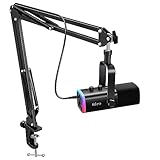
As we look toward the landscape of home office design in 2026, aesthetics and desk organization are just as important as performance. A dynamic microphone setup typically requires a boom arm to keep the microphone positioned close to your mouth. This keeps your actual desk surface clean and free of bulky desktop stands, blending high-end audio performance with a clean, modern home aesthetic. If you want a complete out-of-the-box solution, options like the FIFINE AmpliGame AM8T XLR/USB Gaming Microphone Set ($67.99) bundle the dynamic microphone with a matching, adjustable boom arm to save you the hassle of sourcing separate mounting hardware.
Pros
- Unmatched Background Noise Rejection: Your teammates will no longer hear your clicky blue keyboard switches, PC coil whine, or household foot traffic.
- No Acoustic Treatment Required: You do not need to ruin your home decor by gluing black and purple acoustic foam panels to your walls; the microphone’s physical design handles the room reflections for you.
- Warm, Broadcast-Quality Vocals: Delivers a smooth, professional sound signature that is highly legible in fast-paced voice chats or discord calls.
- Hybrid Versatility: Many modern budget-friendly dynamic mics feature both USB for plug-and-play simplicity and XLR for professional audio interfaces.
- High Sound Pressure Tolerance: If you tend to shout, laugh loudly, or rage-quit during intense gaming sessions, a dynamic mic will not distort or clip as easily as a condenser.
Cons
- Strict Placement Requirements: You must keep the microphone within 2 to 6 inches of your mouth. If you lean back in your gaming chair or turn your head away, your volume will drop off significantly.
- Boom Arm Necessity: Because of the close-proximity requirement, you almost certainly need a boom arm. A standard desk stand usually places the mic too far away, requiring you to slouch over your desk to be heard.
- Gain-Hungry Nature: If you choose a strictly XLR dynamic microphone, you may need to invest in a powerful audio interface or an inline preamp booster, which can add $50 to $150 to your total setup cost.
- Heavier Physical Footprint: Dynamic microphones are physically heavier than condenser mics (often weighing between 1.2 to 2.0 lbs), requiring a sturdy boom arm with strong tension springs to prevent sagging.
Who Should Buy It
You should buy a dynamic microphone if you game in a shared room, a living room, or an untreated home office with hard flooring. It is the perfect choice for competitive players who rely on clear communication without distracting their teammates with background noise. It is also highly recommended for aspiring streamers and content creators who want professional-grade audio but do not have the budget or desire to soundproof their entire room. If you value a clean desk aesthetic and want your voice to sound warm, natural, and isolated from your environment, a dynamic mic is an easy choice.
Who Should Skip It
You should skip a dynamic microphone if you absolutely hate having a microphone in your field of view. Because dynamic mics must sit close to your face, they are highly visible. If you prefer to lean back far in your chair, move around your room while talking, or want a microphone that sits 2 feet away on your desk out of sight, a condenser microphone or a high-quality wireless headset mic is a better fit for your lifestyle.
Cheaper Alternatives
If you are not ready to invest $50 to $100+ on a dedicated dynamic microphone and boom arm setup, there are alternative routes to clear gaming audio. Below is a breakdown of common cheaper alternatives, their typical costs, and the trade-offs you will make.
| Option | Cost | Trade-off |
|---|---|---|
| Software Noise Cancellation (RTX Voice, Discord Krisp) | Free (with compatible hardware) | Can compress your voice, making it sound artificial, robotic, or “underwater” when cutting out loud background noises. Uses system CPU/GPU resources. |
| Budget Headset Microphone | $25 – $45 | Very thin, tinny sound quality with poor bass response. Cable clutter and potential physical discomfort during long gaming sessions. |
| Entry-Level USB Condenser Mic | $30 – $45 | Excellent vocal clarity, but will pick up every single ambient sound in your room, requiring heavy software filtering to be usable for gaming. |
FAQ
Do dynamic microphones require phantom power?
No, traditional dynamic microphones do not require 48V phantom power to operate because they generate their own electrical signal through electromagnetic induction. However, some low-output XLR dynamic microphones require a lot of gain, meaning you might need a preamplifier or an inline booster (like a Cloudlifter) to get usable volume levels without introducing system hiss. Hybrid USB dynamic mics power themselves directly from your PC’s USB port.
Can I use a dynamic microphone on a standard desk stand?
While you can, it is rarely ideal. Dynamic microphones require you to speak directly into them from a short distance (typically under 6 inches). A standard desk stand usually sits 12 to 18 inches away from your face. If you leave a dynamic mic on your desk, your voice will sound incredibly quiet and distant. To get the most out of a dynamic mic, mounting it on a flexible boom arm is highly recommended.
Is a dynamic mic better than a condenser mic for streaming?
For most home streamers, yes. Unless you have a dedicated, professionally soundproofed studio space, a condenser microphone will capture unwanted ambient sounds like computer fans, AC units, and keyboard clicks. A dynamic microphone ensures that your stream audience only hears your voice, resulting in a much cleaner, more professional-sounding broadcast.
Will a dynamic microphone completely eliminate keyboard clicking noise?
While it will not completely silence a loud mechanical keyboard to 0%, it will reduce the volume of the clicks dramatically compared to a condenser microphone. Because the keyboard is physically further away from the microphone capsule and behind the mic’s cardioid pickup pattern, the clicking sound will be pushed far into the background, making it barely noticeable to your teammates or stream viewers.


