
Designing a home streaming desk is no longer just about mounting a microphone and plugging in a USB cable. Today’s home offices double as guest bedrooms, living room nooks, and professional content creation hubs. When building out your workspace, one critical detail dictates both your desk’s visual flow and your daily ergonomic comfort: choosing between a low profile vs standard boom arm for streaming desk setups.
The real decision comes down to visual real estate and spatial geometry. Standard overhead boom arms use traditional scissor joints that arch high above your monitor, claiming vertical air space and sweeping across your field of view. Low profile arms, by contrast, hug the desk surface, reaching under your primary display at a lower angle. Choosing the wrong style can leave you leaning awkwardly toward a mic, constantly bumping into suspended metal tubing, or blocking a multi-monitor layout in a tight residential space.
As an Amazon Associate we earn from qualifying purchases at no extra cost to you.


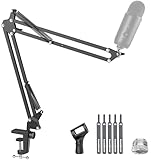

Top 3 picks at a glance
Quick Verdict
Choose a low profile boom arm if you want an unobstructed view of your monitors, prefer a clean, minimal interior design, and stream with a webcam positioned directly at eye level. It keeps hardware hidden below your chin line and fits seamlessly into understated home aesthetics.
Choose a standard boom arm for streaming desk setups if you need maximum vertical reach to clear tall or stacked monitors, work on a tight budget, or frequently want to swing your microphone entirely up and away when your streaming session ends.
Side by Side
| Feature | Low Profile Boom Arm | Standard Boom Arm |
|---|---|---|
| Comfort & Ergonomics | Excellent for low-angle mic placement; keeps sightlines open across monitors. | High versatility for overhead placement; allows mic to hang from above. |
| Durability & Build | Heavy aluminum/metal castings with internal tension joints; fewer exposed springs. | Steel tubing with external or internal dual springs; reliable classic scissor mechanism. |
| Price Range | $80 to $160+ for premium concealed cable designs. | $15 to $100 (Entry-level options start around $15 to $25). |
| Maintenance | Occasional joint hex key tightening; enclosed magnetic cable channels. | Spring tension checks; cable ties or velcro wrap management needed. |
| Space Needed | Requires 3 to 5 inches of vertical clearance underneath your primary monitor. | Requires 18 to 32 inches of vertical clearance above the desk surface. |
| Look & Aesthetics | Sleek, industrial, modern studio look; low visual footprint on camera. | Traditional radio broadcast look; more visible metal framework on video. |
| Resale & Longevity | High demand among modern content creators; holds value well. | Steady value for mid-range models; lower resale on budget steel entry arms. |
| Best For | Clean interior design, single or dual side-by-side monitors, minimalist setups. | Ultrawide stacked displays, deep desks, tight budgets, quick stow-away needs. |
Where Low Profile Wins
Low profile boom arms have re-shaped residential workspace design by solving the “floating arm” problem. In a standard setup, a large metallic scissor arm crosses your peripheral vision. Low profile designs maintain an arm height of just 3 to 5 inches above the desk, sweeping horizontally beneath a 27-inch or 32-inch monitor. This creates an open, wide-open feel across your desk that elevates the room’s interior decor.
Visually, low profile gear leans into a understated, refined look. Much like choosing an casual daily essential like the NPQQUAN Original Classic Low Profile Baseball Cap Golf Dad Hat Black ($8.06) over a bulky helmet, low profile hardware prioritizes an unobtrusive silhouette. If you shoot video with a wide-angle lens, a low profile arm stays out of your face frame, keeping your camera framing focused on you rather than a grid of suspension springs.
If you build compact tech setups—such as combining a small form factor PC featuring a maxsun GeForce RTX 3050 6GB Graphics Cards GDDR6 Video Graphics Card GPU for Gaming PC Mini Small Form Factor SSF Slim Low Profile Design PCI Express 4.0, HDMI 2.1, DisplayPort 1.4a ($299.99) with a compact 24-inch shallow depth desk—a low profile arm maximizes physical space. It glides beneath your sightline without demanding upper-wall clearance, making it ideal for desks positioned beneath sloped attic ceilings or wall-mounted shelving units.
Where Standard Boom Arm for Streaming Desk Wins
Standard high-rise boom arms remain the workhorses of home recording studios for good reason: vertical versatility. A classic scissor or top-tier overhead arm provides anywhere from 18 to 38 inches of vertical reach. This extra height allows you to position a heavy broadcast microphone above complex, stacked monitor setups or high-perched laptop stands.
For budget-conscious buyers, standard arms offer unrivaled value. Entry-level models like the InnoGear Boom Arm Microphone Mic Stand for Blue Yeti Fifine HyperX, Black ($24.99) provide a complete, dependable mounting solution for less than a quarter of the price of a high-end low profile model. Similarly, versatile mid-tier options such as the QuadCast Boom Arm, Mic Arm for Blue Yeti HyperX QuadCast SoloCast Fifine AM8 and Most Microphone, Mic Stand Desk with 3/8″ to 5/8″ Adapter by SUNMON ($19.99) deliver immediate out-of-the-box flexibility with standard adapter thread sizes included.
Standard arms also win when you need to completely clear your desk surface between streaming sessions. With a standard arm, you can pull the microphone overhead, push it back past the top edge of your screen, and return your desk to a completely open surface for writing, craftwork, or studying.
Cost Over 5 Years
When evaluating the long-term investment of a low profile vs standard boom arm for streaming desk setups, consider hardware wear, joint longevity, and desk surface protection over a 5-year timeline:
- Initial Cost: Standard arms range from $20 to $100, while quality low profile arms range from $80 to $160.
- Joint Wear & Adjustment: Standard arms rely on external springs or internal tension bands that can gradually stretch after 3 to 4 years of daily repositioning. Low profile arms use heavy-duty friction hinges tightened by hex screws; they rarely suffer structural sag, though friction pads may need tightening once or twice a year.
- Desk Surface Protection: Cheap C-clamp mounts on budget standard arms can mar soft wood, veneer, or hollow-core honeycomb desks over time if unlined. Higher-end low profile arms typically feature heavy-gauge aluminum desk clamps with integrated rubber padding, preserving your desk finish over years of daily movement.
- Future-Proofing: As remote work and home streaming standards evolve toward clean, camera-ready backdrops in 2026, low profile arms tend to hold higher structural and aesthetic value, reducing the desire for a desk redesign down the road.
Which One for Your Home
Small Apartment / Compact Workspace
In a small apartment studio or bedroom corner, sightlines are everything. A tall, upright standard boom arm cuts off light and visually segments an already limited room. A low profile arm glides flush across a shallow 24-inch deep desk, maintaining open room sightlines and leaving the wall space behind your monitor clean for acoustic panels or artwork.
Family Living Room or Shared Space
When your streaming desk sits in a shared family room, visual noise matters to everyone in the household. A low profile arm folds down neatly near the desk surface when not in use, looking like a modern architectural lamp arm rather than studio broadcast gear. Standard arms can present a tipping or snagging hazard if pets or young children run past suspended overhead cables.
Rental Home or Flexible Setup
If you move frequently between rentals, adaptability is key. Standard boom arms mount easily to almost any desk thickness (0.5 to 2.2 inches) without interfering with behind-desk cable trays. However, if your rental features low drop-ceilings or built-in wall desks with overhead cabinets, a low profile arm ensures you won’t hit structural obstructions above your display screen.
Dedicated Long-Term Home Studio
In a dedicated home studio with a custom 30-inch deep solid wood desk, dual 32-inch displays, or stacked ultrawide screens, choice depends on screen geometry. If your screens are stacked vertically, a standard high-reach arm mounted to the side can drop down from above screen level. If your monitors sit side-by-side at eye level, a low profile arm feeding beneath the screens keeps the overall workspace balanced, ergonomic, and elegant.
FAQ
Will a low profile boom arm block my keyboard or mouse movement?
No, provided it is properly positioned. Low profile arms are designed with clearance to hover 3 to 5 inches above your desk surface. Mounted to the left or right back edge of your desk, the arm angles in beneath your monitor bezel, reaching your chin without interfering with normal typing or mouse movement.
Can low profile boom arms hold heavy microphones like the Shure SM7B?
Yes. Most quality low profile arms are engineered from cast aluminum and rated to hold payloads between 2.0 and 4.4 lbs (0.9 to 2.0 kg). Heavy broadcast dynamic microphones like the Shure SM7B or Electro-Voice RE20 sit comfortably without slipping when joint tension is set correctly.
How do cable management systems differ between the two arm styles?
Low profile arms typically feature integrated magnetic or snap-in plastic channels running along the top or underside of the aluminum chassis, keeping XLR or USB cables completely hidden from view. Standard arms often rely on external plastic clips, velcro straps, or exposed channels that leave cable loops visible along scissor bends.
Do I need a special desk clamp for a low profile boom arm?
Standard low profile boom arms come with heavy-duty C-clamps and grommet mounting options that fit standard desk tops ranging from 0.4 to 2.4 inches thick. Always check your desk edge profile—bevels or rounded edges may require an extra shim or flat clamping area for maximum stability.


