
Choosing your first streaming mic feels simple until you actually start shopping. On one side is a USB mic that promises plug-and-play audio in under a minute. On the other is an XLR mic that promises broadcast quality, but only if you add an interface, cables, and a little know-how. For beginner streamers setting up at home, that trade-off matters more than specs on a box. You are not just buying sound quality, you are buying desk space, setup time, upgrade potential, and how forgiving the gear will be when you are live. Here is how USB and XLR really compare when you are just getting started.
Top 3 picks at a glance
Quick Verdict
For most beginner streamers, a USB microphone is the right starting point. It costs less upfront, takes up less space, and lets you go live immediately without extra gear. An entry-level USB condenser like the Amazon Basics Condenser Microphone for PC at $22.67 is enough to sound clear on Twitch, Discord, and YouTube without any audio background.
As an Amazon Associate we earn from qualifying purchases at no extra cost to you. Product prices and availability are accurate as of the date shown and are subject to change.


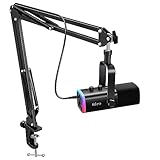

An XLR microphone for beginner streamers wins if you plan to grow. It sounds better in untreated rooms when you choose a dynamic model, it lasts longer because you can swap cables and components, and it connects to mixers, interfaces, and podcast setups as your channel scales. If you see streaming as a long-term hobby or you want the option to add a boom arm, outboard processing, or a multi-mic setup later, starting with a hybrid XLR/USB dynamic mic is the smarter investment. Models like the FIFINE AmpliGame AM8 at $56.99 give you both connections in one body, so you can start on USB and move to XLR when you are ready.
Side by Side
| Feature | USB Microphone | XLR Microphone for Beginner Streamers |
|---|---|---|
| Comfort / Ease of Use | Very high. Plug into USB-A or USB-C, select the mic in your streaming software, and talk. No drivers or gain staging needed for most models. | Moderate. Requires an audio interface or mixer, XLR cable, and manual gain control. Takes 15 to 30 minutes to set up the first time. |
| Durability | Good for 3 to 5 years of daily use. Built-in preamp and converter mean if one part fails, you replace the whole mic. | Excellent. All-metal dynamic bodies, replaceable cables, and separate interface. Individual parts can be repaired or upgraded. |
| Price Range (2026 street prices) | $20 to $80 for beginner USB condensers and dynamics. Hybrid USB/XLR dynamics run $55 to $70. | $50 to $120 for the mic alone, plus $45 to $100 for an entry interface like a Solo or 2i2 style, plus $10 to $20 for an XLR cable. |
| Maintenance | Low. Wipe down, dust the grille, keep the USB port clean. No extra firmware in most cases. | Low to moderate. Clean the mic, check cable connections, occasionally update interface drivers. |
| Space Needed | Compact. Typical footprint 3.4 to 4.5 inches wide, 5.8 to 8 inches tall with desktop stand. Fits on a small desk. | Larger. Mic plus interface (approx. 5.5 x 3.5 x 1.5 inches) plus cable runs. Best with a boom arm to free desk space. |
| Look on Camera | Simple and minimal. Matte black finishes blend into most setups. Stand-mounted, sits low in frame. | Professional and modular. Dynamic XLR mics with boom arms give that classic streamer look. RGB options like the MAONO PD200XS add visible customization. |
| Resale Value | Low to moderate. Budget USB mics resell for $10 to $25 after a year due to high supply. | Moderate to high. Well-kept dynamic XLR mics hold 50 to 70 percent of retail value because they work with any pro audio gear. |
| Best For | First-time streamers, small desks, laptop setups, and anyone who wants to start tonight. | Streamers planning upgrades, noisy or untreated rooms, and creators who want one mic for streaming, podcasting, and recording. |
| Typical Weight | 0.6 to 0.85 pounds (9.6 to 13.6 ounces) with stand included. | 0.85 to 1.4 pounds (13.6 to 22.4 ounces) mic only, plus 0.8 to 1.2 pounds for the interface. |
Where Usb Microphone Wins
The biggest advantage of a USB microphone is speed. You unbox it, place the included stand on your desk, connect a single USB cable, and you are audible. There is no interface to power, no phantom power switch to check, and no gain knob to learn on day one. For someone streaming from a bedroom or home office after work, that simplicity means you actually hit Go Live instead of troubleshooting.
USB also wins on upfront cost and footprint. A beginner USB condenser costs less than a game or a headset and draws minimal power, typically 0.5 to 2.5 watts directly from your PC, so you do not need an extra outlet. The Amazon Basics Condenser Microphone for PC is a good example of this category at $22.67, with a cardioid pickup that focuses on your voice, a 360-degree adjustable stand that measures about 5.8 inches tall by 3.4 inches wide, and plug-and-play operation with no drivers. It is light enough to move between a desk and a dining table if you share space.
Software integration is another practical win. Most streaming apps like OBS Studio, Streamlabs, and Discord recognize USB mics automatically and let you add noise suppression and filters with one click. You also avoid latency mismatches that beginners sometimes hit when routing XLR through an interface without understanding buffer settings.
For crystal-clear voice in a quiet room, budget USB condensers are more than capable. They shine in close-mic situations, 4 to 8 inches from your mouth, and many include a headphone jack for zero-latency monitoring. If your goal is to test whether you enjoy streaming before spending $150 or more, USB keeps the risk low.
Where Xlr Microphone for Beginner Streamers Wins
An XLR microphone wins on control, sound isolation, and longevity, especially if you choose a dynamic capsule. Dynamic XLR mics are less sensitive to keyboard clicks, mouse clatter, and room echo than budget condensers, which makes them ideal for untreated home spaces with hard walls, hardwood floors, or a fan running in the summer. That forgiveness is why so many gaming creators eventually switch.
XLR also gives you analog headroom. Instead of a fixed USB preamp, you control gain at the interface, which means cleaner sound when you speak loudly or laugh, and more consistent levels across long streams. When you want to add processing later, such as a physical noise gate, compressor, or a Stream Deck with audio controls, XLR fits right in. You are not locked into one brand’s USB software.
Hybrid mics have made this transition much easier for beginners. The FIFINE AmpliGame AM8 at $56.99 and the FIFINE AmpliGame AM8T at $67.99 are both dynamic mics that offer USB and XLR outputs in the same housing. You can start on USB with a single cable to your PC, then switch to XLR through an interface when you upgrade, without buying a new mic. The AM8T kit even includes a boom arm and extra mounting hardware, which saves about $20 to $30 versus buying an arm separately.
The MAONO PD200XS XLR/USB Dynamic Microphone Kit at $69.99 takes the same hybrid approach and adds RGB lighting and dedicated software for gain, mute, and tone adjustments. Kits like this weigh around 1.1 to 1.3 pounds for the mic and include a small footprint stand, so they still work on a desk while giving you the XLR path for later. If you want that polished on-camera look and a mic that will stay relevant if you move from streaming to podcasting or voiceover, XLR is the platform that grows with you.
Durability is the final edge. With XLR, a damaged cable is a $12 replacement, not a dead mic. Interfaces can be repaired or resold separately, and standard mounts mean your mic fits any boom, shock mount, or desk clamp you find later.
Cost Over 5 Years
Upfront price does not tell the whole story, because streaming gear tends to stay plugged in for hours every week. Assume you stream 8 to 12 hours per week.
A USB-only path starts at $22 to $70 for the mic and $0 for extra gear. Over five years, most users spend $22 to $70 initially and another $0 to $70 if they replace a budget condenser after year three or add a $25 to $40 boom arm for comfort. Total five-year cost typically lands between $50 and $110. Power cost is negligible at under $3 per year.
An XLR path for a beginner starts higher but flattens out. Expect $57 to $70 for a hybrid dynamic mic like the AM8 or PD200XS, plus $45 to $100 for an entry interface, and $10 to $20 for an XLR cable. That puts the starter total at $112 to $190. Over five years, you may add a $30 to $50 boom arm and replace a cable once. The interface and mic often last the full period, so the five-year total usually stays between $140 and $240. If you later start with pure XLR, the same mic stays usable, so your second five years cost almost nothing beyond upgrades you choose to make.
In short, USB is cheapest in year one by $60 to $120. XLR costs more at the start but avoids a full repurchase when you outgrow USB, and its components retain resale value if you decide to sell.
Which One for Your Home
Your room and routine should decide more than any spec sheet.
Small Apartment (Under 600 Square Feet)
Choose USB. Desks are often 40 to 48 inches wide and shared with work or school gear, so a compact USB mic with a small base keeps your surface usable. You also avoid adding an interface that needs its own shelf space and USB port. A cardioid USB condenser 6 inches from your mouth captures clear voice without taking over the room, and you can stash it in a drawer after a stream. If you expect to upgrade within a year, pick a hybrid USB/XLR dynamic instead so you do not have to rebuy later.
Family Home With Kids or Pets
Choose a dynamic XLR or hybrid dynamic on a boom arm. Dynamic mics reject background noise better, so barking, foot traffic, and a TV in the next room are less likely to spike your levels. Mounting the mic on an arm clamped to the desk keeps it out of reach, reduces desk vibrations from bumps, and lets you swing it away when you need the table back. The added weight and all-metal build of mics like the AM8 also stand up to occasional knocks.
Rental (You Cannot Treat the Walls)
Choose a dynamic mic, ideally hybrid USB/XLR. Most rentals have echo-prone walls and you cannot add acoustic panels permanently. A dynamic capsule is far more forgiving in those spaces than a sensitive condenser. Starting with the MAONO PD200XS or FIFINE AM8T on USB gives you better room rejection now, with the option to add an interface later without drilling or modifying the apartment.
Long-Term Home or Dedicated Streaming Room
Choose XLR. If you have a permanent desk that is 60 inches or wider, you can comfortably fit an interface, manage cables, and install a boom arm once. XLR lets you build a chain you can keep for years: same mic, better interface, optional hardware processing, and the ability to add a second XLR mic for co-op streams or podcasts. For creators who plan to stream well beyond the beginner phase, that modularity prevents waste and makes every future upgrade cheaper.
FAQ
Do I need an audio interface for an XLR microphone as a beginner?
Yes, if you want to use the XLR output. An XLR mic cannot plug directly into a PC. You need an interface or mixer with an XLR input and phantom power if you use a condenser. The good news is many beginner-friendly mics now include both USB and XLR, so you can use USB today and add the interface later when budget allows.
Will my viewers actually hear the difference between USB and XLR?
In a quiet, close-mic setup, the difference is subtle. Where listeners notice XLR is in noisy or echoey homes, during loud moments, and over long streams where consistent levels matter. A dynamic XLR or hybrid mic tends to sound tighter and more controlled in those real-world home conditions than a budget USB condenser.
Is a USB mic good enough for gaming streams and Discord?
Absolutely. For game chat, Twitch, and YouTube, a decent USB mic 4 to 8 inches from your mouth with a cardioid pattern is clear and intelligible. Add a $5 foam windscreen and enable noise suppression in OBS and you will sound better than most lobby chat without touching an interface.
Should I buy a hybrid USB/XLR mic to future-proof my setup?
For most beginners in 2026, yes. A hybrid dynamic mic costs about $35 more than the cheapest USB condenser but saves you from rebuying when you want XLR. You get the easy USB start now and the pro connection later, which is the most cost-effective path if you think you will stream for more than a year.
Related guides
- Dynamic Microphone vs Condenser for Streaming Voice: Which Is Right for Your Home
- 5 Best External SSDs for 4k Footage Backup Workflow: Tested and Ranked (2026)
- Best Acoustic Panels for Echo Reduction in Streaming: Tested and Ranked: 8 Tested (2026)
- 8 Best Ring Lights for Makeup Tutorial Streaming Setup: Tested and Ranked (2026)


