
Designing a dedicated solo Twitch streaming station inside a home office or living room requires balancing electrical capability with visual aesthetic. Beyond choosing desktop wood finishes or ergonomic seating, the core architectural decision for your voice broadcast comes down to audio hardware routing: a direct USB microphone or a dedicated XLR audio interface paired with an XLR mic.
For solo Twitch streamers in 2026, this decision directly impacts physical desk layout, visual wire clutter, long-term repairability, and room acoustics. A simple USB setup routes data and power through a single cable, minimizing footprint on shallow 24-inch desks. Conversely, an XLR audio interface acts as a desktop command module, converting analog signals through dedicated preamps while introducing tactile control knobs and modular cable runs. Decinement requires understanding how each option integrates into your home environment, workstation design, and broadcasting workflow.
As an Amazon Associate we earn from qualifying purchases at no extra cost to you.



Top 3 picks at a glance
Quick Verdict
If your priority is a plug-and-play setup that keeps a shallow or minimalist desk entirely clear of bulky hardware, a direct USB microphone offers the cleanest spatial footprint for under $150. However, if you are looking to build an adaptable, high-fidelity home studio that isolates room noise, supports physical hardware controls, and offers a modular path for future upgrades, investing in an XLR audio interface is the superior choice for solo Twitch streaming.
Side by Side
| Factor | USB Audio Setup | XLR Audio Interface Setup |
|---|---|---|
| Comfort & Tactile Control | Software-based gain and mute controls; limited physical dials on mic body. | Immediate tactile gain knobs, direct headphone monitoring, and hardware mute buttons on the desk interface. |
| Durability | Integrated capsule and digital board; if port or circuit fails, the entire unit must be replaced. | Modular components; solid metal chassis enclosures; cables, microphones, and interface can be replaced independently. |
| Price Range | $40 to $180 total cost for single unit. | $100 to $400+ total cost (Interface: $49 to $180, Microphone: $50 to $250, XLR Cable: $10 to $25). |
| Maintenance | Zero maintenance; simple driver/firmware updates via operating system. | Low maintenance; occasional dust cleaning around dials, checking balanced XLR connections and cable routing. |
| Space Needed | Minimal; single USB cable running to boom arm or desktop stand. | Moderate; requires a 5×4 inch to 7×5 inch desktop footprint plus rear clearance for XLR and USB-C output cables. |
| Look & Desk Aesthetic | Sleek, streamlined, highly portable; ideal for modern minimalist home offices. | Professional broadcast aesthetic; adds textured knobs, metallic finishes, and physical hardware visual interest. |
| Resale Value | Moderate depreciation; limited by evolving USB port standards and internal preamps. | High resale value; standalone XLR microphones and quality interfaces hold value exceptionally well over time. |
| Best For | Casual streamers, small apartments, travel setups, and clutter-free minimalist desks. | Dedicated home studio setups, noisy room environments, audiophiles, and long-term content creators. |
Where Usb Wins
The primary advantage of a direct USB setup lies in spatial efficiency and mechanical simplicity. On a compact home office desk measuring 20 to 24 inches in depth, every square inch of surface space counts. A USB microphone eliminates the need for an external bridge box, consolidating power, analog-to-digital conversion, and signal transmission into a single housing. This reduces visual noise and cable management overhead behind your monitor arms.
From a workflow perspective, USB setups simplify digital file management and portability. Streamers who frequently migrate between a primary desk setup and a laptop workstation can easily pack their equipment. To maintain a lightweight footprint, creators often back up OBS scene collection files, stream alerts, and audio filter profiles on ultra-compact external media, such as the SIMMAX 32GB Memory Stick USB 2.0 Flash Drives Swivel Thumb Drive Pen Drive (32GB Purple) priced around $9.99, or carry high-resolution overlay packages on a dual-interface driver like the Lexar D40E 128GB Dual USB 3.2 Gen 1 Type-C Jump Drive, Champagne Silver available for roughly $29.99. The USB ecosystem excels when swift deployment and clean surfaces take priority over hardware modularity.
Where Xlr Audio Interface for Solo Twitch Streaming Wins
An XLR audio interface provides superior signal processing, acoustic flexibility, and physical control that direct USB connections cannot match. Interfaces convert high-quality analog signals from standard balanced XLR cables using high-headroom preamps. This yields significantly lower self-noise (noise floor), which prevents the noticeable background electronic hiss often heard during quiet stream moments on budget USB microphones.
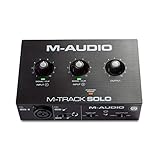
Hardware ergonomics are another key benefit. When live streaming, opening software audio mixers to adjust gain mid-broadcast creates friction. An interface puts physical gain pots, direct zero-latency headphone monitoring dials, and phantom power switches directly at your fingertips. Entry-level desktop units like the M-AUDIO M-Track Solo USB Audio Interface at $49 give creators an accessible start with a compact 6.4 x 5.1 x 2.0-inch footprint. Stepping up to standard home studio workhorses like the Focusrite Scarlett Solo 3rd Gen USB-C Audio Interface for $119.99 introduces ultra-low latency drivers, 24-bit/192kHz audio conversion, and high-performance preamps housed in a weighted aluminum chassis weighing roughly 0.70 lbs, which stays firmly anchored on your desk during adjustment.
Furthermore, an XLR interface allows solo streamers to pair their system with dynamic microphones (like the Shure SM7B or PodMic). Dynamic capsules paired with quality XLR preamps naturally reject ambient household noises—such as mechanical keyboard clicks, air conditioning hums, or hallway foot traffic—far better than sensitive condenser capsules typically found in all-in-one USB microphones.
Cost Over 5 Years
Evaluating audio gear through a five-year home ownership lens reveals distinct financial trajectories between USB and XLR ecosystems.
- USB Streamer Path: Initial setup costs range from $50 to $150. However, because the microphone capsule, analog circuit, gain controller, and USB interface are fused into a single unit, a failure in the USB port or circuit board usually renders the entire device unusable. Additionally, as your streaming quality demands increase, upgrading sound quality requires discarding the old mic entirely. Expect to purchase 2 to 3 USB microphones over a 5-year cycle, resulting in an aggregate spend of $200 to $350.
- XLR Interface Path: Initial setup requires buying an interface ($49 to $120), dynamic XLR microphone ($70 to $200), XLR cable ($15), and boom arm ($30 to $100), totaling $164 to $435. However, modularity protects your long-term investment. If you want a warmer tone after two years, you simply replace the microphone while keeping your interface. If a cable develops a crackle, a $15 cable replacement fixes the issue. Over 5 years, total maintenance and upgrade spend averages $250 to $450, offering significantly higher component longevity and far higher resale value on the secondary market.
Which One for Your Home
Small Apartment or Minimalist Studio
In a cozy studio apartment or multi-use bedroom where your streaming desk doubles as a daily workspace, spatial footprint is critical. A USB microphone attached to a clean, low-profile boom arm keeps cable routing to a absolute minimum. If you prefer physical interface control without sacrificing space, ultra-compact interfaces like the M-AUDIO M-Track Solo fit neatly underneath monitor stands, giving you tactile gain control while occupying less than 35 square inches of desk surface.
Shared Living Space or Family Home
If your home setup resides in a shared living room, basement, or open-plan area near family members or pets, ambient background noise is your biggest operational hurdle. A direct USB condenser microphone will inadvertently pick up kitchen sounds, dog barks, and distant television audio. In this environment, an XLR audio interface paired with a background-rejecting dynamic XLR microphone is essential. The interface provides the gain headroom necessary to drive tight dynamic capsules that isolate your voice while ignoring background household traffic.
Rental Property with Space Limitations
Renters often face constraints with room acoustics because permanent wall-mounted foam panels or acoustic baffles are not feasible. Unfiltered room bounce off bare drywall creates echo in high-sensitivity USB condenser mics. Using an XLR interface allows you to dial down input gain precisely on the hardware knob while speaking closer to a proximity-focused mic, effectively mitigating room reflections without altering your rental’s walls or interior decor.
Long-Term Home Office Setup
For dedicated home offices featuring custom hardwood desks (30 inches deep or greater), routed cable channels, and built-in studio monitors, an XLR audio interface is the clear winner. Desktop interfaces like the Focusrite Scarlett Solo 3rd Gen USB-C Audio Interface add architectural substance to your desktop surface with brushed metal finishes and illuminated halo signal meters. This hardware integrates smoothly into routed cable management trays beneath your desk, offering an enduring audio foundation for home broadcasting.
FAQ
Does an XLR audio interface introduce stream audio delay on Twitch?
No. Modern USB-C audio interfaces utilize ASIO and Core Audio drivers that deliver near-zero hardware latency (typically under 4 to 6 milliseconds). This ensures your voice output syncs perfectly with your webcam feed inside OBS without requiring manual delay buffers.
Can I plug a USB microphone into an XLR audio interface?
No. Standard USB microphones output a digitized signal over USB power lines, whereas an XLR audio interface expects an analog voltage signal through a 3-pin balanced XLR cable. There are a few hybrid microphones on the market that feature both ports separately, but standard USB-only mics cannot connect to interface preamps.
How much clearance depth does an XLR interface need on a desk?
While the physical box of a compact interface may measure 4 to 5 inches deep, you must account for cable strain relief. Straight XLR connectors and USB-C host cables plugging into the back require an additional 2.5 to 3.5 inches of rear clearance. Plan for approximately 8 inches of total depth real estate on your desk surface.
Do I need phantom power (48V) on my audio interface for Twitch streaming?
Phantom power (48V) is only required if you connect a condenser microphone or active inline preamp (like a Cloudlifter) to your interface. If you use a standard passive dynamic microphone, 48V phantom power should remain turned off, as dynamic capsules operate entirely on passive electromagnetic induction.


