
Setting up a home streaming desk requires balancing high-quality audio with home design realities. When building out a studio corner in a living room, bedroom, or dedicated home office, hardware choices impact more than sound clarity—they dictate desk footprint, cable management, and room decor aesthetic. The debate between a usb vs xlr microphone for beginner streamers usually boils down to technical specs, but for a home setup, physical integration matters just as much as audio quality.
A USB microphone connects directly to your computer using a single cable, delivering built-in analog-to-digital conversion inside a compact frame. An XLR setup relies on an analog microphone connected via a three-pin cable to an external USB audio interface, which then plugs into your computer. Choosing between these options depends on how much physical space you have, your budget, and how complex you want your desktop setup to be.
As an Amazon Associate we earn from qualifying purchases at no extra cost to you. Product prices and availability are accurate as of the date shown and are subject to change.


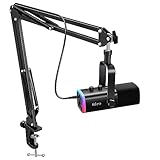

Top 3 picks at a glance
Quick Verdict
For most beginner streamers operating out of a standard home office or living room corner, a USB microphone (or a hybrid USB/XLR model) is the practical choice. It requires no extra desk equipment, eliminates external cable clutter, and installs in under two minutes for an initial investment between $40 and $100.
An XLR microphone setup is better suited for creators with a dedicated studio desk who want superior long-term audio control, physical volume knobs off-screen, and a modular system where components can be upgraded individually. An entry-level XLR rig costs between $150 and $300 once you factor in the microphone, audio interface, XLR cable, and desk mounting arm.
Side by Side
| Feature | USB Microphone | XLR Microphone Setup |
|---|---|---|
| Setup & Comfort | Plug-and-play simplicity; ready in under 2 minutes. | Requires audio interface routing, driver installation, and line level adjustments. |
| Hardware Durability | Integrated circuitry; if digital converter fails, entire unit must be replaced. | Modular components; dynamic capsules and standard switches last decades. |
| Entry Price Range | $40 – $100 complete setup cost. | $150 – $350 (microphones run $50–$150, interfaces $70–$150, cables/arms $30–$60). |
| Maintenance & Care | Virtually zero maintenance; light dusting and driver software updates. | Occasional cable strain checks, gain staging adjustments, and external power management. |
| Space Needed on Desk | Minimal footprint (approx. 4″ x 4″ base or lightweight arm). | Moderate footprint (requires 6″ x 5″ audio interface box plus mic arm anchor). |
| Visual Look & Aesthetic | Sleek, streamlined, single-cable design; easily blends into home decor. | Professional broadcast aesthetic; prominent cables, interface lights, and heavy hardware. |
| Resale Value | Moderate depreciation; high volume of entry-level consumer models on secondhand market. | Strong value retention; standard audio gear holds utility across music, podcasting, and streaming. |
| Best For | Casual streamers, small apartments, shared rooms, tight budgets. | Dedicated home offices, audiophiles, multi-mic setups, long-term upgrade paths. |
Where Usb Wins
USB microphones stand out for spatial efficiency and convenience in a home setting. Because the preamp and analog-to-digital converter reside inside the microphone body, your desk remains clutter-free. You do not need an external 5V-to-48V power box or a tabletop mixer resting on your desktop surface.
For creators working on modest desks—such as a 42-inch by 24-inch writing desk in a bedroom corner—every square inch counts. A typical USB microphone weighs around 0.8 to 1.5 pounds and mounts easily on lightweight aluminum boom arms or minimal desktop tripods. Cable management requires taming just one 6-foot USB cable running to your computer tower or dock.
Software integration is another major advantage for beginners. Modern USB models feature desktop applications that handle gain staging, noise suppression, and equalization digitally. Furthermore, manufacturers have developed versatile hybrid options. Products like the FIFINE AmpliGame AM8T XLR/USB Gaming Microphone Set, Dynamic PC Mic ($67.99) and the MAONO PD200XS XLR/USB Dynamic Microphone Kit, RGB Gaming Mic with Software ($69.99) bridge the gap completely. They let you run USB mode straight out of the box while retaining an XLR port on the base for future studio hardware upgrades.
Where Xlr Microphone for Beginner Streamers Wins
While USB microphones prioritize convenience, an XLR setup offers control, modularity, and acoustic performance. XLR microphones use balanced analog signals sent through a heavy-duty three-conductor cable. This shielding prevents electrical interference from neighboring monitors, LED light strips, and home power strips—even across cable runs over 20 feet.
The primary advantage of an XLR microphone for beginner streamers is component modularity. If a USB microphone’s internal sound card wearing out breaks the unit, the entire microphone is useless. With an XLR rig, if your audio interface fails, your microphone remains fully functional. If you want a warmer, broadcast sound, you can swap a $60 microphone capsule for a professional unit without discarding your interface, desk clamp, or cables.
Physical controls also enhance the home streaming experience. Instead of tabbing out of a game to adjust software sliders, an XLR setup features tactile gain dials, headphone volume knobs, and direct hardware mute switches right on your desktop audio interface. For creators managing live broadcasts, quick physical access to sound controls prevents awkward pauses during streams.
Cost Over 5 Years
Understanding the long-term value of your setup helps set realistic expectations for your home studio budget. Below is an estimated cost projection across a 5-year ownership cycle.
- USB Microphone Setup (5-Year Outlook):
- Initial Purchase (Mic + basic desktop arm): $60 – $100
- Mid-cycle replacement or upgrade (Year 3 or 4): $70 – $120
- Total 5-Year Spend: $130 – $220
- XLR Microphone Setup (5-Year Outlook):
- Initial Purchase (XLR Mic + Audio Interface + Cable + Boom Arm): $180 – $320
- Mid-cycle capsule upgrade (optional Year 3 or 4): $80 – $150
- Total 5-Year Spend: $180 – $470
While the initial cost of an XLR ecosystem is roughly double that of a USB setup, the core components—specifically audio interfaces, metal boom arms, and XLR cables—frequently last 7 to 10 years without needing replacement. Streamers managing complex video and audio workflows often store stream assets, graphic overlays, and OBS audio profiles on external flash storage. For simple configuration backups, compact options like the SIMMAX 32GB Memory Stick USB 2.0 Flash Drives Swivel Thumb Drive Pen Drive (32GB Purple) ($9.99) provide reliable backup storage. For creators editing high-bitrate video clips and local stream archives, higher-capacity drives like the Lexar D40E 128GB Dual USB 3.2 Gen 1 Type-C Jump Drive, Champagne Silver ($29.99) offer fast data transfer between home editing rigs.
Which One for Your Home
Small Apartment or Bedroom Office
If your streaming setup sits inside a dual-purpose room, space efficiency and visual cleanlines are top priorities. A standard USB microphone or a space-saving hybrid model like the FIFINE AM8T or MAONO PD200XS mounted on a low-profile boom arm keeps your desk uncluttered. You can push the mic arm against the wall when workday duties end, leaving your workspace neat.
Family Home with Kids or Pets
In high-traffic households where background noise (footsteps, TV noise, air conditioning) is common, dynamic microphones excel over condenser microphones. Opting for a dynamic XLR setup (or a dynamic USB/XLR hybrid set to dynamic mode) provides tight off-axis rejection. This pickup pattern ignores sounds originating more than 6 to 12 inches away from the capsule, keeping broadcast audio clean without capturing household commotion.
Rental Property with Shared Spaces
If you live with roommates or rent your space, drilling holes for heavy wall mounts or setting up large audio hardware isn’t practical. A plug-and-play USB microphone paired with a padded C-clamp boom arm attaches to desks without scratching wood finishes or damaging walls. When it’s time to move, you can dismantle the entire rig and pack it away in under five minutes.
Dedicated Long-Term Home Studio
If you have a dedicated room with acoustic treatment, a custom 60-inch desk, and cable channels built into your furniture, a dedicated XLR system delivers superior long-term performance. Mounting an audio interface flush beneath a desk riser or alongside a monitor arm creates a professional studio setup capable of capturing pristine voiceover work, live music, and high-production broadcasts as content creation trends evolve heading into 2026.
FAQ
Can I turn a USB microphone into an XLR microphone later?
Standard USB-only microphones cannot be converted into XLR microphones because they lack an analog XLR output pin configuration. However, buying a hybrid microphone (featuring both USB-C and 3-pin XLR outputs on the chassis) allows you to use USB plug-and-play mode today and connect to a professional audio interface via XLR down the road.
Do XLR microphones require phantom power?
Condenser XLR microphones require +48V phantom power, which is supplied directly by pressing a switch on your USB audio interface. Dynamic XLR microphones do not require phantom power to operate; they run passively off the mic preamp’s gain stage.
How much desk space do I actually need for an XLR audio interface?
Most single- or dual-channel entry-level desktop audio interfaces measure roughly 5.5 inches wide, 4 inches deep, and 2 inches tall. They fit easily under monitor risers, beside desktop speakers, or mounted beneath desk surfaces with simple adhesive brackets.
Will a USB or XLR microphone pick up background household noise?
Noise pickup depends primarily on the microphone capsule type (dynamic vs. condenser) and polar pattern (cardioid) rather than whether it uses USB or XLR output. Dynamic microphones require you to speak closer to the capsule (1 to 3 inches away), which naturally filters out ambient room reflection, keyboard clicks, and HVAC noise far better than sensitive condenser microphones.
Related guides
- Dynamic vs Condenser Microphone for Streaming: Which Is Right for Your Home
- Best Budget Green Screens for Small Apartments: Tested and Ranked: 8 Tested (2026)
- Best Usb Microphones for Streaming on Mac: Tested and Ranked: 8 Tested (2026)
- Best Clamp on Key Lights for Shallow Desks: Tested and Ranked: 8 Tested (2026)


