
Top 3 picks at a glance

The Short Answer
For most small streaming rooms, choose a key light with a lit surface between 10 and 16 inches wide and place it 24 to 36 inches from your face. That usually means a compact LED panel, a 12- to 14-inch ring light, or a small softbox-style light. This size gives you flattering, soft-enough illumination without taking over a desk, blocking a monitor, or creating excessive heat in a room under 100 square feet.
If your streaming area is especially tight—such as a desk pushed against a wall—start with a 10- to 13-inch panel or ring light. For a dedicated corner with 4 to 6 feet between you and the camera wall, a 14- to 18-inch soft light is more comfortable and more forgiving. Large 24-inch-plus softboxes and full studio panels can work, but they are usually unnecessary for a single-person desktop setup.
As an Amazon Associate we earn from qualifying purchases at no extra cost to you. Product prices and availability are accurate as of the date shown and are subject to change.

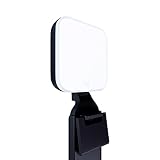

Light size matters more than raw brightness for appearance. A larger illuminated surface produces softer shadows at the same distance. Brightness still matters, though: look for a dimmable LED light in roughly the 20- to 45-watt range for a small room. You can turn a capable light down; a weak one may need to sit too close to your face.
Standard Sizes
| Key light type | Typical lit-face size | Best face-to-light distance | Typical power range | Best for |
|---|---|---|---|---|
| Mini LED panel | 4 to 8 in. wide 10 to 20 cm wide |
12 to 24 in. 30 to 61 cm |
5 to 15 watts | Travel, laptop calls, very narrow desks |
| Compact LED panel | 10 to 13 in. wide 25 to 33 cm wide |
20 to 32 in. 51 to 81 cm |
15 to 30 watts | Most desk streamers and small bedrooms |
| Small ring light | 10 to 12 in. outside diameter 25 to 30 cm outside diameter |
18 to 30 in. 46 to 76 cm |
10 to 25 watts | Beauty content, video calls, centered-camera setups |
| Medium ring light | 14 to 18 in. outside diameter 36 to 46 cm outside diameter |
24 to 40 in. 61 to 102 cm |
20 to 45 watts | Streaming, tutorials, seated talking-head video |
| Compact soft panel | 12 to 16 in. wide 30 to 41 cm wide |
24 to 42 in. 61 to 107 cm |
20 to 45 watts | Gaming streams, podcasts, natural-looking light |
| Small softbox | 18 to 24 in. wide 46 to 61 cm wide |
30 to 48 in. 76 to 122 cm |
40 to 80 watts | Dedicated streaming nook with floor-stand space |
Measurements refer to the illuminated front surface or outside ring diameter, not the entire stand. This distinction is important. A 13-inch desktop panel may need a desk footprint 8 to 12 inches deep, while a floor stand can require a leg spread of 20 to 30 inches. Always size the support as well as the light.
In practical terms, products such as the Logitech Litra Glow fall into the compact desktop-light category. A 12.9-inch panel such as the NEEWER GL25B or a 14-inch clamp-mounted ring light such as the NiceVeedi model suits many small rooms. A larger professional panel such as the Elgato Key Light offers more output and a broad light source, but its desk clamp and arm need enough rear-desk clearance to be useful.
How to Measure Your Space
- Measure the desk depth. Measure from the front edge of the desk to the wall, monitor, or other obstruction behind it. A desk under 20 inches deep usually benefits from a clamp-mounted light or a narrow stand rather than a wide desktop base.
- Measure the open width beside your monitor. You need at least 10 to 12 inches of clear horizontal space for a compact panel on a desk stand. For a 14-inch ring light or panel, allow 16 to 20 inches so the light can sit at a useful angle rather than directly in front of you.
- Measure face-to-light distance from your seated position. Sit where you stream and measure to the likely light location. The sweet spot is generally 24 to 36 inches. If the only available position is closer than 18 inches, choose a smaller, dimmable light with a diffuser.
- Check vertical clearance. Your key light should normally sit 6 to 12 inches above eye level and angle down toward your face. Measure from the desktop to the ceiling, shelf, or wall décor. A desk-mounted arm often needs 24 to 36 inches of height above the work surface.
- Measure rear-desk clearance for clamps. Clamp lights need a clear, sturdy desk edge. Allow at least 2 to 4 inches behind the monitor or along a side edge for the clamp and cable routing. Check desk thickness too; many clamps fit tops roughly 0.5 to 2.5 inches thick.
- Mark the camera position. Your main light should be about 30 to 45 degrees to one side of the camera, not far off to the side. If your room only allows a straight-on placement, a ring light or centered soft panel is often easier to use.
By Room or Use Case
Very Small Desk Setup: 36 to 48 Inches Wide
Choose a 10- to 13-inch LED panel or a 10- to 12-inch ring light. Mount it with a desk clamp whenever possible, especially if your desktop is less than 24 inches deep. Position the light 20 to 28 inches from your face and keep it slightly above eye level.
This is the right scale for dorm rooms, shared bedrooms, and work-from-home desks. A compact light priced around $50 to $90 is usually enough when it has adjustable brightness and color temperature. Avoid a large floor softbox here: its stand legs, cable, and shadow-casting bulk can make the room harder to use.
Small Bedroom Streaming Corner: 50 to 90 Square Feet
A 12- to 16-inch panel, 14-inch ring light, or compact soft panel is the most versatile choice. Place it 24 to 36 inches away at a 30- to 45-degree angle. This setup leaves enough room for a monitor, microphone boom, and chair movement while still creating a softer result than a tiny webcam light.
Look for 20 to 35 watts of dimmable LED power. At this size, a light can handle daytime window competition without needing to run at maximum output after dark. Plan for a price range of roughly $55 to $120, depending on mounting hardware, remote control, app control, and included stand.
Dedicated Gaming or Podcast Room: 90 to 120 Square Feet
Use a 14- to 18-inch panel or ring light, or an 18- to 24-inch softbox if you have a clear floor corner. Your chair should sit about 30 to 42 inches from the light. Larger sources look especially good when you wear glasses because they soften the transition between facial highlights and shadows—although any light can still create visible reflections in lenses.
A 25- to 45-watt light is a practical range. A premium desk-mounted studio light may cost about $150 to $200, while a well-equipped compact panel often falls around $80 to $140. Spend more for better mounting and control convenience only after confirming that the fixture physically fits the room.
Beauty, Makeup, and Front-Facing Tutorials
A 12- to 18-inch ring light is a sensible choice when you want symmetrical, front-facing illumination. Use a 14-inch model if the light will sit 24 to 36 inches away; a 10-inch ring can feel cramped at that distance. Keep the camera near the center of the ring, but lower the brightness enough to prevent a washed-out forehead, nose, and cheeks.
For a more dimensional look, place a compact panel 30 degrees to one side instead of relying entirely on the ring. In 2026, many small-room creators prefer this slightly off-camera placement because it gives the face more shape while remaining easy to set up.
Common Sizing Mistakes
- Buying based on lumens alone. A powerful but tiny light can create sharp shadows and glare. Match the physical light size to your available distance first.
- Forgetting the stand footprint. A light may be only 13 inches across but still need a large tripod base. Measure floor and desk space before ordering.
- Putting a large light too close. A 16-inch or larger panel at 12 inches from your face can be difficult to position comfortably and may reflect strongly in glasses.
- Placing the light beside the camera instead of near it. If the fixture is more than 45 degrees off-camera, one side of the face may become noticeably darker.
- Choosing a non-dimmable light. Small rooms often need lower output at night. Dimming is more useful than buying a light that is merely brighter.
- Ignoring monitor height. If your monitor top sits near eye level, a short desk stand may leave the key light too low. Choose an adjustable arm or taller stand.
FAQ
Is a 12-inch key light big enough for streaming?
Yes. A 12-inch panel or ring light is large enough for one person in most small streaming rooms when placed about 20 to 32 inches from the face. It is particularly suitable for desks 40 to 60 inches wide. Add diffusion or move it slightly farther away if the shadows look too defined.
Should I get a ring light or a panel light for a small room?
Choose a ring light for centered, even facial lighting and limited side-to-side space. Choose a panel light for a more natural, directional look and easier placement at a 30- to 45-degree angle. Both work well in small rooms when sized between 10 and 16 inches.
How far should a key light be from my face?
Start at 24 to 36 inches. Move a small 10-inch light closer, around 18 to 24 inches, if it is not bright enough. Move a larger 14- to 18-inch light farther back, around 30 to 42 inches, if you need more room for your monitor, microphone, or glasses reflections.
Do I need a large professional key light for a small streaming room?
Usually not. A larger professional light is worthwhile if you need strong output against daylight, want app-based control, or stream for long periods and value a sturdy desk-mounted design. For ordinary evening streams in a small room, a 12- to 16-inch dimmable light in the $55 to $120 range is generally the better size and value.
Related guides
- How Much Ram for Streaming and Recording Gameplay? Size Guide With Measurements
- What Size Green Screen for Full Body Streaming? Size Guide With Measurements
- How Much Nas Storage do I Need for Video Footage? Size Guide With Measurements
- What Size Webcam Field of View for Desk Streaming? Size Guide With Measurements


