
Shopping for a wrinkle resistant green screen sounds simple until you unbox a backdrop that looks like a crumpled bedsheet on camera. The most common mistake buyers make is assuming any fabric labeled “wrinkle resistant” will stay smooth out of the package. In reality, thin muslin or low-density polyester will crease in shipping, reflect light unevenly, and create shadows that make chroma keying a nightmare in post-production. Other frequent missteps include buying a backdrop that is too small for a full-body shot, choosing a highly reflective material that creates hot spots under LED panels, and ignoring how the screen is supported. A backdrop is only as wrinkle-free as its material and its tension system, and overlooking either one means spending hours with a steamer before every shoot.
Understanding what to look for in wrinkle resistant green screen setups saves you that frustration and ensures you get clean, even keying without constant touch-ups. The right choice comes down to material density, construction, and how you plan to use it, not just marketing claims.
As an Amazon Associate we earn from qualifying purchases at no extra cost to you. Product prices and availability are accurate as of the date shown and are subject to change.
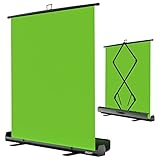


Top 3 picks at a glance
Decide These 3 Things First
Before comparing specs, narrow your options with three foundational decisions. Getting these right eliminates most poor fits immediately.
1. Where will you shoot? A permanent studio corner can accommodate a 10 x 12 foot or 10 x 20 foot fabric backdrop on a crossbar, while a small home office, apartment, or mobile setup needs a collapsible pop-up panel that folds down to 24 to 30 inches in diameter. If you move between locations, portability outweighs sheer size.
2. Who or what are you filming? A seated talking head for Zoom or YouTube needs far less coverage than a standing full-body shot with arm movement. For head-and-shoulders, a 5 x 7 foot surface is enough. For full-body with room to move, you need at least 7 x 7 feet of clean background, and ideally 8 to 10 feet wide to avoid cropping the edges during keying.
3. How will you light it? Wrinkle resistance is only part of the equation. Even a smooth screen will key poorly if it is unevenly lit. If you have two dedicated background lights with 60 to 100 watts each, you can get away with a fabric backdrop. If you rely on a single key light or overhead room lighting, a tensioned collapsible panel that stays perfectly flat will give you a more forgiving surface.
Size and Coverage: Measure Your Shot, Not Just the Fabric
Green screen size is listed as width x height, but usable chroma key area is smaller once you account for light falloff and the need to keep your subject 3 to 6 feet in front of the screen to prevent green spill.
For solo creators: A 58 x 74 inch collapsible panel covers head-to-torso with generous side room and fits in spaces as small as 6 x 8 feet. It is ideal for webcams, interviews, and seated presentations.
For full-body and small groups: Look for 77 x 76 inch to 78.7 x 82.7 inch large collapsible panels or 8 x 10 foot to 10 x 12 foot fabric backdrops. These allow a standing subject to move without stepping off the green. A 78.7 x 82.7 inch panel provides about 45 square feet of keyable area, enough for one person plus a chair.
For studio photography and video: A 10 x 20 foot fabric backdrop provides floor and wall coverage for full-length portraits and allows subjects to stand 4 to 5 feet from the background while still filling the frame. That size requires a studio at least 12 feet wide and 15 feet deep to use effectively, plus a support system rated to hold 8 to 12 pounds of fabric and crossbar.
Always check folded or packaged dimensions. A collapsible 58 x 74 inch screen often weighs 5 to 7 pounds and collapses to a 24-inch circle, while a 10 x 20 foot fabric backdrop weighs 3.5 to 5 pounds but needs a separate stand that adds another 7 to 10 pounds and a 42-inch carrying bag.
Material Matters: What Actually Resists Wrinkles
Not all green screen fabrics are created equal, and the fiber content determines how it handles folding, washing, and heat.
Polyester poplin and polyester velvet blends are the most reliably wrinkle resistant. Look for a weight of 180 to 280 GSM (grams per square meter). Fabrics in this range are dense enough to hang without sagging and to resist creasing after being folded for shipping. Thinner 90 to 120 GSM polyester will arrive with sharp fold lines that require steaming and will wrinkle again easily if stored folded.
Spandex or elastane blends, typically 90% polyester and 10% spandex, are common in collapsible pop-out screens. The slight stretch allows the fabric to be pulled taut over a spring-steel frame, creating a drum-tight surface that physically cannot wrinkle during use. This is the most effective wrinkle-resistance system for frequent setup and teardown.
Muslin, even when labeled wrinkle resistant, is usually cotton or cotton-poly and wrinkles more easily than 100% polyester. It also absorbs light differently and may require more ironing with low heat or a garment steamer at 1200 to 1500 watts held 6 inches from the surface.
Finish matters as much as fiber. Choose a matte, non-reflective finish with minimal sheen. A matte surface diffuses light from 50 to 150 watt LED panels and prevents hot spots that confuse keying software. If a listing does not explicitly say non-reflective or matte, assume it may be too shiny for even lighting.
Construction and Frame: How Wrinkle-Free Is Maintained
Material is half the battle. The other half is how the screen is held under tension.
Collapsible pop-up green screens use an internal spring-steel or fiberglass frame sewn into the edge. When popped open, the frame pulls the fabric taut in all directions. This design is inherently wrinkle resistant because there is no loose fabric to fold. Look for a double-stitched edge and a sturdy zipper or elastic closure around the frame. Premium models add a reinforced handle and a twist-fold design that lets one person collapse a 77 x 76 inch panel in under 30 seconds.
Rod-pocket or grommet fabric backdrops rely on gravity and a support system. A 10-foot wide crossbar with a center support is needed to prevent sagging in the middle. For a 10 x 20 foot drape, use a heavy-duty backdrop stand with air-cushioned light stands rated for at least 10 to 12 pounds per side. Clamps every 18 to 24 inches along the top bar help distribute tension and eliminate horizontal ripples. Without proper tension, even a 250 GSM fabric will show soft waves.
Check the bottom edge. A weighted hem or a floor pocket for a crossbar keeps the bottom from billowing when a fan or air conditioner is running, which is a common cause of subtle motion artifacts during video keying.
Color Accuracy and Performance Under Lights
A true chroma key green should be a saturated, slightly yellow-leaning green, often referenced as Chroma Key Green or Pantone 354 C. Avoid screens that look yellowish, olive, or neon. Inconsistent dye lots can cause uneven keying where one side of the backdrop keys cleanly and the other leaves a green fringe.
Opacity is critical. Hold the fabric up to a 60-watt bulb or window. If light passes through, the screen is too thin and background objects will show through, especially when backlit. Dense 200 GSM and heavier fabrics are opaque without a backing. If you choose a lighter fabric, plan to place it 12 to 18 inches from a wall rather than using it as a standalone divider.
For performance, consider washability. Polyester backdrops can be machine washed on cold and tumble dried on low without losing color, which matters if the screen collects dust, makeup, or shoe marks from floor coverage. Collapsible panels with a spandex blend should be spot cleaned only to protect the frame and elasticity. Always avoid high heat, which can warp the spring frame and degrade the dye.
Price Tiers: What Your Budget Buys in 2026
Price tends to track construction type more than color quality. As of 2026, the market has stabilized into three clear tiers.
Budget tier, $30 to $60: Typically 8 x 10 foot to 10 x 12 foot or 10 x 20 foot flat polyester fabric with rod pocket. Example range includes non-reflective fabric backdrops priced around $34.85 for a 10 x 20 foot sheet. These are lightweight and wrinkle resistant for the thickness, but they require a separate stand, clamps, and often steaming out of the box. Best for dedicated studios where the backdrop can stay hung.
Mid-range tier, $150 to $180: Collapsible panels in the 58 x 74 inch to 77 x 76 inch range, such as models priced at $159.99 to $169.99. You get a pop-up frame, carrying case, and a surface that is wrinkle-free in use with no assembly. Ideal for home offices, hybrid workers, and YouTubers who need fast setup and breakdown daily.
Premium tier, $200 to $250: Large collapsible panels from 78.7 x 82.7 inches and up, or extra-wide tensioned systems priced around $219.99. These offer the most keyable area in a portable format, heavier-duty frames, and often include both green and blue reversible covers. Worth it if you regularly shoot full-body or need to cover two people sitting side by side.
Remember to budget for accessories if you choose fabric. A basic 10-foot backdrop stand kit costs $45 to $90, plus $12 to $18 for a set of six spring clamps, and $25 to $40 for a handheld steamer if you do not already own one.
Warranty, Delivery, and Assembly
Warranty coverage reflects how the manufacturer expects the product to be used. Budget fabric backdrops often carry a 30-day return window with limited warranty against defects. Mid-range and premium collapsible screens typically include a 1-year warranty on the frame and stitching, with some brands offering 18 to 24 months. Check whether the warranty covers frame warping or seam separation, the two most common failure points after 6 to 12 months of frequent folding.
Delivery size affects convenience. A 10 x 20 foot fabric backdrop ships folded in a 12 x 10 x 3 inch poly mailer weighing under 5 pounds and may arrive with hard creases that need 10 to 15 minutes of steaming. A 77 x 76 inch collapsible screen ships as a 30-inch diameter disc in a carry bag, weighs 6 to 9 pounds, and is ready to pop open in seconds with no tools required.
Assembly time is a deciding factor for many buyers. Fabric on a stand takes 8 to 15 minutes to set up solo, including extending the stands to 7 to 8 feet high, sliding the crossbar through the rod pocket, and clamping the edges smooth. A collapsible panel takes 30 to 60 seconds to twist open and lean against a wall or mount with a single light stand clip, and 60 to 90 seconds to twist closed. If you set up more than three times per week, time savings alone often justify the higher upfront cost of a pop-up system.
Spec Checklist
| Spec | Budget | Mid | Premium |
|---|---|---|---|
| Typical Size | 10 x 12 ft to 10 x 20 ft flat fabric | 58 x 74 in to 77 x 76 in collapsible panel | 78.7 x 82.7 in and larger collapsible or extra-wide tensioned |
| Material Weight | 120 to 180 GSM polyester | 180 to 250 GSM polyester with 10% spandex, matte finish | 220 to 280 GSM polyester velvet or double-sided, matte non-reflective |
| Wrinkle Resistance | Moderate, requires steaming after shipping and storage | High, frame tension keeps surface drum-tight | Very high, heavy fabric plus reinforced frame and weighted hem |
| Packaged Weight | 3.5 to 5 lbs fabric only | 5 to 8 lbs with case | 7 to 11 lbs with case |
| Setup Time | 8 to 15 minutes with stand and clamps | 30 to 60 seconds, no tools | 45 to 90 seconds, no tools |
| Support Needed | 10 ft crossbar stand, 6 clamps | Optional, leans or clips to one stand | Optional, freestanding or single stand |
| Price Range | $30 to $60 | $150 to $180 | $200 to $250 |
| Ideal For | Permanent studio, floor coverage | Home office, frequent travel | Full-body, two-person shots, pro mobile work |
Red Flags
Watch for these warning signs before you buy. They often indicate a screen that will not stay smooth or key cleanly.
First, vague material descriptions like “high quality fabric” with no GSM, fiber content, or finish listed. Without density and matte confirmation, you cannot assess wrinkle resistance or reflectivity.
Second, backdrops that appear shiny or satin-like in photos. Reflective fabric creates bright spots under 60 to 150 watt LEDs and causes uneven keys, even if it is labeled green screen.
Third, no mention of opacity or backing. If the listing does not state that the material is opaque or shows the screen backlit without see-through, it is likely too thin to hide background clutter.
Fourth, collapsible screens with no folded dimensions or weight listed. A quality pop-up should specify collapsed diameter and carrying case size. Missing details can mean a flimsy frame that warps after a few folds.
Fifth, “no iron, no steam needed” claims on thin folded fabric. All flat-packed fabric will have creases from shipping. Only tensioned frame designs can legitimately claim to be wrinkle-free out of the bag.
Finally, reviews that mention strong chemical odor, dye transfer onto clothing, or green dust after washing. These indicate poor dye setting that will fade unevenly and may stain subjects or floors.
FAQ
Can I make a wrinkled green screen work without buying a new one?
Yes, in many cases. For polyester fabric, use a garment steamer at 1200 to 1500 watts held 6 to 8 inches away and work from top to bottom, or tumble on low heat for 10 minutes with a damp towel and hang immediately with clamps every 18 inches to pull the fabric taut. For stubborn fold lines, lightly mist with water and stretch by hand while the fabric is warm. Avoid direct iron contact on high heat, which can create permanent shine marks that show on camera.
Do collapsible wrinkle resistant screens need any maintenance?
They need minimal maintenance but proper storage matters. Always twist-fold according to the instructions rather than forcing the frame, store flat or hanging rather than under heavy items, and spot clean with mild soap and water. Do not machine wash or dry a framed panel, and keep it away from prolonged heat above 120 degrees Fahrenheit, such as a hot car trunk, which can weaken the spring steel memory.
What lighting setup helps any green screen look wrinkle-free?
Even a perfectly smooth screen looks wrinkled if lit unevenly. Place two background lights at 45-degree angles, 4 to 6 feet from the screen, at equal power, to wash the surface evenly. Keep your subject 3 to 6 feet in front of the screen to avoid shadows and green spill, and use a light meter app or waveform monitor to keep background exposure within one-third stop across the entire surface. Softboxes or diffusion panels of 20 to 24 inches help spread light without hot spots.
Should I choose fabric or a collapsible panel if I have limited space?
For rooms under 10 x 10 feet, a collapsible panel is usually the better choice. A 58 x 74 inch or 77 x 76 inch pop-up occupies only 2 to 3 square feet of floor space when leaning and stores as a flat disc in a closet. A 10 x 20 foot fabric backdrop requires a 10-foot wide stand that dominates a small room and needs 5 to 6 feet of depth between subject and background, which most apartments cannot spare.
