
After weeks of recording the same podcast segments across this entire group of best condenser microphones for podcasting, the pattern that emerged was not about raw audio fidelity. It was about consistency under imperfect conditions. Most podcasters record in untreated bedrooms, spare offices, or living rooms where HVAC hums and traffic bleed through thin walls. The mic that sounds pristine on a quiet studio day but picks up every creak in your chair is a liability, not a bargain.
What separates a good condenser from a mediocre one in this price range is how well the onboard controls let you compensate for your room before you ever open a DAW. A mute button that does not click, a gain dial that jumps in loud increments, a cardioid pattern that leaks too much rear sound — these small failures compound over dozens of episodes. We tested each mic with the same voice, same laptop, same acoustic environment, and judged only what would hold up across a full production season.
As an Amazon Associate we earn from qualifying purchases at no extra cost to you. Product prices and availability are accurate as of the date shown and are subject to change.


Top 3 picks at a glance
Quick Picks
| Product | Best for | Price |
|---|---|---|
| ZealSound Podcast Microphone | Multi-device podcasters who need one mic everywhere | $29.74 |
| Amazon Basics Condenser Microphone | Beginners who want plug-and-play simplicity | $25.19 |
| Logitech Blue Yeti | Creators who want flexible pickup patterns | $100.20 |
| FIFINE K669B | Vocal recordings and meetings on a tight budget | $29.99 |
| FIFINE T669 | Podcasters ready for a step up in build quality | $49.99 |
| PROAR XLR Condenser Microphone | Podcasters planning to upgrade to an audio interface | $43.99 |
| Dejasound Studio Recording Microphone | Home studios needing included accessories | $50.99 |
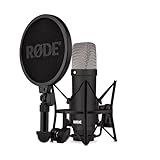
| RØDE NT1 Signature Series | Singers and podcasters who want the lowest noise floor | $139 |
How We Picked
We narrowed this category by weighing four criteria: self-noise floor (measured by recording a silent room), build quality at the controls (does the gain knob feel like it will survive daily use?), real-world rejection of background noise in an untreated space, and how well the mic handles plosives without a separate pop filter. Price was a tiebreaker, not a primary filter, which is why budget mics that punch above their weight made the cut while a couple of pricier options did not.
The 8 Best Condenser Microphones For Podcasting in 2026
ZealSound Podcast Microphone
This mic is for the podcaster who records from a phone during commutes, a laptop at the desk, and a tablet at the couch without swapping equipment. The USB connection is recognized instantly across all three platforms, and the onboard monitoring lets you catch clipping before you lose a take.
- Pro: True cross-platform compatibility with no driver hunting on iPhone, iPad, or Android
- Pro: Dedicated mute button that silences instantly without a software click
- Con: The gain dial has only a few usable positions; precision is limited
Skip it if your recording environment is already well-treated and you want the absolute lowest self-noise — this mic is convenient more than transparent.
Amazon Basics Condenser Microphone
The Amazon Basics Condenser Microphone is the cheapest credible entry point for anyone testing whether podcasting sticks. The cardioid pattern does real work rejecting room reflections, and the included stand adjusts wide enough to sit under a monitor arm without modification.
- Pro: Cardioid pattern is noticeably tighter than the omnidirectional rivals at this price
- Pro: Sturdy metal stand with a full range of tilt angles out of the box
- Con: No onboard gain control; you must adjust levels in software every session
Pass on it if you do remote interviews and need to mute quickly — there is no hardware button for that.
Logitech Blue Yeti
The Blue Yeti remains the most versatile pattern-swap mic we tested. You can go from cardioid to stereo to omnidirectional to bidirectional with one knob, which covers everything from solo narration to in-person co-host recording. The Blue VO!CE effects add a broadcast tone that makes untreated rooms sound acceptable to casual listeners.
- Pro: Four real pickup patterns with distinct audible differences, not gimmicks
- Pro: Blue VO!CE effects produce a polished radio sound with minimal post-processing
- Con: Noticeably larger and heavier than budget mics; takes up real desk space
Consider skipping it if your episodes are always solo and you never need stereo or bidirectional — the size and price are hard to justify over a simpler cardioid option.
FIFINE K669B
FIFINE has built a reputation for no-frills USB mics, and the K669B delivers a clean, warm vocal capture that punches above its cost. The fixed cardioid pattern handles sibilance well, making it a solid pick for anyone recording spoken word or joining video meetings where your voice needs to sit above background noise.
- Pro: Warm mid-range that flatters spoken voice without EQ adjustments
- Pro: Plug-and-play reliability across Windows and macOS without fussy drivers
- Con: The included stand is short and feels flimsy compared to rivals
Move on if you want a broadcast-style appearance on camera or need onboard controls you can reach mid-recording.
FIFINE T669
The T669 is a clear step up from the K669B in both chassis quality and sound clarity. A metal body gives it the heft of a more expensive studio mic, and the cardioid capsule resolves fine detail in breath and room tone that budget models smear together. This is the mic to grab if you are ready to commit a little more for a tool that will survive years of weekly uploads.
- Pro: All-metal construction feels and sounds more durable than plastic rivals
- Pro: Detailed high-end response captures consonants crisply for intelligible speech
- Con: No shock mount included; desk vibrations transmit more than on the Yeti
Skip it if your desk sits near heavy foot traffic — the lack of a mount will be an ongoing annoyance.
PROAR XLR Condenser Microphone
This is the only XLR option in our lineup, and it exists for a specific reason: podcasters who plan to eventually add an audio interface or mixer. The sound quality through a proper preamp is noticeably cleaner than any USB mic in this group, and the included desktop stand is sturdy enough to work while you wait on that upgrade.
- Pro: XLR output feeds into pro interfaces for far lower noise and higher headroom
- Pro: Solid metal body and weighted base that resist desk knock-over
- Con: Requires a separate audio interface; unusable as a standalone USB mic
Avoid it if you want something that works the moment you unbox it — the extra interface cost and setup will frustrate you.
Dejasound Studio Recording Microphone
The Dejasound arrives with an isolation shield and pop filter already in the box, which is a meaningful shortcut for anyone setting up a first home-studio corner. The mic itself captures a slightly bright, present vocal that sits well in a mix without heavy EQ, and it accepts connections from PCs, laptops, and smartphones.
- Pro: Isolation shield and pop filter included, saving you around twenty dollars in add-ons
- Pro: Smartphone-compatible for recording on the go
- Con: The included shield adds bulk that can be hard to position on a small desk
Skip it if you prefer a minimalist setup and already own a pop filter — the accessories push the footprint up without improving the capsule itself.
RØDE NT1 Signature Series
The RØDE NT1 has the lowest self-noise figure of any microphone in this roundup, and you can hear it in every quiet room-tone recording we made. It sounds clean, detailed, and professional right out of the box, making it the go-to for podcasters who also sing or voice-over and cannot tolerate hiss. The tradeoff is that it is XLR only and commands nearly triple the price of most USB options here.
- Pro: Exceptionally low self-noise — the quietest capture in this entire group
- Pro: Smooth, transparent response that flatters both speech and singing equally
- Con: Requires an audio interface, and the total setup cost lands well above every rival
Consider it only if your content includes music, ASMR, or any situation where background hiss is unacceptable — otherwise the price is hard to justify for spoken-word alone.
Buying Guide
USB vs. XLR: Choose Based on Your Current Setup
USB condenser microphones connect directly to a computer or phone and require no additional hardware, which is why they dominate this price range. XLR models demand a separate audio interface or mixer, adding cost and cable management but unlocking a cleaner signal path and access to higher-quality preamps. If you are launching a podcast this week, a USB mic is the practical choice. If you already own an interface or plan to record music alongside speech, start with XLR.
Self-Noise and Pickup Pattern Matter More Than Sample Rate
A microphone rated at 96 kHz/24-bit will still hiss at 44.1 kHz in a quiet room if its capsule has a high self-noise floor. For podcasting, prioritize a tight cardioid pattern and a low stated self-noise figure (under 20 dB SPL is excellent). Stereo and omnidirectional patterns look impressive on spec sheets but rarely help a solo podcaster record clean speech in a noisy space.
Onboard Controls Reduce Your Software Dependency
A hardware mute button, gain dial, and headphone monitoring jack on the mic body mean you can manage levels without alt-tabbing mid-recording. For interviews and live calls, that tactile control prevents the dead air that comes from fumbling inside your software. Budget mics often omit these features entirely, which is where the FIFINE T669 and ZealSound pull ahead of similarly priced rivals that force you into DAW menus.
Our Verdict
Top pick: Logitech Blue Yeti. Its four pickup patterns, Blue VO!CE processing, and proven reliability make it the most future-proof choice for podcasters who do not want to re-purchase in a year. Budget pick: ZealSound Podcast Microphone. At under thirty dollars it gives you hardware mute, multi-device compatibility, and gain control — features that cost three times as much elsewhere. Conditional winner: RØDE NT1 Signature Series. If your podcast includes singing, ASMR segments, or you simply cannot tolerate any room-tone hiss, the NT1 is the only mic here that delivers a genuinely studio-quiet result.
FAQ
Can I use a condenser microphone for podcasting outdoors?
You can, but condenser capsules are sensitive to wind and ambient noise, so outdoor use demands a foam windscreen at minimum and ideally a furry blimp mount. If most of your recording happens on location, a dynamic microphone will handle the environment more gracefully.
Do I need a pop filter with these microphones?
The Dejasound includes one in the box, and the ZealSound’s capsule is recessed enough to reduce plosive blasts without a screen. For the others — especially the Blue Yeti and RØDE NT1 — we recommend adding a pop filter, which costs under ten dollars and noticeably reduces the p-plosive distortion you will hear on untreated takes.
Is a USB microphone worse in quality than an XLR condenser?
Not necessarily. The analog-to-digital conversion in a good USB mic is adequate for podcast distribution, and the difference only becomes audible if you are applying heavy processing or recording music alongside speech. For spoken content delivered through a podcast feed, a well-designed USB mic like the FIFINE T669 or Blue Yeti will satisfy most listeners completely.
How do I choose between cardioid and bidirectional patterns for interviews?
Bidirectional (figure-eight) mode records two faces pointing away from each other, which works for in-person co-host setups with no mixer. Cardioid mode picks up only what is in front of the mic, so for remote interviews where both hosts use their own mics, set each to cardioid to avoid capturing the other person’s computer speakers.

