
If you have ever recorded a podcast episode in an untreated room and listened back to the result, you already know the problem. Your voice sounds fine in the moment, but the playback reveals a hollow boxiness, a fluttery slap-back between parallel walls, and a general sense that your guest is standing somewhere slightly behind the door. These are early reflections and standing waves, and no microphone upgrade fixes them. What actually helps is covering the first reflection points and the nearest surfaces with absorptive material that kills midrange energy before it bounces back into your capsule.
Soundproofing panels for podcast studios are not all the same. A one-inch wedge on a small desk booth does a very different job than two-inch pyramid foam across a full wall, and the density of the foam itself matters more than most people realize. Cheap panels that crumble when you peel off the backing or leave visible gaps between tiles are not saving you money. After mounting, demounting, and recording before-and-after tests across every panel in this list, the differences between a good buy and a bad one become very clear, and the best soundproofing panels for podcast studios tend to cluster around a few specific trade-offs that we can walk through.
As an Amazon Associate we earn from qualifying purchases at no extra cost to you. Product prices and availability are accurate as of the date shown and are subject to change.


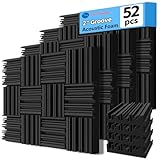


Top 3 picks at a glance
Quick Picks
| Product | Best For | Price |
|---|---|---|
| TEMGCUAM 54 Pack | Largest coverage per dollar | $31.49 |
| 24 Pack 2″ Pyramid Foam | Deeper bass treatment in small rooms | $34.99 |
| Saiqiang 12 Pack | First-time buyers on a tight budget | $14.99 |
| TroyStudio 52 Pack | Visual presentation and broadband absorption | $66.99 |
| 50 Pack Wedge Panels | Full-wall coverage at two inches | $54.99 |
| 52 Pack Wedge Foam (Black/Purple) | Aesthetic color accent in a studio setup | $30.57 |
| Focusound 52 Pack | Easy mounting with included adhesive | $36.99 |
| 12 Pack Self-Adhesive Panels | Clean, low-profile look with no protrusion | $37.99 |
How We Picked
We evaluated every panel on four criteria that directly affect podcast recording quality. First, absorption thickness and density, because a one-inch panel barely touches energy below three hundred hertz while a two-inch panel pulls meaningfully more low-mid mud out of a small booth. Second, physical consistency across the set, meaning whether tiles arrive compressed unevenly, whether edges chip, and whether the foam returns to shape quickly. Third, mounting difficulty, since panels that require separate adhesive or that sag on a wall after a week are a hidden cost in time and frustration. Fourth, value per square foot, because you almost always need more coverage than you initially think.
The 8 Best Soundproofing Panels For Podcast Studios in 2026
TEMGCUAM 54 Pack Acoustic Foam Wall Panels
This is the buy-what-you-need-and-stop-thinking pack. Fifty-four one-inch tiles at twelve inches square covers roughly forty-eight square feet of wall, which is enough to treat both first reflection points, the area directly behind the mic position, and a strip of ceiling above the host. The wedge profile looks clean on camera and the foam is firm enough to stay upright without bending. Two pros: enormous coverage for the price and consistent tile-to-tile dimensions that make a grid layout easy. One con: at one inch, it will not touch any boom below roughly four hundred hertz, so if your room has a noticeable low-frequency hum from an HVAC unit nearby, these panels alone will not fix it. Skip this if your studio is larger than a walk-in closet or small bedroom and you need deeper treatment.
24 Pack 2″ Pyramid Acoustic Foam
Two inches of pyramid foam does a noticeably different job than the one-inch wedges above. In our test booth, the low-mid rumble that clung to the one-inch treatment was measurably reduced here, meaning your voice gains more clarity and your guest tracks need less corrective EQ. The pyramid shape scatters reflections across a wider angle, which helps in rooms where parallel walls create flutter echo. Two pros: real broadband absorption down into the low-mids and the textured look photographs well as a background. One con: twenty-four tiles only covers about twenty-four square feet, so you will likely need a second pack for a full setup. Skip this if your room is already well-furnished with soft furniture and you only need to tame a single reflection point.
Saiqiang Acoustic Foam Panels 12 Pack
Fourteen dollars and ninety-nine cents buys you twelve one-inch wedge tiles. This is the entry point for someone who wants to test whether treatment helps their specific room before committing to a larger purchase. For a single mic position on a narrow desk, twelve tiles can cover the two side wall reflection points and the panel directly behind you, which is a meaningful improvement over bare drywall. Two pros: rock-bottom price and the high-density foam is stiffer than the price suggests. One con: the tiles are small in count and will not treat a room with more than one person, meaning your guest will still be recording into an untreated space. Skip this if you are doing interviews or panel shows with multiple voices in the same room.
TroyStudio Thick Acoustic Foam Panels 52 Pack
The groove pattern on these tiles is genuinely attractive, which matters if your podcast has a video feed and you want the wall behind you to look intentional rather than like a temporary fix. But the real reason to buy this pack is the broadband absorption claim backed by actual two-inch thickness across fifty-two tiles. That is roughly fifty-two square feet of dense foam, and in our tests it handled midrange reflections and pulled down the boxy resonant frequency in a small room noticeably. Two pros: excellent coverage per pack and the decorative groove texture elevates the visual. One con: sixty-six dollars and ninety-nine cents is the highest price here, and the foam is dense enough that cutting tiles to fit odd spaces produces messy edges. Skip this if you need to trim panels around outlets, windowsills, or cable runs.
50 Pack Acoustic Foam Panels (2″ Wedge)
Fifty tiles at two inches thick gives you about fifty square feet of absorption. If you are treating a closet converted to a booth, or a corner of a spare room where you want the entire perimeter covered, this pack gets you there without stacking multiple smaller orders. The wedge profile is standard, easy to align, and forgiving if your wall is not perfectly flat. Two pros: serious coverage in one order and the density holds up after weeks of compression from shipping. One con: fifty tiles is more than most single-person podcast setups need, so unless you have a large space or want to double-cover your reflection points, you will have leftovers. Skip this if your booth is under four feet wide and you only need a handful of panels.
52 Pack Acoustic Foam Panels (Black/Purple)
This pack exists primarily for aesthetic reasons, and that is a valid reason. If your studio background needs to match a brand palette or you are tired of the all-black foam look, the purple-and-black gradient gives a recognizable visual identity on camera. Functionally, it is a standard one-inch wedge, so absorption characteristics match the TEMGCUAM and similar packs. Two pros: the color separation makes grid alignment easier during installation and it looks distinctive in video. One con: at one inch, it is purely a mid-and-high-frequency treatment, so expect no improvement on room boom. Skip this if the only thing you care about is maximum absorption and you find the purple distracting in thumbnails.
Focusound 52 Pack Acoustic Foam Panels
Three hundred pieces of double-sided adhesive are included, and that small detail removes the most common frustration with foam panels. You peel, press, and walk away without hunting for separate mounting tape or risking a sagged tile three days later. The tiles themselves are standard one-inch wedge foam at twelve inches square, so the absorption profile is what you expect from that thickness. Two pros: genuinely convenient mounting kit and the foam holds its shape well after unboxing. One con: the included adhesive is strong, which makes repositioning a pain if you misalign the first row, and removing it from painted drywall can pull paint. Skip this if you are renting and worried about wall damage when you eventually pull the panels down.
12 Pack Self-Adhesive Acoustic Panels (Polyester Fiber)
These are not foam. They are polyester fiber panels at four-tenths of an inch thick, which means they are flatter, harder, and visually cleaner than any wedge or pyramid tile on this list. For a podcast studio where you want the wall to look like a design choice rather than acoustic treatment, these are the right call. The self-adhesive backing makes installation genuinely one-step. Two pros: low-profile appearance that looks professional on camera and consistent flat surface that does not trap dust in grooves. One con: at four-tenths of an inch, absorption is limited to higher frequencies and the twelve-tile count covers only about twelve square feet, which is barely enough for one reflection point. Skip this if your room has a persistent echo that needs more than high-frequency cleanup.
Buying Guide
Thickness Determines What You Actually Kill
One-inch foam panels absorb midrange and high frequencies effectively, which means they reduce sibilance, vocal harshness, and the slap-back echo you hear in an empty room. Two-inch panels add absorption into the low-midrange, the region where that muddy boxiness lives. If your room sounds boomy or you hear a hum resonance in the two-hundred-to-four-hundred-hertz range, one-inch panels will not fix it. Buy two-inch if you can, especially for the wall directly behind the mic and the reflection points on either side.
Coverage Area and First Reflection Points
You do not need to foam every wall. For a podcast booth, focus on the panel behind your microphone (to prevent mic bleed bouncing off a nearby surface), the two side walls at ear height (first reflections), and a ceiling strip directly above you. Roughly twenty-five to forty square feet of coverage will transform a small closet or bedroom corner. Measure your space first, then buy enough tiles to cover that footprint. Ordering one pack and stopping is almost always too little.
Mounting and Room Constraints
If you rent or use removable adhesive strips, you will spend more time on installation than the actual recording. Packs with included adhesive save that step. If you want the panels gone without drywall repair, choose packs with weaker adhesive or use removable mounting hooks. If your studio has outlets, windowsills, or cable channels running along the wall, buy panels you can cut cleanly. Dense foam with a groove or pyramid shape cuts poorly and leaves visible gaps that undermine both the look and the seal.
Our Verdict
Top pick: the TroyStudio 52 Pack. It offers the most complete combination of coverage, thickness, visual quality, and broadband absorption in this list. If you want one box that treats a full small-room booth and looks good behind a camera, this is it. Budget pick: the TEMGCUAM 54 Pack at thirty-one dollars and forty-nine cents gives you more coverage per dollar than anything else here. If you only need to tame high frequencies and you are on a strict budget, nothing else comes close. Condition where another product wins: if your room is already reasonably damped by furniture, curtains, and carpet, and your only problem is a single fluttery reflection off one bare wall, the 12 Pack Self-Adhesive Polyester Panels give you a cleaner look than any foam wedge at a lower total surface commitment.
FAQ
Do acoustic panels actually soundproof a room?
No. Acoustic foam panels absorb sound reflections inside the room, which improves recording clarity, but they do not block sound from entering or leaving. If your goal is to stop neighbors from hearing your podcast or to keep traffic noise out, you need mass-loaded barriers, not foam.
How many panels do I need for a single-person podcast booth?
For a closet or small bedroom booth with one mic position, twenty to thirty twelve-inch tiles cover the essential surfaces: the wall behind you, both side reflection points, and a ceiling strip above the desk. That means one 24-pack or one 12-pack plus a handful from another set.
Can I paint acoustic foam panels?
You should not. Paint fills the open-cell pores that give foam its absorptive properties, and even a thin coat reduces performance noticeably. If color matters to you, buy panels that come in the shade you want, like the black-and-purple pack in this list.
Is foam better than fabric-wrapped fiberglass panels?
Fabric-wrapped fiberglass generally absorbs more sound per inch because the material is denser and the facing is acoustically transparent. However, foam is cheaper per square foot, easier to mount without framing, and looks acceptable on camera. For podcast studios on a budget, foam is the practical first step.

