
Streaming while gaming loads your CPU harder than gaming alone, because software encoding and background tasks pile on top of the game. That extra heat makes CPU cooling a real decision, not an afterthought. The choice usually comes down to a big air cooler versus an all-in-one (AIO) liquid cooler, and each has clear strengths for a streaming build.
As an Amazon Associate we earn from qualifying purchases at no extra cost to you.
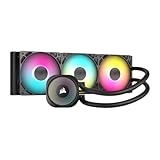

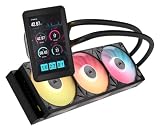

Top 3 picks at a glance
How streaming changes the thermal load
If you encode with your CPU (x264) rather than the GPU, all cores stay busy, pushing sustained loads and temperatures higher than gaming alone. Even with GPU encoding, a streaming PC juggles game, chat, alerts, and capture, keeping the CPU warmer for longer. Sustained heat, not brief spikes, is what your cooler must handle.
Air coolers
A quality dual-tower air cooler moves a lot of heat with a big heatsink and one or two fans. It is cheaper, has no pump to fail, and lasts for years with zero maintenance. The downsides are size, which can block tall RAM or crowd small cases, and the visual, which some builders dislike.
Head-to-head
| Factor | Air cooler | AIO liquid (240-360mm) |
|---|---|---|
| Price | $35-$100 | $90-$200 |
| Cooling headroom | Good to very good | Very good to excellent |
| Noise under load | Low-moderate | Low (bigger radiator) |
| Failure points | Fan only | Pump + fans |
| Lifespan | Very long | 4-6 yrs typical |
| Clearance issues | Height / RAM | Radiator space in case |
Which to choose
For most streaming builds, a strong dual-tower air cooler is the pragmatic winner: it handles a hard-working mid-range or upper mid-range CPU quietly, costs less, and never leaks or loses a pump. Step up to a 280-360mm AIO if you run a high-core-count CPU with x264 encoding, if you want the lowest noise under sustained load, or if a tall air cooler will not fit your case or clear your RAM.
The encoding shortcut
Remember you can sidestep much of the heat by encoding on the GPU with NVENC or a hardware encoder, which offloads the work from the CPU almost for free in quality terms these days. Do that and even a modest air cooler stays comfortable while streaming, which is why many streamers pair GPU encoding with a simple, reliable air cooler.
Case fit and airflow
The best cooler on paper is useless if it does not fit, so measure before you buy. Air coolers have a maximum height spec; compare it to your case’s clearance, and check RAM height too, since tall heatsinks can block memory slots or force low-profile RAM. AIOs shift the problem to radiator space: a 240mm radiator needs two 120mm fan mounts, a 360mm needs three, and not every case has room in the top or front for the larger sizes.
Airflow direction matters as well. With an AIO, mounting the radiator as front intake feeds the CPU cool air but dumps that heat into the case for the GPU; mounting it as top exhaust keeps case air cooler for the GPU but gives the CPU slightly warmer air. For a streaming build where both chips work hard, top exhaust on a roomy case is a balanced default. Air coolers simply exhaust toward the rear fan, which is foolproof. Whichever you choose, pair it with sensible case fans so the cooler is fed fresh air rather than recirculating hot air. Good case airflow often does more for real-world temperatures than upgrading the cooler itself, which is why experienced builders plan the whole airflow path, not just the CPU cooler in isolation.
Frequently asked questions
Will an air cooler be loud while I stream on mic?
A good air cooler runs at moderate fan speeds and, with a sensible fan curve, stays quiet enough that a cardioid mic aimed at your mouth barely picks it up. Cheap coolers spinning at full tilt are louder. Set a gentle fan curve and position the mic close to keep fan noise off your stream.
Do AIO liquid coolers leak or fail often?
Modern sealed AIOs rarely leak, but the pump is a moving part with a finite life, typically 4-6 years, and when it fails cooling stops suddenly. Air coolers have only a fan to replace. For a set-and-forget streaming rig, that simplicity is a real point in the air cooler’s favor.
Bottom line
A dual-tower air cooler handles most streaming builds quietly, cheaply, and reliably, while a 280-360mm AIO makes sense for high-core CPUs, x264 encoding, or tight-clearance cases. Better yet, encode on the GPU to cut CPU heat so an affordable air cooler stays cool and quiet all stream.


