
A compressor is what makes broadcast voices sound smooth and consistent, never disappearing when you lean back or blasting when you get excited. Set it well and you sound polished and easy to listen to; set it wrong and you sound pumped and lifeless. Here is a starting point you can tune by ear.
As an Amazon Associate we earn from qualifying purchases at no extra cost to you.
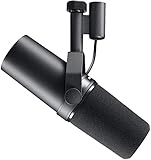


Top 3 picks at a glance
What a compressor does
A compressor automatically reduces the volume of loud parts so the gap between your quietest and loudest moments shrinks. That lets you raise the overall level (make-up gain) so soft speech is clearly audible without the loud bursts clipping. On a stream, this keeps you understandable whether you whisper a reaction or shout at a jump scare.
Sensible starting values
| Control | Starting value | What it does |
|---|---|---|
| Ratio | 3:1 to 4:1 | How hard loud parts are reduced |
| Threshold | -18 to -12 dB | Level where compression begins |
| Attack | 5–10 ms | Preserves natural word punch |
| Release | 60–120 ms | How fast it recovers |
| Make-up gain | To match level | Restores overall loudness |
Tuning it by ear
Start with a gentle 3:1 ratio and lower the threshold until you see about 3–6 dB of gain reduction on normal speech peaks, not more. Keep the attack around 5–10 ms so the front of each word still has natural punch; too fast and your voice sounds dull and squashed. Set release around 60–120 ms so the compressor recovers smoothly between words without audible pumping. Then raise make-up gain until your compressed voice matches a healthy level.
Signs you have overdone it
If your voice sounds flat, breathy, or like it is “breathing” up and down between words, you are compressing too hard. Back off the ratio toward 2:1–3:1, raise the threshold so less of your speech is squeezed, and slow the release slightly. Compression should be felt more than heard: consistent, present, but still natural. A high ratio like 8:1 belongs on a limiter catching rare peaks, not on your everyday voice.
Where it sits in the chain
Put the compressor after your noise gate and EQ. The gate cleans the silence, the EQ shapes the tone, and the compressor then evens out the level of that shaped voice. Adding a limiter at the very end as a safety catch prevents any stray peak from clipping the stream. This order, gate to EQ to compressor to limiter, is the reliable broadcast chain.
Compression as part of the broadcast chain
A compressor does its best work as one stage of a short, ordered chain rather than a magic single fix. Place your noise gate first to clean the silence, EQ next to shape the tone, the compressor after that to even out the level of the shaped voice, and a limiter at the very end as a safety catch for stray peaks. In that order each stage handles what the last one left, and the compressor is smoothing an already clean, well-shaped signal instead of squashing noise and mud along with your voice.
Match the amount of compression to how you actually stream. If you swing wildly between quiet commentary and loud reactions, a slightly firmer ratio and lower threshold keep you consistently audible; if you speak at a steady level, a gentle touch is all you need and heavy compression only flattens your natural dynamics. Watch the gain-reduction meter and keep it dancing in the 3–6 dB range on normal speech, letting bigger reductions happen only on genuine peaks. Compression you can feel but not hear is the goal, and the limiter, not the compressor, should be the thing catching the rare shout.
FAQ
Should the attack be fast or slow?
Medium, around 5–10 ms. A slightly slower attack lets the natural transient of each word through so you keep punch and clarity, while still controlling sustained loudness.
Do I need both a compressor and a limiter?
A compressor smooths everyday dynamics; a limiter is a safety net for rare peaks. Using a gentle compressor plus a limiter at the end gives you a smooth voice that never clips.
Bottom line
Start at a 3:1 ratio, a threshold that yields 3–6 dB of gain reduction, a 5–10 ms attack, a 60–120 ms release, and make-up gain to match level, then trust your ears. Keep it gentle so you sound consistent, not squashed, and place it after your gate and EQ with a limiter as a final safety catch.


