
Nothing kills a stream faster than your camera dying mid-broadcast. If you run a DSLR or mirrorless camera as your webcam, its internal battery was designed for short photo sessions, not four-hour streams. A dummy battery (also called an AC coupler) solves this by feeding constant power into the battery slot. Here is how it works, what to look for, and the mistakes that fry cameras.
As an Amazon Associate we earn from qualifying purchases at no extra cost to you.



Top 3 picks at a glance
What a dummy battery actually is
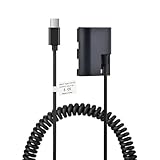
A dummy battery is a plastic shell shaped exactly like your camera’s real battery, with a thin cable running out of the compartment to a power source. Instead of storing charge, it passes external DC power straight into the camera, so the camera thinks it has a battery that never drains.
Two common power sources
There are two main flavors. The first plugs into a wall adapter that outputs the correct voltage (often 7.4V or 8.4V depending on the camera). The second is a USB-C coupler that pulls power from a power bank or PD charger, which is handy for tidy, single-cable setups. Match the type to how you route power to your desk.
Why voltage and current ratings matter
Cameras are picky. A battery rated at 7.2–7.4V nominal wants a coupler and adapter that deliver that range steadily. Too little and the camera refuses to power on; too much or noisy power can damage internal electronics. Always buy the coupler made for your exact battery model, and use the adapter it ships with rather than a random one from a drawer.
| Spec | Typical value | Why it matters |
|---|---|---|
| Output voltage | 7.4V–8.4V | Must match battery’s nominal rating |
| Adapter current | 2A–3A | Covers recording plus screen and IBIS |
| Cable length | 1.5–3 m | Reach from desk to outlet cleanly |
| USB-C PD input | 9V/2A+ | Needed if powering from a bank |
| Kit price | $15–40 | Cheaper than losing a stream |
Installation and cable routing
Most battery doors have a small rubber flap or notch designed to let the coupler cable exit without pinching. Route the cable so it does not tug on the camera when you adjust framing; a tug can pop the coupler loose and shut the camera off. Use a small cable clip on your tripod leg or mount arm to take strain off the connector.
Overheating is still a separate problem
Constant power keeps the camera awake, which means it also runs hot for hours. A dummy battery does not cause overheating, but it removes the natural cooldown that battery swaps used to force. If your camera warns about heat, that is a cooling issue to solve with airflow, not a power issue.
Dummy battery vs a genuine AC adapter
Some camera makers sell a first-party AC adapter kit that includes a matched coupler. These cost $60–120 but guarantee correct voltage and clean power. Third-party couplers at $15–40 usually work fine, but stick to sellers with real reviews for your model, and avoid the cheapest no-name units that skimp on voltage regulation.
Buy the right kit the first time
The most common mistake is ordering a coupler for the wrong battery model, since many camera lines share a body shape but use different battery codes. Confirm your exact battery designation, then buy the coupler and adapter listed for that code. If you want to power from a USB-C power bank instead of the wall, verify the coupler explicitly supports USB-C PD input and that your bank can output the required wattage, or the camera will not power on.
Keep a real battery as backup
Even with a dummy battery, keep one charged genuine battery on hand. If the wall adapter fails or you knock the cable loose in the middle of a stream, you can drop the real battery in and keep going while you sort out the coupler. Treating the dummy battery as your primary and a real cell as your spare gives you both unlimited runtime and a safety net for under $40 total.
FAQ
Will a dummy battery work with a power bank all day?
Yes, if you use a USB-C PD coupler and a bank that can output the camera’s required wattage. A 20,000mAh PD bank can run many mirrorless cameras for several hours, which is useful for IRL or off-desk streaming where an outlet is not handy.
Can I leave the coupler plugged in permanently?
You can, and many streamers do. Just power the camera off between sessions to reduce heat and sensor wear, and unplug the wall adapter during long breaks so it is not sitting under load for days on end.
Bottom line
A dummy battery is the cheapest reliability upgrade a camera-based streamer can make. Buy the coupler built for your specific battery, use a properly rated adapter, route the cable so it cannot yank loose, and you get unlimited runtime for $15–40. Pair it with good airflow and your camera will outlast even your longest marathon stream.


