
As an Amazon Associate we earn from qualifying purchases at no extra cost to you. Product prices and availability are accurate as of the date shown and are subject to change.
Wrinkles in a green screen are the silent killer of good streams. Even a fabric backdrop that looks “flat enough” to the naked eye can produce shadowed creases your chroma key software reads as dark bands, causing edges to shimmer, hair to disappear, and parts of your body to flicker in and out of frame. Streamers often blame their software or lighting when the real problem is physical: a wrinkled surface never presents one uniform shade of green to the camera. The good news is that fixing it takes 10 to 20 minutes, costs almost nothing if you already own the backdrop, and only needs items you likely have at home. This guide walks you through diagnosing the wrinkles, choosing the right removal method for your backdrop type, and keeping your setup smooth for every session.
What You Need
| Item | Why | Optional? |
|---|---|---|
| Handheld garment steamer (1,000–1,800 watts) | The safest wrinkle-removal method for fabric backdrops; steam relaxes fibers without direct contact heat | No, for fabric screens |
| Spray bottle with clean water | Light misting plus gentle tension removes light creases without any heat | Yes |
| Microfiber cloth or lint-free towel | Wipes down the surface and smooths out air pockets on rigid panels | Yes |
| Spring clamps (4–6, 2–4 inch jaw width) | Apply even tension at the edges, which pulls out many wrinkles without heat | No |
| Backdrop stand (6–10 feet wide, rated 10+ lbs) | Lets you hang fabric taut; a sagging hang is the number one cause of new wrinkles | No, for fabric screens |
| Hair dryer on low heat | A backup heat source if you don’t own a steamer; keep it 8–12 inches from the fabric | Yes |
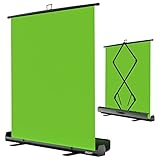
| Collapsible panel (e.g., EMART 58 x 74 inch chroma key panel, $169.99) | Pop-up panels eliminate wrinkle problems entirely — they ship and store flat | Yes, replacement option |
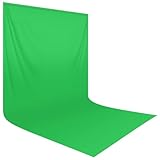
| Replacement budget fabric (e.g., Hemmotop 10 x 20 foot chromakey backdrop, $35.98) | A fresh, large drape that can be re-hemmed and re-hung once wrinkles become permanent | Yes, replacement option |
Step-by-Step
1. Assess the backdrop type and wrinkle severity (2–3 minutes)
Determine whether you have a woven fabric backdrop (muslin or polyester, typically 6 x 9 feet up to 10 x 20 feet) or a rigid/collapsible panel (usually 5 x 6 to 5 x 7 feet). Fabric develops fold-line creases from storage; panels develop curl or shallow dents. Fabric needs steam or tension; panels need to be laid flat or gently warmed. Also check the care label — most polyester backdrops tolerate low heat, but never exceed the manufacturer’s stated temperature limit.
2. Hang the backdrop fully and apply edge tension (3–5 minutes)
Mount the fabric on your stand across its full width. Clip spring clamps every 18–24 inches along the top edge, and add light downward weight (two clamps with small sandbags or water bottles, 1–2 lbs each) at the bottom corners. Many wrinkles disappear from tension alone within 10 minutes. If creases remain after that, move to heat.
3. Steam the fabric (8–12 minutes)
Fill your steamer, let it reach full pressure (usually 45–60 seconds), and work from the top of the backdrop downward in slow vertical passes, holding the nozzle 4–6 inches from the fabric. Pull the fabric gently taut with your free hand as you go. Don’t saturate the material — you want visible steam, not wet patches. A 6 x 9 foot backdrop takes about 6 minutes; a 10 x 20 foot one can take 15. Let the fabric dry for 5 minutes before streaming so you don’t trap moisture against it.
4. Use the water-mist method for light creases (5–8 minutes, no heat)
If you don’t have a steamer, lightly mist the wrinkled areas with your spray bottle — the fabric should look damp, not dripping. Smooth the fabric flat with your palm through a clean towel, re-clamp the edges, and let it hang for 30–60 minutes. Gravity and tension do most of the work. This works best for fresh fold lines, not creases that have set for months.
5. Handle rigid or collapsible panels (3–5 minutes)
Never steam a foam-backed or pop-up panel. Lay it flat on a clean floor, weight the corners with books (about 2–3 lbs each), and leave it for a few hours to overnight for curled edges. For shallow dents, warm the spot with a hair dryer on low for 20–30 seconds from 12 inches away, then press flat under a towel. If you’re upgrading instead, a collapsible option like the EMART 58 x 74 inch panel (about $170) pops open flat in seconds and stores in a 25-inch round bag, sidestepping the problem entirely.
6. Test on camera before going live (3–4 minutes)
Turn on your keying lights (500+ watts total or equivalent LED output across two lights at 45-degree angles), open your streaming software, and check the chroma key preview. Look for dark bands, gradient patches, or edge flicker around your shoulders and hair. If you see banding, there’s still a shadow-casting crease — go back to step 3 on that specific area. Adjust your keying tolerance slightly after steaming, since a flat backdrop lets you use a narrower, cleaner key.
Mistakes to Avoid
Ironing directly on the green surface. A hot iron plate can glaze polyester fibers, leaving shiny patches that reflect light unevenly — worse than the wrinkle. If you must iron, use the lowest setting with a thick cotton towel between the iron and the backdrop.
Steaming too close or too wet. Holding a steamer under 3 inches away or soaking the fabric leaves water spots that dry as darker green blotches and take hours to evaporate.
Hanging fabric with a tight horizontal fold still in it. If the backdrop came folded in a 12-inch square package (common with budget fabrics like the $35.98 Hemmotop 10 x 20 foot drape), one tension-and-hang session won’t fix the deep cross creases. Steam those fold lines individually.
Ignoring lighting while fixing wrinkles. A badly lit flat backdrop still keys poorly. Keep your key lights angled at 45 degrees and add a dedicated backdrop light if you can — even 100–200 watts aimed at the green surface flattens shadows.
Using tape or pins on the visible area. Gaffer tape residue and pin holes both create key artifacts. Clamp only the edges that sit outside your camera frame.
How Often
Do a quick tension check and visual scan every time you set up — about one minute. If your backdrop stays mounted permanently, steam it once every 4–6 weeks or whenever you notice new fold lines forming from air handling or contact. Backdrops that get packed away after each session need a light steaming every 2–3 sessions, since folding reintroduces creases each time. Deep-crease restoration shouldn’t be needed more than twice a year; if it is, your storage method is the problem, not the schedule.
When to Call a Pro or Replace
There’s rarely a reason to hire a professional for wrinkle removal — steam cleaning services charge $50–$100 for what a $30 home steamer does in ten minutes. Consider replacement instead when: the fabric has permanent glazing or scorch marks from heat damage; the green has faded unevenly into yellowish patches (unfixable and fatal to keying); the material has stretched or torn at the grommets; or the backdrop is smaller than your streaming frame, forcing you into tight crops. A quality fabric backdrop under $40 is cheap enough that replacing a degraded one usually beats rescuing it. If you stream multiple times a week and fight wrinkles constantly, switching to a collapsible panel around the $150–$200 range pays for itself in setup time within a couple of months.
FAQ
Can I put my green screen in the dryer to remove wrinkles?
Generally no. Most polyester backdrops specify air dry only; dryer heat can shrink the fabric, melt grommets, and set permanent wrinkles in new shapes. If the care label explicitly allows low tumble heat, use it for 10 minutes with no other items, then hang immediately — but steaming is safer and faster.
How long does it take to steam a large backdrop?
A 6 x 9 foot backdrop takes about 6–8 minutes with a 1,500-watt steamer; a 10 x 20 foot drape takes 12–15 minutes plus 30–60 minutes of hang time afterward to fully dry and settle. Budget an extra 5 minutes for the on-camera test before you go live.
Will wrinkles really ruin my chroma key, or is it just cosmetic?
They genuinely break the key. Wrinkle shadows can shift the green’s color value by enough that your software reads the crease as a different color, producing dark bands, flickering edges, and holes in your key around hair and semi-transparent clothing. A flat backdrop also lets you lower your key tolerance, which preserves detail at your body’s edges.
What’s the best way to store a green screen so wrinkles don’t come back?
Roll, don’t fold. Wrap the backdrop loosely around a 3–4 inch diameter cardboard tube or PVC pipe, green side out, and secure with fabric ties — never rubber bands or clips that dent the material. Store it upright in a dry closet. Rolled storage keeps a fabric backdrop essentially wrinkle-free between sessions, while folding in a 12-inch square guarantees you’ll be steaming again next time.
