
Three microphone styles cover almost all video and content work: the shotgun, the lavalier, and the handheld. Each captures voice a different way, and picking the wrong one for the scene means fighting wind, echo, or handling noise the whole shoot. This breakdown explains how each works, where it shines, and where it fails, so you can match the mic to the content instead of forcing one mic onto every job.
As an Amazon Associate we earn from qualifying purchases at no extra cost to you.


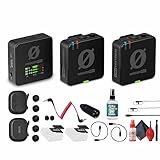

Top 3 picks at a glance
Shotgun microphones
A shotgun mic is highly directional — it hears a narrow cone in front and rejects sound to the sides and rear. Mounted on a camera or a boom just out of frame, it captures a subject’s voice while suppressing room and crowd noise. It keeps the mic out of shot, which filmmakers love, but its reach is often overestimated: a shotgun sounds best fairly close (within a few feet), and moving it far away lets room echo creep in.
Best for
Talking-head video where you want no visible mic, run-and-run interviews with a boom operator, and controlled sets. Weakness: outdoors it needs a serious windscreen, and in a reverberant room a distant shotgun still picks up echo.
Lavalier microphones
A lav is a tiny clip-on mic worn on the chest, 6–10 inches from the mouth. Because it is always close to the source, it delivers consistent level and strong noise rejection regardless of head movement, and wireless versions free the subject to walk anywhere. The trade-offs are that it is visible (or must be hidden), it can catch clothing rustle, and it captures one person per mic.
| Mic type | Pickup | Best use | Main weakness |
|---|---|---|---|
| Shotgun | Narrow, directional | Off-camera boom, sets | Echo when far; wind |
| Lavalier | Close, omni/cardioid | Moving subjects, vlogs | Visible; clothing noise |
| Handheld | Close, cardioid | Interviews, stage, IRL | In frame; handling noise |
Handheld microphones
A handheld is the reporter’s mic: held close to the mouth, cardioid, and built to take a beating. It gives excellent, controllable audio and is intuitive to pass between people for interviews, but it is obviously in the shot and can pick up handling noise if gripped carelessly. Dynamic handhelds also shrug off wind and loud environments better than most lavs.
Run-and-gun reality
For street interviews and events, a rugged handheld or a hidden wireless lav usually beats a shotgun, which struggles with unpredictable distance and wind. For a seated studio piece, a boomed shotgun or a hidden lav gives the cleanest, most invisible result.
Which should you own first?
If you make mostly solo talking videos, a lav or a boomed shotgun is your workhorse. If you interview people on the move, start with a wireless lav (or two) and add a handheld for noisy or windy settings. A single shotgun on camera is a fine starter for vlogging but shows its limits the moment the room echoes or the wind blows.
Redundancy: record a backup track
Whichever mic you use, the professionals’ habit is to never trust a single audio source. Record a safety track — the camera’s built-in mic, a second recorder, or a backup lav — so a wireless dropout, a dead battery, or a bumped gain knob does not cost you the whole shoot. Audio problems are usually invisible until you are editing, and unlike a soft-focus shot, bad audio often cannot be fixed. A cheap second capture that you hope to never need is the difference between salvaging a great take and reshooting it. Build the backup into your setup routine and you will eventually be very glad you did.
FAQ
Does a shotgun mic really pick up voice from far away?
Less than people expect. A shotgun rejects off-axis sound but does not amplify distant sound; the farther it is from the subject, the more room echo it captures. It sounds best positioned close, just out of frame — not across the room.
Why does my lavalier mic pick up clothing rustle?
The mic is brushing against fabric. Clip it so the capsule is not touching clothing, use the included foam or a fur cover, and route the cable to reduce movement. Positioning it slightly higher and using a mic-mounting technique that isolates it from fabric fixes most rustle.
Bottom line
Match the mic to the scene: shotgun for invisible audio on a controlled set, lavalier for moving subjects and consistent close pickup, handheld for interviews and noisy or windy environments. Most creators end up owning a lav plus one other. Buy for the content you actually shoot, and always carry a windscreen for anything used outdoors.


