Riding with music, navigation prompts, or a passenger on the intercom sounds simple until you remember that a helmet is a loud, cramped, vibrating place. Wind roars past the shell at highway speed, gloves make small buttons useless, and any speaker that sticks out can press against your ear. The keyword “best motorcycle helmet speakers” therefore hides several decisions at once: how thin the speakers are, how long the battery lasts, whether you want a two-way intercom, and how the controls behave with winter gloves on. This guide compares eight helmet audio options on exactly those points.
It is for commuters who want podcasts and calls without earbuds, touring riders who share a bike and want to talk to a passenger, and anyone replacing a worn-out headset. We rely on the listed specs only: speaker size, battery hours, water-resistance ratings, microphone design, and system compatibility. Where a title leaves something unsaid, we say so instead of guessing, because helmet audio is one category where a small mismatch, such as a speaker that is too thick for your padding, can ruin a ride.
Our Top Picks

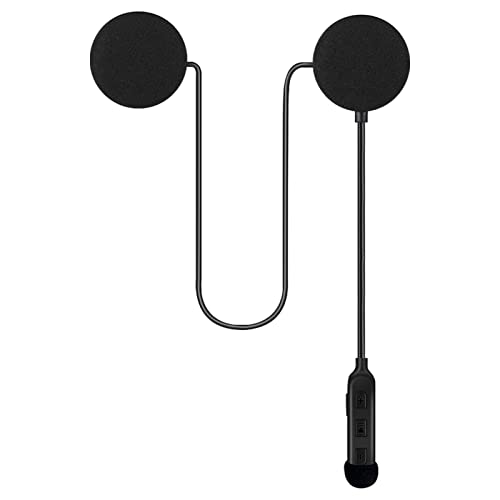
Top 3 picks at a glance
Quick Picks
As an Amazon Associate we earn from qualifying purchases at no extra cost to you.




| Product | Best for | Key spec from the title |
|---|---|---|
| ELIKIDSTO Helmet Headset | Budget solo commuters | 1000mAh battery, 25 hours use, boom microphone |
| Cardo SPIRIT | Two-rider conversations | 2-way intercom, 400m range, 32mm HD speakers |
| JZAQ Helmet Headset | Long rides between charges | 60 hours, waterproof, automatic answering |
| FEYA Helmet Speakers | Siri users in wet weather | IPX6, wake up Siri, two mic types |
| Cardo SPIRIT HD | Group rides wanting louder drivers | 600m range, 40mm HD speakers, intercom |
| Syphon SoundPro | Tight, thin helmet padding | Ultra-thin 9.6mm, glove-friendly controls, IP55 |
| Cardo 45mm Speakers Audio Set | Upgrading an existing Cardo unit | 45mm speakers, FREECOM, PACKTALK, SPIRIT compatible |
| Large-Button Helmet Headset (50 Hours) | Winter riders in thick gloves | 50 hours use, large button for gloves, auto answer |
How to Choose
Speaker size and helmet fit
Speaker diameter changes both sound and comfort. The Cardo options here go from 32mm to 40mm and up to 45mm for the replacement set, and larger drivers generally move more air for fuller bass in a noisy shell. The tradeoff is space: thicker drivers can touch your ears in a snug helmet. The Syphon SoundPro lists an ultra-thin 9.6mm profile specifically for that problem. Before buying, check the ear pocket depth in your helmet. If you can slip two fingers into the recess beside your ear, a standard speaker will fit; if padding is tight, favor a thin design.
Battery hours, charging, and standby claims
Titles quote battery life in hours, with figures of 25, 50, and 60 hours appearing. Treat these as best-case numbers under moderate volume. For a daily commuter who rides an hour each way, 25 hours is roughly a week of use; for a touring rider, a 50 or 60 hour unit may cover a long trip without a plug. Also check how the unit charges, since a USB connection lets you top up from a bike port, while a sealed battery pack limits replacements. Ignore bold standby boasts and focus on talk or play hours.
Water resistance and controls with gloves
Ratings are your best clue to how a unit handles rain. IPX6 means the unit resists strong water jets, while IP55 combines dust resistance with water-jet resistance. Plain “waterproof” claims without a rating are harder to compare. Controls matter just as much: a headset that needs a precise tap fails with winter gloves. Look for large buttons or glove-friendly controls, and consider automatic answering so a call never requires you to reach for a switch at speed.
Intercom, range, and compatibility
If you ride with a passenger or a friend, an intercom matters. Listed ranges of 400m and 600m describe line-of-sight best cases; terrain, traffic, and helmet shells reduce them. Cross-brand connectivity means the unit can pair with some other makers’ intercoms, which helps a mixed group. For solo riders, an intercom is unnecessary cost, so skip it and spend the budget on microphone quality and a better fit. A boom microphone usually picks up your voice more clearly at speed than a tiny pad, but it needs to sit near your mouth, so check the mounting approach.
What should you ignore? Marketing words such as HiFi, loud, or good sound carry no measurable value on their own. A listing that gives a driver diameter, a battery figure, and a water rating is easier to trust than one that only praises the sound. Also be skeptical of noise cancellation claims: at highway speed, wind noise is mostly handled by seal quality, foam covers, and helmet design, not by a chip in the headset. The most reliable way to improve clarity is to position the speakers right over your ear openings, use the supplied foam, and keep the volume moderate. Where do budget models cut corners? Usually on microphone tuning, on documented water resistance, and on firmware support, so a lower-cost unit may sound fine for music but struggle with calls at speed.
Finally, think about installation. Most helmet headsets attach with a clip or adhesive mount on the left side of the shell, with wiring that tucks under the padding. Easy installation is only a benefit if the unit fits your helmet shape, so measure the gap near the cheek pad and confirm the cable length reaches both ears. If you swap helmets often, a clip-on mount is more practical than a permanent adhesive one.
The 8 Best Options
ELIKIDSTO Helmet Headset
This headset promises HiFi sound, noise cancellation, a 1000mAh battery, 25 hours of use, and a boom microphone, with easy installation. It is a straightforward choice for a rider who wants calls and music without an intercom.
- Strength: a 1000mAh battery with 25 hours of use covers a week of short commutes.
- Strength: the boom microphone design helps voice pickup at speed.
- Trade-off: the title does not mention an intercom or a water-resistance rating.
Skip it if you ride in heavy rain or need rider-to-rider talk.
Cardo SPIRIT
The SPIRIT is a single-pack Bluetooth helmet headset with two-way intercom, 400m range, 32mm HD speakers, waterproof construction, and cross-brand connectivity. It fits a rider who wants to chat with one other person.
- Strength: two-way intercom is built in for pairing with a passenger or friend.
- Strength: cross-brand connectivity lets it talk to some other makers’ units.
- Trade-off: 32mm drivers are smaller than the 40mm and 45mm Cardo options.
Skip it if you want louder audio or ride mostly alone.
JZAQ Helmet Headset
The JZAQ headset lists waterproof sports use, hands-free calls, music and call controls, automatic answering, and 60 hours of use. It is a long-life option for riders who hate charging.
- Strength: 60 hours of use is the longest battery figure here.
- Strength: automatic answering removes a distraction when a call arrives.
- Trade-off: the title does not give a waterproof rating, so rain protection is hard to compare.
Skip it if you want an intercom or a quoted IP rating.
FEYA Helmet Speakers
FEYA stresses high battery life, an IPX6 rating, automatic answer, music control, intelligent noise handling, and a wake-up command for Siri. Two microphone types appear in the listing.
- Strength: IPX6 gives a verifiable level of water-jet resistance.
- Strength: Siri wake-up keeps iPhone riders hands-free.
- Trade-off: the title does not state battery hours, only “high battery life.”
Skip it if you need a firm battery figure before buying.
Cardo SPIRIT HD
The HD version steps up to a 600m intercom range and 40mm HD speakers, while keeping waterproof construction and cross-brand connectivity. It suits riders who want better sound in a group.
- Strength: 40mm speakers promise fuller sound than the 32mm base model.
- Strength: 600m range is the longest intercom range listed.
- Trade-off: larger drivers can crowd a snug helmet.
Skip it if your helmet padding is tight or you never use an intercom.
Syphon SoundPro
Syphon’s SoundPro focuses on thin Bluetooth speakers at 9.6mm, with glove-friendly controls and an IP55 rating. It answers the fit problem directly.
- Strength: the ultra-thin 9.6mm profile suits helmets with limited ear room.
- Strength: glove-friendly controls and IP55 resistance suit all-weather riding.
- Trade-off: thin drivers usually give up some bass compared with larger units.
Skip it if you want booming sound or a built-in intercom.
Cardo 45mm Speakers Audio Set
This is a speaker set rather than a full headset, listed as compatible with FREECOM, PACKTALK, and SPIRIT series communicators. It targets owners who want bigger drivers on an existing unit.
- Strength: 45mm speakers are the largest listed for richer sound.
- Strength: it fits several Cardo lines, giving upgrade flexibility.
- Trade-off: it does nothing on its own; you need a compatible communicator.
Skip it if you do not already own a Cardo communication system.
Large-Button Helmet Headset (50 Hours)
This unbranded headset lists good sound, loud output, 50 hours of use, a large button for gloves, automatic answering, and fast, stable connection. It is built for simple, practical riding.
- Strength: the large button works with gloves.
- Strength: 50 hours of use and automatic answering suit commuters.
- Trade-off: the title offers no water-resistance rating or intercom.
Skip it if you ride in wet climates and need a verifiable rating.
Which One Fits Your Situation
You ride two-up and want to talk
The Cardo SPIRIT is the natural fit. A two-way intercom with cross-brand connectivity handles the passenger conversation without extra setup.
Your helmet has very little ear room
Go with the Syphon SoundPro. Its 9.6mm thickness exists to solve this exact problem, and the glove-friendly controls are a bonus.
You commute daily and hate charging
The JZAQ Helmet Headset lists 60 hours of use, the longest here. Add automatic answering and you can leave the phone in your pocket.
You already own a Cardo unit and want better sound
The Cardo 45mm Speakers Audio Set upgrades the drivers without replacing the whole communicator, as long as your model is in the FREECOM, PACKTALK, or SPIRIT families.
Common Mistakes
- Buying thick speakers for a snug helmet, then feeling pressure on the ears after an hour.
- Trusting a battery figure as continuous playback at high volume rather than a best case.
- Paying for an intercom when you almost always ride alone.
- Choosing small buttons and then fumbling with winter gloves at a stoplight.
- Assuming “waterproof” without a rating is equal to IPX6 or IP55 resistance.
Related guides
- When I Turn On Record Game In Background On Gamebar. Gamebar Crashes, What Do I Do?
- How To Reduce Background Noise On A Streaming Microphone
- Poly Computer Accessories Company Streaming Evaluation
Frequently Asked Questions
Are helmet speakers legal and safe to use?
Rules about helmet audio differ by region, so check local law before you ride. Safety-wise, keep volume low enough to hear traffic, and use auto-answer so you never touch the phone on the road.
Do I need a boom microphone?
A boom microphone usually captures your voice better at speed, but it must sit close to your mouth. Pad-style microphones are simpler to mount and can work in full-face helmets with the right placement.
What is the difference between IPX6 and IP55?
Both resist water jets, but IP55 also lists protection against dust. Either is a step above a vague waterproof claim, and both are suited to rain commuting.
Is 2026 a good time to buy an intercom unit?
Cross-brand connectivity is now common on mid-range units, so you are less tied to a single maker. Decide based on range, speaker size, and fit rather than waiting for a specific feature.