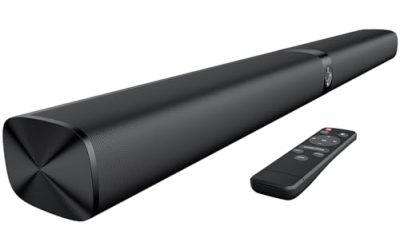
Dorm speakers face a different test than living-room speakers. The room is small, the walls are thin, a roommate may be studying six feet away, and the desk is already crowded with a laptop and a lamp. The real decision is not how loud a speaker can get but how well it behaves at moderate volume, how easily it moves from desk to shower shelf to quad lawn, and whether it survives a spilled drink or a backpack toss.
This guide is for students packing for move-in day in 2026 who want a single speaker that handles study playlists, movie nights, and the occasional hallway hangout. It compares seven portable Bluetooth models and one powered bookshelf pair, so you can decide whether you want something that travels or something that stays put on the desk.
Our Top Picks

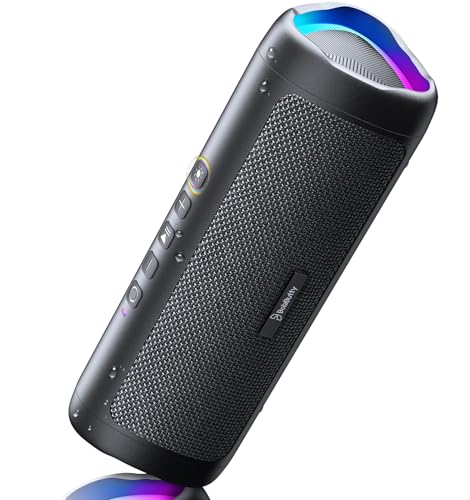
Top 3 picks at a glance
Quick Picks
As an Amazon Associate we earn from qualifying purchases at no extra cost to you.



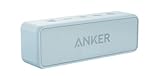
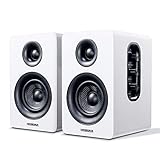
| Product | Best for | Key spec from the title |
|---|---|---|
| Anker Soundcore 2 | All-around dorm speaker | 24-hour playtime, IPX7, 12W stereo, wireless stereo pairing |
| 20W Bluetooth Speaker (IPX5) | Louder small-room sound | 20W, IPX5, up to 24H playtime, TWS pairing |
| JBL Go 3 | Pocket-size travel | IP67 waterproof and dustproof, 5 hours of playtime |
| JBL Go 4 | Updated JBL mini | Up to 7 hours plus 2 hours with Playtime Boost |
| DUDGSIS 20W Stereo | Lights and wired input | 20W, IPX7, RGB light, 15H, Bluetooth 5.3, AUX input |
| Anker Soundcore 2 (second listing) | Buying a stereo pair | Wireless stereo pairing, 12W stereo |
| Anker Soundcore 2 (third listing) | Gift or roommate share | 24-hour playtime, IPX7 |
| Sanyun SW208 Bookshelf | Desk setup with a wired source | 3″ active speakers, 24bit DAC, USB and 3.5mm AUX |
How to Choose
Power and room size
A dorm room needs less power than most spec sheets suggest. Anything in the 10W to 20W range fills a double room at normal volume. Higher numbers mostly buy headroom for parties. Compare wattage only within the same speaker type, because peak and continuous figures are often mixed in listings. If a title lists a very large wattage on a small box, treat it as a marketing peak rather than a promise of clean loud sound. Distortion at high volume is where budget speakers usually cut corners, so a modest wattage from a known maker can sound cleaner than a bigger number from an anonymous brand.
Battery life and charging
Look for at least 12 hours if you plan to carry the speaker around campus, and 20 hours or more if you hate charging. Shorter playtimes of 5 to 7 hours are acceptable for pocket models that live in a bag. A USB-C port is easier to share with phone chargers than a micro-USB port. Powered bookshelf speakers skip batteries entirely but need an outlet, which is scarce in older dorms. Also check whether the speaker can play while charging, because a dead battery during a study marathon is a common annoyance and a lot of buyers only discover it after the return window closes.
Water and dust rating
IPX5 handles splashes and rain; IPX7 survives brief submersion; IP67 adds dust protection. For a dorm, IPX5 is already enough for a spilled drink, while IPX7 or IP67 matters if the speaker travels to the beach, a pool, or a tailgate. Ignore the word “waterproof” without a rating beside it, and remember that ports left open can still let moisture in, so close any cover after charging near a sink.
Pairing and connectivity
True wireless stereo pairing lets two identical speakers act as a left and right channel, which fills a room far better than one unit. Check the Bluetooth version: 5.0 and newer give steadier connections and lower latency. An AUX input helps if your laptop or TV lacks Bluetooth, and RGB lighting is a nice-to-have that drains battery faster, so ignore it unless you like the look. Voice assistant and app features are also worth ignoring in a dorm, where the quickest tools are a power button and a volume key that always work.
The 8 Best Options
Anker Soundcore 2
This is the all-rounder for students who want one speaker to cover desk, dorm lounge, and weekend trips. The title lists 24-hour playtime, an IPX7 rating, 12W stereo sound, wireless stereo pairing, and a BassUp mode for extra low-end punch.
- 24-hour playtime means a full week of study sessions between charges
- IPX7 rating tolerates splashes and brief dunks at the pool
- Trade-off: 12W is modest if you plan to host crowded room parties
Skip it if you need a wired input for a TV or want an oversized speaker with room-filling volume.
20W Bluetooth Speaker (IPX5)
An unbranded-style option for students who want more listed power at a budget tier. The title lists 20W HD sound, IPX5 water resistance, up to 24H playtime, and TWS pairing, with marketing copy aimed at home, party, outdoor, camping, and beach use.
- 20W rating and up to 24H playtime are strong on paper for this size
- TWS pairing allows a stereo setup with a second unit
- Trade-off: IPX5 is splash-proof only, so do not submerge it
Skip it if you want a recognizable brand with a long track record for support and warranty service, since an unfamiliar maker can be harder to reach if the unit fails mid-semester.
JBL Go 3
The Go 3 is the pocket-size pick for students who prioritize carry-everywhere convenience. The title lists punchy bass, an IP67 waterproof and dustproof rating, and 5 hours of playtime, suited to a bag, a bike rack, or a shower shelf.
- IP67 rating protects against both dust and water
- Very small footprint leaves desk space free
- Trade-off: 5 hours of playtime means frequent top-ups
Skip it if you want all-day playback or a speaker that fills a room by itself, because a pocket-size driver can only move so much air.
JBL Go 4
The Go 4 continues the ultra-portable formula with JBL Pro Sound and punchier bass. The title lists up to 7 hours of playtime plus 2 additional hours with Playtime Boost, and the blue finish suits a dorm shelf that wants a color accent.
- Longer listed battery than the Go 3, with a Playtime Boost mode
- Ultra-portable design that fits in a coat pocket
- Trade-off: still short of the 24-hour figures on larger competitors
Skip it if your priority is stereo pairing details or a wired AUX input, since neither appears in the title.
DUDGSIS Portable Bluetooth Speaker
For students who like a bit of lighting on the desk, this model lists 20W stereo output, IPX7 waterproofing, RGB light, 15H playtime, Bluetooth 5.3, TWS pairing, and an AUX input. It is the most feature-rich portable in the group on paper.
- AUX input lets you connect a laptop, game console, or older device
- Bluetooth 5.3 and TWS pairing give a modern connection and stereo option
- Trade-off: the RGB light may drain battery faster during use
Skip it if you share a room with someone who sleeps early, since a lit speaker can be distracting.
Anker Soundcore 2 (Second Listing)
This is the same Soundcore 2 model offered under a second listing, and it is the obvious route for a stereo pair. With wireless stereo pairing and 12W stereo sound in the title, two units split left and right across a desk or a shelf and fill a small room far better than one.
- Pairing two identical speakers creates a true left-right setup
- Keeps the IPX7 rating and 24-hour playtime for each unit
- Trade-off: you carry and charge two speakers instead of one
Skip it if you only need background music at low volume. A single unit will do, and the savings can go toward a case or a power bank for the pair.
Anker Soundcore 2 (Third Listing)
A third listing of the same model works as a shared or gift purchase, since the specs are identical: 24-hour playtime, IPX7, 12W stereo, Bluetooth 6, and BassUp. Roommates can split the purchase of one speaker for the room, or a family member can buy one as a move-in present.
- One speaker for a shared room avoids doubling up on gear
- Long playtime and IPX7 suit a speaker that gets passed around
- Trade-off: shared speakers invite taste clashes and volume disputes
Skip it if you want a different design or an AUX input for a TV.
Sanyun SW208 Bookshelf Speakers
Not portable, but the stand-out for a desk setup. The title lists 3-inch active bookshelf speakers, Bluetooth 5.0, a built-in 24bit DAC, 60W carbon fiber drivers, USB and 3.5mm AUX input, and 3D surround processing.
- Two-speaker layout gives a wider stereo image than a single portable
- USB and 3.5mm AUX inputs suit laptops, consoles, and TVs
- Trade-off: needs an outlet and desk space, and it will not travel
Skip it if you want to move music between rooms or carry it outside.
Which One Fits Your Situation
You share a small double room
The Anker Soundcore 2 is the safe middle ground. Its 12W output suits moderate volume, and 24-hour playtime keeps it from becoming a charging chore for either roommate.
You carry music everywhere
Pick the JBL Go 4 if you want the smallest body with a Playtime Boost mode, or the JBL Go 3 if you want the IP67 dust and water rating on a shower shelf.
You game or watch movies at your desk
The Sanyun SW208 gives you a stereo pair with USB and AUX inputs, which is better for a laptop or console than a single battery speaker.
You want more output for dorm hangouts
The DUDGSIS 20W model lists RGB lighting, IPX7 water protection, and an AUX input, which suits a social room better than a pocket speaker. It is also the one to look at if you want a speaker that doubles as mood lighting on a shelf.
Common Mistakes
- Buying on wattage alone and ignoring battery life, IP rating, and size
- Assuming a bookshelf pair will work when the room has no free outlet
- Skipping the IP rating when the speaker will live near sinks, showers, or drinks
- Forgetting the dorm’s quiet-hours policy and buying more volume than the room can use
- Leaving out an AUX input when the laptop or TV has no Bluetooth
Related guides
- When I Turn On Record Game In Background On Gamebar. Gamebar Crashes, What Do I Do?
- How To Reduce Background Noise On A Streaming Microphone
- Poly Computer Accessories Company Streaming Evaluation
Frequently Asked Questions
Is 12W enough for a dorm room?
Yes, for most rooms at normal listening volume. It handles study music and movies; only party use needs more headroom. Dorm walls and neighbors will usually limit volume before the speaker does.
Should I buy two speakers and pair them?
If the speaker lists wireless stereo pairing or TWS, a pair gives a wider soundstage than one unit. It costs more and means two chargers to manage.
Do I need IP67 for a dorm?
No. IPX5 covers spills, and IPX7 covers a pool or beach trip. IP67 adds dust protection, which matters more outdoors.
Bluetooth speaker or bookshelf speakers?
Choose Bluetooth if you want portability and no cables. Choose a powered bookshelf pair if you spend most hours at one desk and want stronger stereo separation.