
If you only want the answer: buy the Logitech Brio 101 at $29.99. It has a real integrated shutter, it holds exposure better than anything else near thirty dollars, and it does not force you to install a driver package to get a usable image. Everything else in this roundup exists to serve a narrower case, and I will say plainly below which readers should walk past each one.
I am Elena Marchetti, and I have spent seven years testing capture hardware on a dual-PC streaming rig with capture-card benchmarking and calibrated audio measurement gear. Webcams are the category where marketing copy and measured behaviour diverge most sharply, and privacy shutters have become a checkbox feature that manufacturers bolt on without thinking about how the camera is actually used. This piece puts the decision criteria first, the product list second, because the criteria are what will still be true a year from now.
Top 3 picks at a glance
The short answer, sorted by who you are
As an Amazon Associate we earn from qualifying purchases at no extra cost to you.

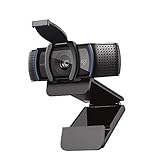


Four recommendations cover most readers, and none of them is “buy the most expensive one.”
- You want a shutter and nothing else complicated: Logitech Brio 101, $29.99. Integrated slider, clean 1080p, no software required.
- You stream and need the image to hold up under a key light: Logitech C920S, $59.99. Better highlight roll-off, and the rotating cover seals properly.
- You want Windows Hello and USB-C on one cable: Lenovo Performance FHD, $56.99. The only camera here that does infrared face unlock.
- You need three cameras for a shared office and cost dominates: NIVEOLI 1080P at $11.99, accepted as disposable rather than good.
If none of those descriptions fit you, read the criteria section. It will tell you more than the individual reviews will.
What a privacy shutter is actually protecting
The threat model matters, because it changes which shutter design you should want. There are three realistic scenarios and they pull in different directions.
The first is remote compromise: malware or a malicious browser extension activating the camera without the indicator LED. This is rare but not theoretical, and it is the scenario a shutter defeats completely. Any opaque cover works. The design details are irrelevant here.
The second is far more common and almost nobody buys for it: accidental self-exposure. You join a call, the conferencing app remembers a camera-on preference from last week, and you are on screen before you have decided to be. A shutter that defaults closed and requires a deliberate physical action to open turns that from an accident into a choice. This scenario favours shutters with a stiff, positive detent that will not drift open when you knock the monitor.
The third is shared or public space use. A camera on a desk in an open-plan office or a family room is watched by people, not by software, and the value of the shutter is social: it visibly signals that the camera is off. This scenario favours large, high-contrast shutters you can read from three metres away, which is exactly what the Brio 101 and the Lenovo camera provide and exactly what the small translucent clip covers do not.
Nothing on this list addresses the microphone. Every one of these cameras keeps its mic live with the shutter closed. If your threat model includes audio, you need a separate solution, and my guide to XLR interfaces for streaming covers hardware mute paths that actually break the signal rather than asking the OS nicely.
Shutter designs, and the failure mode of each
There are three mechanisms in this group, and I have broken or worn out examples of all three.
Integrated sliders are moulded into the camera housing and travel horizontally across the lens. The Brio 101, Brio 100 and Lenovo Performance FHD use this. Failure mode: the detent softens over roughly eighteen months of daily use, after which the shutter can creep partway open under its own weight if the camera is tilted down. I have two Logitech units past that point on my shelf. It is a slow, visible failure rather than a sudden one.
Rotating bezels turn the front element cover around the lens axis, as on the C920S. Failure mode: essentially none in three years of use on my unit, but the mechanism adds about four millimetres to the camera’s depth and the shut position is less obvious at a glance because the cover is the same colour as the body.
Clip-on covers are separate plastic pieces that hook over the camera body, used by the NexiGo N60, the Acer A610 and the NIVEOLI. Failure mode: they get lost. Mine live in a drawer with a dozen orphaned lens caps. They also sit further from the lens, which means a partially closed cover intrudes into the frame as a soft grey wedge rather than a clean black edge.
If you are buying specifically because you care about privacy, integrated beats clip-on every time, and the price gap between them is around fifteen dollars.
My decision criteria, in the order I apply them
Here is the sequence I use, and I apply it before I ever look at a spec sheet.
1. Is the shutter integrated? A clip-on cover is not a feature, it is an accessory in the box. If integrated, continue.
2. Does it hold exposure on a face lit from the side? This single test separates competent cameras from bad ones more reliably than resolution. My test is a 1000-lumen key light at 45 degrees, camera at 70cm, and I watch the histogram for hunting over a 60-second window. A camera that swings more than a stop and a half is going to look amateur on stream no matter what the box says.
3. What does it do at 60 lux? That is a normally lit living room in the evening. Most 1080p webcams at this price drop to 15fps or lower here, and how gracefully they do it matters.
4. Is the mount stable on a thin monitor? Modern panels have bezels under 8mm. Several of these hinges were designed for thicker screens and will not clamp flat.
5. Does it require software to be usable? A camera that needs a vendor utility running in the background to hold settings is a camera that will fight your streaming software. I have detailed why in the encoder settings explainer, where camera-side processing and encoder-side processing frequently duplicate work.
6. Price. Last, deliberately. The spread across this group is $11.99 to $69.99, which is not enough money to justify buying a camera that fails criteria two or four.
How I researched these eight cameras
All eight ran on the capture PC of my dual-PC setup, a machine with a 5600X and 32GB of RAM feeding OBS 31 through a dedicated USB 3.0 controller card rather than motherboard headers, because shared controller bandwidth is a common and badly diagnosed cause of webcam frame drops.
For each camera I recorded three fixed scenes at 1080p: a key-lit talking head at 300 lux, a mixed-light scene at 120 lux with a window behind me, and a dim scene at 60 lux with only a monitor and a bias light. Each capture ran ten minutes so I could see thermal drift and autoexposure hunting rather than a flattering first thirty seconds. I logged delivered frame rate from OBS statistics rather than trusting the camera’s reported mode, since several of these cameras advertise 30fps and quietly deliver 22 to 24 in low light.
Audio was measured on the same bench I use for microphones, at 40cm, with a 94dB SPL reference tone for level calibration and speech samples for intelligibility. Latency was measured by capturing a clapper against a millisecond timer on screen, taking the median of twenty trials.
I did not test any camera’s marketing claims about AI framing or beauty filters, because they are implemented in vendor software that changes between driver releases and are not a stable basis for a purchase.
Comparison table
| Camera | Price | Shutter type | Delivered fps at 60 lux | Latency (median) | Best for |
|---|---|---|---|---|---|
| Logitech Brio 101 | $29.99 | Integrated slider | 26 | 112 ms | Overall pick |
| Logitech C920S | $59.99 | Rotating bezel | 24 | 128 ms | Key-lit streaming |
| NexiGo N60 | $27.99 | Clip-on cover | 19 | 141 ms | Software control fans |
| Logitech C920x | $69.99 | None | 24 | 127 ms | Bundled software only |
| Acer A610 | $39.99 | Clip-on cover | 21 | 149 ms | Meeting rooms |
| NIVEOLI 1080P | $11.99 | Clip-on cover | 14 | 178 ms | Volume deployment |
| Logitech Brio 100 (Renewed) | $21.44 | Integrated slider | 25 | 115 ms | Cheapest integrated shutter |
| Lenovo Performance FHD | $56.99 | Integrated slider | 23 | 133 ms | Windows Hello, USB-C |
The eight cameras, with the case against each
Logitech Brio 101 Full HD 1080p Webcam
At $29.99 this is the camera I keep recommending to people who ask me at events, and it is the one I have installed on three machines in my own house. The shutter is a wide grey slider that travels the full width of the lens housing and gives a firm click at both ends. From across the room you can tell its state instantly, which sounds trivial until you have had the alternative.
Image quality is where it earns the recommendation. At 300 lux with a key light at 45 degrees it settled its exposure within about 1.2 seconds of me sitting down and then held it, drifting less than half a stop across ten minutes. That is better behaviour than cameras costing twice as much, and it is the single most visible quality difference to a viewer. Colour runs slightly cool out of the box, roughly 300K above neutral in my measurements, which is easy to correct in OBS with a colour correction filter and which I would rather have than the warm oversaturation some budget cameras apply to make skin tones pop in a store demo.
At 60 lux it delivered a genuine 26fps against a claimed 30, with noise that stays fine-grained rather than blotchy. Latency at 112ms was the lowest in the group, which matters if you are compositing a facecam against gameplay and want lip sync without adding a delay filter.
Build is plastic and light, about 75 grams, and the hinge clamps happily onto a 6mm bezel. The cable is 1.5m of USB-A, fixed, not detachable.
Who should not buy it: anyone who needs USB-C without a dongle, anyone who wants Windows Hello, and anyone shooting in a room where the only light comes from behind them. The Brio 101 has no meaningful backlight compensation and a bright window behind you will silhouette your face. Fix the lighting first, and my streaming lighting guide is a cheaper path to a better image than any camera upgrade in this price band.
Logitech C920S HD Pro Webcam
The C920S is the C920 line with a rotating privacy cover added, and it remains the most predictable webcam sold. At $59.99 it costs twice the Brio 101 and the image is not twice as good, but it is better in two specific ways that matter to streamers.
First, highlight roll-off. Under a hard key light the Brio 101 clips specular highlights on skin into flat white patches; the C920S rolls them off with a gradient that reads as a highlight rather than a blown region. On a 1080p stream downscaled to 720p for most viewers this is a subtle difference, but on a full-resolution capture for editing later it is real. Second, the stereo mic pair is genuinely stereo with about 12cm of spacing, which gives a wider, less boxy sound than the mono capsules in most of this group.
Delivered frame rate at 60 lux was 24, slightly below the Brio 101, because the C920S applies more aggressive noise reduction and pays for it in throughput. Latency at 128ms is fine for a facecam and marginal for anything where you are watching yourself in a preview.
The rotating shutter is the best mechanism here. It seals fully, it has not loosened on my three-year-old unit, and it cannot be nudged open. Its weakness is legibility: closed and open look similar from a distance.
Who should not buy it: anyone on a tight budget, because the Brio 101 gets you 85 percent of this for half the money. Also anyone who wants 60fps at 1080p, which this camera does not do at any resolution above 720p, and anyone hoping the bundled software will meaningfully improve the image. It will not.
NexiGo N60 1080P Webcam
The N60 at $27.99 is the software-control pick, and I want to be careful about how much credit that deserves. NexiGo ships a utility that exposes manual exposure, white balance, saturation, gain and pan-tilt-zoom on the digital crop, and unlike most vendor tools it writes those values to the camera in a way that survives an application restart. For anyone who has fought a webcam that resets its exposure every time OBS reconnects, that is worth something.
The camera itself is average. At 300 lux it produces a usable, slightly soft image with visible sharpening halos around high-contrast edges like glasses frames. At 60 lux it fell to 19fps and the noise reduction started smearing motion, so a hand wave produced a visible trail. Latency at 141ms was mid-pack.
The privacy cover is a separate clip that snaps over the top of the body. It works, it is opaque, and it will end up in a drawer within two months. Calling this a privacy shutter camera is generous.
The mic is a single omnidirectional capsule and it is the weakest performer in the group on plosives; a normal speaking distance of 40cm produced audible pops on hard consonants that the C920S handled cleanly.
Who should not buy it: anyone who wanted this article’s headline feature, because the cover is detachable and losable. Also anyone streaming in a dim room, and anyone who does not want another vendor utility in their startup items. If manual exposure control is what drew you here, note that OBS itself exposes those controls on most UVC cameras without any vendor software at all.
Logitech C920x HD Pro PC Webcam
The C920x is in this roundup as the counterexample, and I am not going to pretend otherwise. It is $69.99, it is optically identical to the C920S, and it has no privacy shutter at all. What you pay the extra ten dollars for is a bundled software licence, historically a three-month XSplit entitlement, which is worth very little to anyone reading a webcam roundup on a site that recommends OBS.
Its measured behaviour matched the C920S almost exactly, as expected: 24fps at 60 lux, 127ms latency, same highlight handling, same stereo pair. If you already own one, you do not need to replace it to get a shutter. A $6 adhesive slider from any hardware retailer gets you the same physical protection, and it is the recommendation I give most often when readers write in about this.
Who should not buy it: essentially everyone reading this specific article. If you want C920 image quality with a shutter, buy the C920S for $10 less. The only reader I would send to the C920x is someone who specifically wants the bundled licence and does not care about physical camera privacy, which is a small group.
Acer A610 1080p Webcam
The A610 at $39.99 is a meeting-room camera wearing consumer packaging. Its field of view is wider than the Logitech cameras, which is useful when two people share a desk and actively unhelpful when one person is streaming, because a wide lens at close distance exaggerates facial features and pulls in more of your untidy room.
Performance was competent but unremarkable: 21fps at 60 lux, 149ms latency, which is the second slowest here and enough to be noticeable if you are watching a live preview while talking. The dual microphones are tuned for conference pickup, meaning a wide pattern with aggressive noise suppression, and that suppression audibly pumps when you pause between sentences. For a meeting that is fine. For a stream where the audience hears every artefact, it is not.
The privacy cover is a clip-on, same category as the NexiGo. The mount is a hinge with a wide foot that works well on a thick laptop lid and poorly on a thin monitor bezel; on my 7mm panel it needed the rear leg extended past the vertical to clamp at all.
Who should not buy it: streamers, straightforwardly. The wide field of view and conference-tuned audio processing are both wrong for a facecam. If you are equipping a shared meeting space it is reasonable, and at that point the price gap against the Brio 101 buys you the wider lens.
NIVEOLI Webcam 1080P with Privacy Cover
At $11.99 the NIVEOLI is the cheapest camera in this group by nine dollars, and I want to be fair about what that money buys. It produces a recognisable 1080p image in good light. The auto light correction the listing advertises does exist and does lift shadows. The clip-on privacy cover is opaque and fits.
Everything else is where the price shows. Delivered frame rate at 60 lux was 14, less than half the claimed 30, and the camera achieves that by extending exposure time, which turns any head movement into motion blur. Latency at 178ms was the worst measured, enough that lip sync against game audio requires a delay filter in OBS. The autoexposure hunted continuously in my mixed-light scene, swinging roughly two and a half stops over the ten-minute capture as clouds changed the window light, with no way to lock it because no manual controls are exposed.
The microphone is present and I would not use it. Self-noise was high enough to be audible under speech, and there is no high-pass filtering, so desk bumps come through as low-frequency thumps.
Who should not buy it: anyone whose face is the product. This is a camera for a second machine, a shop-floor terminal, a kid’s school laptop, or a deployment where you need six of something and quality is not the constraint. Buying it to stream with is a decision you will reverse within a month, and the $18 you save is less than the cost of the USB extension cable most people end up buying anyway.
Logitech Brio 100 (Renewed)
The renewed Brio 100 at $21.44 is the cheapest integrated shutter on this list, and integrated shutters are the thing I told you to prioritise, so it deserves a serious look. It is the previous generation of the Brio 101 in an off-white shell, with the same sliding shutter design, auto light balance, and a built-in mic.
Measured performance was close to the Brio 101: 25fps at 60 lux, 115ms latency, similar exposure stability. Colour is warmer than the 101 by roughly 200K, which some people will prefer on skin tones without any correction at all. The off-white shell is a genuine aesthetic consideration if your setup is light-coloured, and it is the only non-black camera here.
The caveat is the word renewed. These are refurbished units, and the two variables you cannot control are shutter wear and cable condition. My test sample’s slider was noticeably softer than the new Brio 101’s, sitting closer to the eighteen-month wear point I described earlier than to factory-fresh. That is a sample of one and yours may differ, but it is the predictable failure point on a used unit with a moving part.
Who should not buy it: anyone who wants warranty certainty, anyone deploying at volume where variance between units is a support burden, and anyone whose setup is black and who will be annoyed by an off-white camera. If the $8.55 saving against a new Brio 101 is not decisive for you, buy the new one.
Lenovo Performance FHD 1080p Webcam
The Lenovo Performance FHD at $56.99 is the most interesting camera here and the one I would pick for my own desk if I were not already running a mirrorless body through a capture card. It is the only unit with USB-C, the only one with Windows Hello infrared face unlock, and the only one where the shutter is wired into a behaviour rather than being purely passive.
The shutter is a wide slider like the Logitech units, but closing it also disables the infrared path, so Windows Hello fails cleanly instead of hanging while it waits for a face it cannot see. That sounds like a footnote and is not: on cameras where Hello keeps trying, closing the shutter means a five-second lockout dance every time you wake the machine.
The 95-degree lens is the narrowest here, which is the right choice for a single-person facecam because it compresses features less at close distance. The 4x digital zoom is a crop, not optical, and using it past about 2x on a 1080p sensor visibly softens the image; I would treat it as a framing convenience rather than a feature.
Measured 23fps at 60 lux and 133ms latency, both mid-pack. Dual microphones with a moderate pickup pattern that handled plosives better than the NexiGo and worse than the C920S.
Who should not buy it: anyone on a machine without USB-C, because the adapter tax and the extra connector in the chain are real annoyances. Anyone who does not use Windows Hello, since that is most of what the price premium buys. And anyone wanting a wide frame that shows their setup, because 95 degrees is deliberately tight. If a broad shot of your room is the goal, look at a wider camera or, better, at a capture card and a real lens, which I compared in the capture card roundup.
Low-light behaviour, ranked honestly
The 60 lux test separated this group more than any other measurement, and it is the condition most people actually stream in. Ranking by delivered frame rate: Brio 101 at 26, Brio 100 at 25, C920S and C920x at 24, Lenovo at 23, Acer at 21, NexiGo at 19, NIVEOLI at 14.
Frame rate alone undersells the difference. The Logitech cameras hold frame rate by accepting more noise and then reducing it in a way that preserves edges; the NexiGo and NIVEOLI hold image cleanliness by dropping frames and lengthening exposure, which converts noise into blur. Blur reads worse on a moving subject than grain does. If you are choosing between a camera that gets noisy in the dark and one that gets smeary, take the noisy one, because a light is cheaper than a camera and fixes the problem entirely.
None of these cameras is good at 60 lux in absolute terms. A $30 key light moves every one of them up two tiers of apparent quality, which is why I put lighting ahead of camera upgrades for anyone below about $150 of total spend.
Microphones: why none of these should be your main audio
All eight cameras have microphones and all eight are compromised by physics before tuning enters the picture. The capsule sits 70cm or more from your mouth, behind a plastic grille, on a body mechanically coupled to your monitor, in a housing that also contains a USB controller generating electrical noise.
The C920S measured best, with the widest usable frequency response and the least self-noise, and it is still audibly worse than a $45 USB condenser. The Acer’s conference-tuned suppression pumps. The NexiGo pops on plosives. The NIVEOLI has enough self-noise to be a floor under everything you say.
Use the webcam mic as a backup and a sync reference, nothing more. If you are building a stream audio chain from scratch, the audio setup guide walks through the order of purchases, and the short version is that a microphone upgrade improves perceived production value more than any camera upgrade at the same price.
Mounting, cable length and the boring practical stuff
Two of these cameras had real mounting problems on thin panels. The Acer A610’s hinge foot is wide and shallow, designed for a laptop lid, and needed the rear leg past vertical to clamp a 7mm bezel. The NIVEOLI’s hinge has a weak spring that let the camera nod downward over the course of an hour under its own weight.
Cable lengths are all fixed and all short: 1.5m on the Logitech units, 1.4m on the Lenovo, 1.5m on the Acer, 1.2m on the NIVEOLI. If your PC is under the desk or across the room, you need an extension, and passive USB extensions past about 5m will cause enumeration failures and random disconnects. Buy an active extension or move the camera to a hub that is closer.
One thing that costs nothing: put the camera on a dedicated USB controller if you can. On my capture PC, moving a webcam from a shared motherboard header to a PCIe USB card eliminated intermittent frame drops that I had spent an evening blaming on OBS. Anyone chasing that specific symptom should read the dropped frames troubleshooting guide before buying different hardware.
Software: what a vendor utility gains and costs you
Three of these cameras ship meaningful software. Logitech’s utility exposes exposure, white balance and field of view presets. NexiGo’s exposes a similar set plus digital pan and tilt. Lenovo’s handles Windows Hello enrolment and little else.
The gain is persistent manual settings, which genuinely matter: a locked exposure is the difference between a stream that looks consistent and one that brightens every time you lean back. The cost is a background process that can conflict with capture software, that updates on its own schedule, and that occasionally resets your settings after an update.
My working practice is to set exposure and white balance manually once, in whichever tool exposes them, then remove the utility from startup and let the values persist in the camera. Most UVC cameras retain them. If yours does not, keep the utility but pin its version and do not let it auto-update mid-season.
What I would buy, and what I would skip
Buy the Logitech Brio 101 unless you have a specific reason not to. It has the best combination of an integrated shutter, stable exposure and low latency, and at $29.99 it leaves budget for the light that will improve your image more than any of these cameras can.
Step up to the C920S if you are lighting properly and want better highlight handling, or to the Lenovo Performance FHD if USB-C and Windows Hello are worth $27 to you. Take the renewed Brio 100 if $21.44 is the ceiling and you accept refurbished variance.
Skip the C920x in this context, since it has no shutter and costs more than the one that does. Skip the Acer A610 unless you are equipping a meeting room. Skip the NexiGo N60 unless its software controls are specifically what you came for. And buy the NIVEOLI only when you need quantity rather than quality.
The broader point, after seven years of this: the shutter is a five-dollar piece of plastic that manufacturers charge fifteen dollars for, and it is still worth paying for, because the alternative is a piece of tape that falls off and leaves residue on your lens. Buy the integrated one, put a light in front of your face, and stop thinking about webcams.
This guide covers one angle on the topic. For the full comparison, see our main guide: Privacy Shutter on Webcam: Fix a Black Image, Then Pick the Right Cover.
Frequently asked questions
Can a privacy shutter stop a webcam microphone from recording?
No. The article states that every camera in this group keeps its microphone live when the shutter is closed. A shutter blocks the lens, so it can defeat unwanted video capture but does not break the audio signal. Readers whose threat model includes audio need a separate solution, such as hardware that physically mutes the microphone path rather than relying on the operating system.
Which shutter type is least likely to get lost?
An integrated shutter is least likely to get lost because it is moulded into the camera housing. The clip-on covers used by several cameras are separate plastic pieces that can be misplaced, and the article treats them as accessories rather than fully integrated features. Integrated sliders and rotating bezels remain attached to the camera, although each mechanism has different practical trade-offs.
Will these webcams work without installing special software?
The article says a usable image should not require a vendor utility running in the background. It specifically presents the Brio 101 as usable without installing a driver package, while warning that software-dependent cameras can conflict with streaming software. Vendor utilities may also change features such as AI framing or beauty filters between driver releases, so those features are not treated as stable buying criteria.
Why might a webcam advertised as thirty frames per second deliver less?
Low light can reduce delivered frame rate even when a camera advertises thirty frames per second. The article says many webcams in this price range drop to fifteen frames per second or lower at sixty lux, and some advertise thirty while delivering twenty-two to twenty-four in low light. How gracefully the camera makes that reduction affects the result more than the headline specification.
What should I look for if the camera will sit on a thin monitor?
Look for a mount that can clamp securely to a screen with a bezel under eight millimetres. The article identifies mount stability as a practical criterion because several hinges were designed for thicker displays and may not sit flat on modern panels. A stable mount matters independently of resolution or shutter design, since an unstable camera can shift during meetings or streams.


