
Buying storage for raw video footage sounds simple until you realize the wrong choice costs you either money or footage. Most buyers make the same handful of mistakes: they buy capacity instead of speed, they assume any SSD will handle video well, they forget that camera cards and desktop storage are completely different purchases, and they treat backup as an afterthought. A card that records fine on a mirrorless camera may choke on a cinema camera writing 800 Mbps ProRes RAW. A cheap portable drive that “works” for documents can drop frames during long writes.
This guide breaks down what actually matters when you’re building a storage workflow for raw video — from in-camera cards to archive — so you spend money where it counts and skip where it doesn’t.
As an Amazon Associate we earn from qualifying purchases at no extra cost to you. Product prices and availability are accurate as of the date shown and are subject to change.



Top 3 picks at a glance
Decide These 3 Things First
1. What bitrate does your camera actually write? A Sony FX3 shooting XAVC S-I writes around 600 Mbps (75 MB/s). A Blackmagic 6K shooting Blackmagic RAW at 6K 24p writes roughly 50–90 MB/s; in ProRes 422 HQ at 6K it can exceed 180 MB/s. Your in-camera card must sustain that write rate with headroom — card makers’ advertised speeds are read speeds, which are always higher.
2. Where does footage live after the shoot? A working drive (fast, 1–2TB, you edit from), a backup drive (large, cheap per terabyte, offsite or at least off-desk), and an archive (cold storage). Most solo creators can start with a two-drive setup; a three-copy workflow with one offsite copy is the professional standard.
3. How much footage do you generate per project? At 400 Mbps, one hour of footage is roughly 180 GB. Shoot 10 hours a month and you’re producing close to 2 TB monthly. Doing this math before buying anything prevents the most common regret — undersized cards and a working SSD full within weeks.
Capacity: Buy for Your Worst Shoot Day
Capacity is the most misunderstood spec because the right answer differs by storage tier:
- In-camera cards: Rule of thumb — one card should hold at least 1.5× a typical shoot day. For a camera writing 400 Mbps, a 256GB card holds roughly 80–85 minutes. That’s tight for a wedding or event day; 512GB is the safer choice. For heavy codecs like ProRes RAW, expect 512GB to hold 60–90 minutes at common settings.
- Working SSD: 1–2TB handles most solo projects. If you edit multicam or 4K+ ProRes, 2TB keeps you from offloading mid-project.
- Backup/archive: These follow a different price curve — 4–8TB desktop HDDs cost $100–$180, while 4TB of portable SSD capacity runs $250–$400. Buy HDD for archive, SSD for editing.
Don’t fill cards past roughly 90%; some cameras slow down or misbehave on nearly-full media, and you lose wiggle room for codecs that balloon at higher frame rates.
Speed Ratings: What the Numbers on the Card Actually Mean
Manufacturers advertise read speeds because they look impressive, but video cares about write speed. Decode the labels:
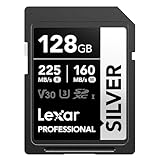
- V30 / V60 / V90 (SD cards): guaranteed minimum sustained write of 30, 60, or 90 MB/s. A V30 card like the Lexar 128GB Silver (225MB/s read, V30, U3) is fine for 4K30 at 100–150 Mbps but will not sustain a 400 Mbps camera. V60 is the sensible baseline for 4K 10-bit shooters; V90 for high-bitrate or 6K work.
- CFexpress Type B: Required for cinema-style cameras and flagship mirrorless bodies writing 600–1,700 Mbps. A card like the ProGrade Digital 512GB CFexpress 4.0 Type B (Gold) is built for sustained writes that SD simply can’t touch — this is the tier where a $279.99 card is justified by a camera that demands it. Buying CFexpress for a camera that takes SD is wasted money.
- External SSDs: Look for sustained write, not peak read. A drive advertising 1,000MB/s reads — like the Sandisk 1TB Creator Phone SSD — is well above what USB video editing needs, but confirm the sustained write figure (usually 600–900 MB/s on quality USB 3.2 Gen 2 drives) since cheap drives throttle after 20–60 seconds of continuous transfer.
Budget rule: match the card tier to your camera’s requirement plus ~50% headroom. Anything faster than that is comfort, not necessity — except that faster cards also offload quicker, which matters when you’re dumping 512GB at midnight.
Build and Durability: Cards Get Abused
Video storage lives in pockets, camera bags, and luggage, so physical construction is a genuine spec:
- SD cards: Look for a rated operating temperature range of at least -13°F to 185°F (-25°C to 85°C) and shock resistance figures around 1,500–5,000 G for reputable lines. IPX7 (water immersion) ratings appear on premium cards and are worth it for outdoor shooters.
- CFexpress cards: Heavier and more rigid by design (roughly 38.5 × 30 × 3.8 mm for Type B); the metal shell protects the connector but a bent pin in a camera slot is still the #1 failure mode. Carry cards in a hard case, not loose.
- Portable SSDs: Drop resistance ratings of 3 meters (about 10 feet) are common on creator-focused drives, and some offer IP55 dust/water resistance. Silicone or rubberized shells survive bag life; bare aluminum looks premium but dents and transmits shock.
- Connectors: USB-C on both ends, and check the included cable actually supports the drive’s speed — USB 3.2 Gen 2 (10 Gbps) needs a properly rated cable, not whatever is in the drawer.
Performance in Practice: Thermals, Offload, and Edit Smoothness
Two performance issues bite video shooters that spec sheets undersell:
Thermal throttling. Portable SSDs transferring 200GB+ continuously slow down as they heat — sometimes to 300–400 MB/s mid-copy. Drives with aluminum bodies or heat-spreading designs sustain better; if you routinely move full cards, prioritize drives that publish sustained (not just peak) speeds. Similarly, CFexpress cards in a hot camera during 8K recording can throttle; the premium card tiers handle this better than budget ones.
Offload time is a workflow cost. At 400 MB/s effective transfer, a 512GB card takes about 22 minutes to clear. A 1,000 MB/s SSD and matching card reader cut that to under 10 minutes. If you offload daily, the speed premium pays back in hours saved per month. Buy a dedicated card reader with USB 3.2 Gen 2 (10 Gbps) or Thunderbolt — a $30–$60 reader often matters more than the drive upgrade it unlocks.
Editing straight off external drives: 4K multitrack editing wants sustained 200–400 MB/s plus good random reads. Any decent NVMe-based portable SSD manages; hard drives (80–200 MB/s) will stutter on multicam 4K. Don’t edit off SD cards — wear and speed make it a losing proposition.
Price Tiers: What Each Dollar Buys
Budget ($15–$60 per card, $80–$130 per SSD): V30 SD cards like the Lexar 128GB Silver at $60 (or the 256GB at $114.99) cover 4K30 standard-bitrate shooting. Entry portable SSDs work as scratch drives but often throttle. Fine for hobbyists and B-cam roles.
Mid ($60–$150 per card, $130–$250 per SSD): V60 cards, 1TB portable SSDs like the Sandisk Creator at $199.99, and solid readers. This is the sweet spot for most working shooters: reliable sustained writes, decent thermal design, real warranties.
Premium ($200+ per card, $250+ per SSD): CFexpress cards like the ProGrade 512GB at $279.99, V90 SD, and high-capacity NVMe portables. Justified only when your camera’s bitrate or your daily offload volume demands it — buying here for a camera that tops out at 150 Mbps is a poor allocation.
Warranty and Data Recovery Support
Storage fails, so read the warranty like a spec:
- Memory cards: Reputable brands offer limited lifetime or long-term warranties (10 years to lifetime on premium lines; 3–5 years on budget lines). Note that warranties cover the card, not your footage.
- SSDs: Expect 3–5 year limited warranties on quality portable drives, often with a TBW (terabytes written) rating. For video workloads, a 600–1,500 TBW rating is more than enough.
- Data recovery: Some premium brands include or partner on recovery services — genuinely valuable if you’ve ever quoted a client a delivery date. If your footage is your income, favor brands with real recovery programs over anonymous imports.
Spec Checklist
| Spec | Budget | Mid | Premium |
|---|---|---|---|
| In-camera card | 128–256GB SD, V30 ($15–$115) | 256–512GB SD, V60 ($60–$180) | 512GB CFexpress or V90 SD ($200–$350) |
| Sustained write | 30–45 MB/s | 60–130 MB/s | 700–1,400 MB/s |
| Working drive | 500GB–1TB portable SSD ($70–$130) | 1–2TB portable SSD ($130–$250) | 2–4TB NVMe portable ($250–$500) |
| SSD sustained write | 400–600 MB/s (throttles) | 600–900 MB/s | 1,000–1,800 MB/s |
| Archive drive | 2–4TB desktop HDD ($60–$100) | 4–8TB desktop HDD ($100–$180) | 8TB+ NAS or multi-bay ($300+) |
| Interface | USB 3.2 Gen 1 (5 Gbps) | USB 3.2 Gen 2 (10 Gbps) | USB4 / Thunderbolt (20–40 Gbps) |
| Drop rating | Unrated | ~3 m (10 ft) | 3 m + IP55 |
| Warranty | 3 years | 5 years | 5 years–lifetime, recovery support |
Red Flags
- Advertised speed with no class rating. A card claiming “300MB/s” with no V60/V90 marking is quoting burst read; skip it for video.
- Counterfeit risk. Cards bought from third-party marketplace sellers at 40% below street price are the most common source of lost footage. Buy from the brand or authorized dealers.
- No sustained-write spec on SSDs. If a manufacturer publishes only peak read, assume throttling.
- Drives bundled with unbranded cables or readers. Often the bottleneck in the whole chain.
- “Backup drive” with no second copy. A single external drive is not a backup; it’s a point of failure.
- Cards reformatted in the computer. Always format in the camera; mismatched formatting is a leading cause of corrupt clips.
FAQ
Do I really need V90 or CFexpress for 4K?
Depends on the codec. 4K24 at 100–150 Mbps runs comfortably on V60 and often V30. 4K 10-bit at 400–600 Mbps, ProRes, or RAW formats need V90 SD or CFexpress. Check your camera’s manual for its bitrate at your usual settings and buy one tier up.
Can I edit video directly off an external SSD?
Yes, if it’s an NVMe-based SSD with sustained writes above roughly 500 MB/s over USB 3.2 Gen 2. This is a common and legitimate workflow, especially for laptops. Don’t attempt it on hard drives or budget DRAM-less SSDs with multicam 4K timelines.
What’s the cheapest reliable backup setup?
A 4–8TB desktop hard drive ($100–$180) paired with your working SSD gives you two copies for under $350 total. Add a cloud tier ($6–$12/month for 2TB class plans) or an offsite copy for irreplaceable work. Hard drives are ideal here because archive storage rewards price per terabyte, not speed.
How long do memory cards last with heavy video use?
SD and CFexpress cards are rated in program/erase cycles — roughly 500 to a few thousand full-write cycles for quality cards. A 512GB card written daily would take years to approach its limit. Real-world failures are overwhelmingly physical damage and counterfeits, not wear, which is why case discipline and reputable sellers matter more than cycle anxiety. By the time card prices settle through 2026, replacing aging cards every few years is cheap insurance anyway.


