
Top 3 picks at a glance
The Short Answer
To determine the correct size boom arm for your desk, you must match the arm’s maximum reach with your desk’s depth and your monitor setup. For a standard 30-inch deep desk, you need a medium-to-large boom arm with a total reach of 32 to 37 inches to comfortably clear your monitors and reach your mouth. If you have a shallower desk (24 inches deep or less), a compact boom arm with a 28-inch reach or a low-profile boom arm is ideal.
Additionally, weight capacity is just as critical as physical length. A standard entry-level boom arm typically supports up to 3.3 pounds, while professional, heavy-duty spring-damped models can carry up to 4.4 pounds without sagging. Always ensure your combined microphone, shock mount, and pop filter weight falls safely within your chosen arm’s rated limits.
As an Amazon Associate we earn from qualifying purchases at no extra cost to you. Product prices and availability are accurate as of the date shown and are subject to change.
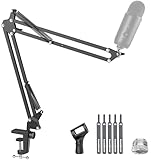


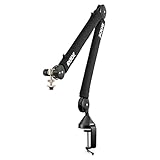
Standard Sizes
Microphone boom arms generally fall into four distinct sizing categories. Selecting the right category depends on your physical desk footprint, aesthetic preferences, and budget.
| Boom Arm Category | Total Reach (Horizontal/Vertical) | Weight Capacity | Recommended Desk Depth | Average Price Range |
|---|---|---|---|---|
| Compact / Entry-Level | 27 to 30 in (68 to 76 cm) | 1.5 to 3.3 lbs (0.7 to 1.5 kg) | Under 24 in (60 cm) | $20 to $35 |
| Mid-Range Standard | 30 to 35 in (76 to 89 cm) | 3.0 to 4.0 lbs (1.3 to 1.8 kg) | 24 to 30 in (60 to 76 cm) | $40 to $70 |
| Low-Profile | 26 to 29 in (66 to 74 cm) | 3.3 to 4.0 lbs (1.5 to 1.8 kg) | 24 to 32 in (60 to 81 cm) | $50 to $90 |
| Professional Studio | 35 to 38 in (89 to 96 cm) | 2.4 to 4.4 lbs (1.1 to 2.0 kg) | 30 in and wider (76 cm+) | $100 to $150 |
Entry-level models, such as basic scissor-spring arms priced around $24.99, offer a shorter reach and are perfect for smaller, dedicated writing desks. Upgrading to a mid-range standard arm with integrated cable management (typically priced around $49.99) provides a cleaner look and a sturdier, longer reach of roughly 35 inches. Low-profile models (ranging from $50 to $90) sit flat to the desk surface and slide under monitors, while professional studio arms (priced over $100) offer maximum extension and heavy-duty internal spring dampening for large workspaces.
How to Measure Your Space
Before purchasing a boom arm, taking precise measurements of your workspace ensures you will not experience clearance issues or limited range of motion. Follow these steps to size your desk setup:
- Measure Desk Depth: Run a tape measure from the back edge of your desk (where the clamp will sit) to the front edge where you sit. If your desk is 30 inches deep, your boom arm needs at least 32 inches of total reach to extend over your monitors and sit comfortably in front of your face.
- Check Desk Thickness and Under-Desk Clearance: Most C-clamps require a flat lip of at least 2 to 3 inches on the underside of the desktop. Measure your desktop thickness; standard clamps support thicknesses from 0.5 inches up to 2.3 inches. If your desk has a metal support frame or privacy panel blocking the edge, you may need a grommet mount instead.
- Calculate Monitor Clearance Height: If you plan to route a standard top-down boom arm over your monitors, measure the distance from the desktop to the top of your screens. Standard dual-stage boom arms need to mount at least 15 to 20 inches high at the elbow joint to clear typical 27-inch displays.
- Weigh Your Audio Gear: Use a kitchen scale to weigh your microphone, shock mount, and pop filter together. A heavy microphone like the Blue Yeti weighs roughly 1.2 pounds on its own, but adding a heavy-duty metal shock mount can push the total package over 2 pounds, requiring a robust arm.
By Room or Use Case
Gaming and Streaming Setups
Gamers and streamers require an unobstructed view of their monitors and a clear sightline to their webcams. A low-profile boom arm, like the FIFINE BM88 (priced around $56.99), is highly recommended for these environments. These arms sit low to the desk and extend forward underneath your monitors, keeping the microphone below your chin and out of your field of view. This design prevents the arm from blocking your face on camera while ensuring you have full visibility of your screens during intense gameplay.
Professional Home Office & Podcasting
As remote work and high-definition video conferencing continue to dominate home office designs heading into 2026, keeping a clean, professional background is more critical than ever. For a dedicated home office or podcast studio, a professional studio arm like the RØDE PSA1+ (priced around $112) provides the ultimate combination of reach, stability, and silence. Its internal spring damping allows you to adjust the mic mid-meeting without sending loud vibrations through the audio channel, and its 37-inch reach easily wraps around multi-monitor office setups.
Compact Bedrooms & Study Nooks
If you are working from a small bedroom nook with a desk depth of 20 to 24 inches, space is at a premium. A compact, entry-level boom arm like the standard InnoGear Mic Stand (priced around $24.99) is the most practical choice. Its smaller footprint allows you to fold the arm tightly against the wall when not in use, freeing up valuable desktop space for textbooks, laptops, or writing materials.
Common Sizing Mistakes
Many buyers focus solely on price and overlook critical physical compatibility factors. To avoid returns, watch out for these common sizing errors:
Ignoring the Desk Lip: Many modern desks feature beveled edges, built-in drawers, or metal reinforcing ribs directly underneath the desktop. If your desk does not have a flat, square edge of at least 2 inches deep, a standard C-clamp will slip or fail to attach. Always check your desk’s underside construction before choosing a clamp-on model.
Underestimating Cable Length: When you route your microphone cable through a boom arm with integrated cable management channels, you lose a significant amount of cable slack. A standard 6-foot USB or XLR cable is often too short once threaded through a 35-inch boom arm and routed down to a floor-bound PC. Plan on purchasing a 10-foot cable to ensure you have enough slack for full arm rotation.
Buying Too Much Reach: Purchasing a heavy-duty 37-inch studio arm for a tiny 24-inch desk will result in a cluttered, awkward workspace. The excess metal tubing will constantly bump into walls or monitors. Match the scale of your arm to the scale of your desk.
FAQ
Can a boom arm be too heavy for a glass or particleboard desk?
Yes. Heavy-duty boom arms combined with heavy microphones exert concentrated torsional force at the clamp point. Clamping a heavy arm directly onto a tempered glass desk can shatter it. For cheap particleboard or hollow-core desks (like paper-filled cardboard desks), the pressure can crush the desktop material over time. If using these surfaces, use a wooden reinforcement block to distribute the clamping force, or choose a lightweight compact arm.
What is the difference between standard and low-profile boom arms?
Standard boom arms use a high-rise, dual-section scissor design that mounts to the back or side of your desk and reaches up and over your monitors. Low-profile boom arms sit close to the desk surface (usually under 4 inches high) and extend horizontally underneath your line of sight. Low-profile arms are excellent for clean camera views, while standard arms are better for reaching over large desktop obstacles.
Do I need a shock mount, and how does it affect the size I need?
A shock mount suspends your microphone in elastic bands to isolate it from desk vibrations (like typing or bumping your coffee mug). While highly recommended, shock mounts add 2 to 4 inches of physical length and up to half a pound of weight to your setup. You must factor in this extra weight and physical clearance when choosing your boom arm’s weight capacity and reach.
How do I know if my microphone will fit the boom arm’s threading?
Almost all commercial boom arms ship with standard dual-threading options. They feature a native 3/8-inch thread or include a 5/8-inch adapter. This makes them universally compatible with popular microphones like the Blue Yeti, Shure SM7B, and various HyperX or Fifine models. Always verify that the adapter is included in the box before purchasing.


