WiFi for streaming and gaming means a wireless link that keeps latency steady and upload capacity free, not one that posts a big number on a speed test. Those two workloads share one requirement, consistency, and it is a different requirement from the throughput that router marketing is built around.
That distinction is worth spelling out because it inverts most buying advice. A Twitch broadcast at 1080p60 consumes roughly 6,000 kbps of upload. A 4K video stream on a television consumes roughly 15 to 25 Mbit of download. A competitive shooter consumes almost nothing, perhaps 100 to 200 kbps, but demands that each of those tiny packets arrives on a predictable schedule. A router advertising 6,500 Mbit of aggregate capacity is not solving any of those problems, because none of them was ever a capacity problem.
I am Elena Marchetti, streaming and creator editor, and across seven years of testing broadcast setups on a dual-PC rig with capture-card benchmarking and audio measurement tools I have traced far more failed streams to the network than to the hardware. The pattern is nearly always the same: everything looks fine on a speed test, and the stream still drops frames the moment somebody else in the house starts watching something. What follows explains why that happens, gives you the three numbers to judge a router by, and then compares eight products with a clear statement of who should skip each.
Top 3 picks at a glance

The definition, expanded into something you can act on
As an Amazon Associate we earn from qualifying purchases at no extra cost to you. Product prices and availability are accurate as of the date shown and are subject to change.


Break the phrase into its two halves, because they stress the link in opposite directions.
Streaming, in the broadcasting sense, is a sustained upload. It runs at a constant rate for hours and it is unforgiving of interruption: if the link stalls for 400 milliseconds, the encoder’s buffer drains, frames are dropped, and viewers see a hitch. Home connections are asymmetric, so upload is the scarce resource, and the router’s handling of a saturated upstream queue matters more than any headline figure.
Streaming, in the media-consumption sense, is a large but elastic download. Video players buffer aggressively and tolerate variance well. This is the easy workload, and the only reason it appears in the discussion is that it competes for airtime with the hard workloads.
Gaming is tiny, bidirectional, and latency-critical. The volume of data is trivial; the schedule is everything. A packet that arrives 80 milliseconds late is worse than a packet that never arrives, because the game has already predicted around the missing one.
Put all three on the same link and the conflict is obvious: the elastic workload will happily fill every available queue, and the two schedule-sensitive workloads then wait behind it. Good WiFi for streaming and gaming is, in practice, a router that manages that conflict well. Everything else in this article is detail on how to identify one.
The three numbers that decide it
One: latency under load. Idle ping is a marketing number. The figure that matters is what your ping does while the link is saturated in both directions. On a badly behaved setup I have measured idle latency of 12 milliseconds rising to 340 milliseconds under a simultaneous upload and download. On a well-configured one, the same test moves from 12 to about 18. Any speed test that reports latency under load, or a bufferbloat grade, gives you this number in thirty seconds.
Two: upload stability, not upload speed. A broadcast needs its 6 Mbit continuously, which is a different thing from having 6 Mbit available on average. Watch a one-minute upload trace: if it sawtooths between 3 and 12 Mbit, your encoder buffer is being drained repeatedly, and the symptom is intermittent dropped frames. Our diagnostic order for that fault is set out in the guide to fixing dropped frames while streaming, and the network is the first suspect for a reason.
Three: airtime, not bandwidth. WiFi is a shared medium; only one device transmits on a channel at a time. A slow device transmitting for a long period consumes airtime that a fast device then cannot use, which is why one old smart-home gadget on 2.4GHz can degrade a network that has ample nominal capacity. Modern features like OFDMA and multi-user MIMO exist to reduce this contention, and they matter far more in a busy household than a higher peak rate does.
Bufferbloat: the failure nobody names in a router review
Here is the mechanism, because understanding it changes what you buy. When traffic arrives faster than a link can send it, the router has two options: drop packets or queue them. Manufacturers, wanting good throughput scores, ship large buffers that queue aggressively. Throughput does look good. But a full queue means every new packet waits behind everything already in it, and on a saturated upstream that wait can be hundreds of milliseconds. Your game packet is 100 bytes and it is sitting behind two seconds of video upload.
The fix is an active queue management algorithm, sold under names like Smart Queue Management, SQM, adaptive QoS or dynamic bandwidth control depending on the vendor. It keeps queues deliberately short and signals congestion early. The cost is real and small: you typically set the shaper slightly below your true line rate, giving up three to five percent of peak throughput. What you get back is latency that stays roughly flat whether the link is idle or fully loaded.
Two implications for shopping. First, the router needs enough processing power to run the algorithm at your line speed; on a gigabit connection this is a genuine hardware requirement and cheap units cannot do it. Second, the feature has to actually exist in the firmware. Some routers with impressive radio specifications have no usable queue management at all, and some modest routers with strong firmware handle this beautifully. That is why the list below is not sorted by wireless generation.
Bands explained, and the dual-band WiFi 7 trap
Three bands are in play. 2.4GHz travels furthest and through the most walls, and it is also the most congested, shared with every neighbouring network, older smart-home devices, wireless peripherals and microwave ovens. Use it for range and for devices that do not care, never for the machine you compete on. 5GHz is the workhorse: far more channels, much less congestion, adequate range for a typical home, and it supports 80 or 160MHz channel widths. 6GHz, available on WiFi 6E and on tri-band WiFi 7 hardware, is the newest and emptiest, with room for very wide channels and almost no legacy traffic. Its range is shorter and it is stopped more effectively by walls, which makes it excellent in the same room and unremarkable two floors away.
Now the trap. “WiFi 7” describes a protocol, not a band list. Several inexpensive WiFi 7 routers, including two in this comparison, are dual-band: 2.4GHz and 5GHz only, with no 6GHz radio. They gain some genuine protocol improvements, but they do not give you access to the empty band, which for a dense apartment building is the main reason to upgrade at all. A tri-band WiFi 6E router with a real 6GHz radio can be the better buy at a lower price. Read the band list before the generation number, every single time.
Channel width follows the same logic. Wider channels raise peak throughput and lower resilience, because a wide channel overlaps more neighbours. On 5GHz in a crowded building, 80MHz frequently outperforms 160MHz in practice despite the lower theoretical ceiling. On 6GHz, where there is space, going wide is usually free.
WiFi 7, 6E and 6: what each actually buys you
WiFi 6 introduced OFDMA and improved multi-user scheduling, which reduce airtime contention in busy homes. This is the generation where WiFi became genuinely reasonable for a broadcast. A good WiFi 6 router with strong firmware is not an out-of-date purchase.
WiFi 6E is WiFi 6 plus the 6GHz band. No new protocol tricks, one enormous practical benefit: clean airtime. In an apartment building where you can see thirty networks, this is the single most effective upgrade available.
WiFi 7 adds wider channels, higher-order modulation, and multi-link operation, which lets a capable client use two bands at once and switch instantly when one degrades. Multi-link operation is the feature most relevant to latency consistency, and it requires a WiFi 7 client adapter as well as a WiFi 7 router. If your desktop has a WiFi 6 card, you get none of it.
Which is why the honest summary is this: match your client. A WiFi 7 router paired with WiFi 6 devices delivers WiFi 6 behaviour, and money spent on the router would have been better spent on the adapter, or on a cable.
Comparison table: eight products, judged on the right criteria
| Product | Type | Bands | Generation | Notable ports / features | Price | Best for |
|---|---|---|---|---|---|---|
| GL.iNet GL-MT6000 Flint 2 Wi-Fi 6 Gaming Router Dual 2.5G Ports | Router | 2.4 + 5GHz | WiFi 6 | Dual 2.5G ports, open firmware, strong queue management | $169.99 | Latency under load, streamers |
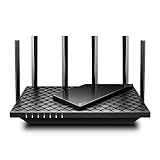
| TP-Link AXE5400 Tri-Band WiFi 6E Router, 2025 PCMag Editors’ Choice | Router | 2.4 + 5 + 6GHz | WiFi 6E | Real 6GHz radio, tri-band | $99 | Crowded apartments, best value |
| TP-Link BE6500 Dual-Band WiFi 7 Router (BE400) | Router | 2.4 + 5GHz | WiFi 7 | Multi-link on two bands, no 6GHz | $129.99 | WiFi 7 clients in a quieter area |
| NETGEAR Nighthawk Dual-Band WiFi 7 Router (RS90) – Router Only, BE3600 Wireless Speed (up to 3.6 Gbps) – Covers up to 2,000 sq. ft., 50 Devices – 2.5 Gig Internet Port – Free Expert Help | Router | 2.4 + 5GHz | WiFi 7 | 2.5G WAN port, support line included | $129 | Larger homes, hands-off setup |
| TP-Link AX5400 WiFi 6 Router (Archer AX73) | Router | 2.4 + 5GHz | WiFi 6 | Six antennas, mature firmware | $119.99 | Range on a budget |
| BZIZU WiFi 6 PCIe Card – Intel AX200, 3000Mbps Dual Band, Bluetooth 5.2 | Client adapter | 2.4 + 5GHz | WiFi 6 | Intel AX200 chipset, Bluetooth 5.2 | $19.98 | Fixing a weak desktop adapter |
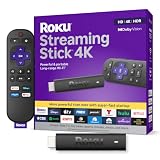
| Roku Streaming Stick 4K with Voice Remote – HDR10+ & Dolby Vision | Media client | 2.4 + 5GHz | 802.11ac class | 4K HDR playback, dual-band | $48.88 | The TV that shares your airtime |
| KOTIN Gaming PC Desktop Ryzen 7 8700F, RTX 5060 Ti 8G, 32GB DDR5, 1TB SSD | Desktop | Depends on board | Varies | Ethernet port is the point | $1,549.99 | The machine you should wire up |
Note what the table does not have a column for: peak advertised throughput. That number would not have changed a single recommendation below.
The routers, and who should skip each
GL.iNet GL-MT6000 Flint 2 Wi-Fi 6 Gaming Router Dual 2.5G Ports
At $169.99 this is the most expensive unit here and the one I would buy for a household that streams. It is WiFi 6, not 7, which sounds like a step backwards until you look at what the money bought instead: a processor with enough headroom to run smart queue management at gigabit speeds, two 2.5G ports so the wired side is not the bottleneck, and firmware built on an open platform with genuinely configurable queue disciplines.
That combination is what flattens latency under load, which is the failure mode that actually ends broadcasts. In practice, enabling the queue management and setting the shaper to roughly 90 percent of your measured line rate turns a connection that spikes into three-digit latency during an upload into one that barely moves. The trade is a few percent of peak throughput you were never using.
Who should skip it: anyone who wants to plug in a router, never open its settings page, and be done. The value here is in configuration, and if you are not going to configure it, you are paying $50 more than necessary for capability you will not enable.
TP-Link AXE5400 Tri-Band WiFi 6E Router, 2025 PCMag Editors’ Choice
At $99 this is the value pick, and the reason is one row of the specification sheet: it has a real 6GHz radio. In a dense building, moving your gaming desktop or streaming laptop onto 6GHz removes it from the same congested airtime as thirty neighbouring networks, and the improvement in latency variance is larger than anything a newer generation number will give you on a crowded 5GHz channel.
You need a client that supports 6GHz to benefit, which means a WiFi 6E or WiFi 7 adapter. Older devices simply continue on 5GHz as before, which is fine, and it means the 6GHz band stays reserved for the machines that need it. Range on 6GHz is shorter and walls hurt it more, so plan on the primary device being within a room or two of the router.
Who should skip it: anyone whose devices are all WiFi 6 or older, since the 6GHz band will go unused, and anyone in a detached house with little neighbouring interference, where a cheaper dual-band unit performs identically.
TP-Link BE6500 Dual-Band WiFi 7 Router (BE400)
At $129.99 this brings WiFi 7 in at a reasonable price, with the caveat stated plainly in its own name: dual-band. There is no 6GHz radio. What you do get is the protocol’s multi-link operation across 2.4 and 5GHz, higher-order modulation and improved scheduling, all of which help consistency if your client devices are WiFi 7 as well.
The honest comparison is against the tri-band 6E unit at $99. If you live somewhere with modest wireless congestion and you own recent WiFi 7 devices, this is the better pick because multi-link switching genuinely stabilises a marginal link. If you live in an apartment block with visible congestion on every 5GHz channel, the cheaper router with an empty band beats it.
Who should skip it: anyone in a congested building, and anyone whose devices are all WiFi 6, in which case you are paying for a protocol nothing on your network can speak.
NETGEAR Nighthawk Dual-Band WiFi 7 Router (RS90) – Router Only, BE3600 Wireless Speed (up to 3.6 Gbps) – Covers up to 2,000 sq. ft., 50 Devices – 2.5 Gig Internet Port – Free Expert Help
At $129 this is the pick for a larger home where coverage is the constraint rather than congestion. It is also dual-band WiFi 7, so the same 6GHz caveat applies, but it pairs coverage claims of around 2,000 square feet with a 2.5 Gig internet port, which is the correct choice if your service is faster than gigabit or ever will be.
The included support line is worth more than it sounds for anyone who does not enjoy this subject. Router setup problems are frequently mundane, and having someone to call about a double-NAT situation or a stubborn firmware update is a legitimate feature. Treat the “50 devices” figure as marketing rather than engineering; airtime, not a device counter, is what limits a busy network.
Who should skip it: anyone in a small flat, where a cheaper router covers the space just as well, and anyone whose priority is latency under load, where the Flint 2 with configurable queue management is the more targeted purchase.
TP-Link AX5400 WiFi 6 Router (Archer AX73)
At $119.99 this is the conservative choice: WiFi 6, dual-band, six antennas, and firmware that has been in the field long enough to be well understood. For a household whose devices are mostly WiFi 6 anyway, it delivers what those devices can use and does not charge for a generation they cannot speak.
Its strength is coverage relative to price. The antenna arrangement holds a usable 5GHz signal further from the router than most units in this bracket, which matters if the streaming machine is at the other end of the house from where the line enters. Its weakness is that its queue management is basic, so under a heavily saturated upload it will bloat more than the Flint 2.
Who should skip it: anyone who broadcasts on a connection with limited upload, where queue behaviour is the whole game, and anyone with WiFi 6E or 7 clients that would benefit from the 6GHz band.
Three things in this category that are not routers
Search results for this topic mix routers with client hardware, which is confusing but not wrong: the client end determines just as much of the outcome. Here is where each of these fits.
BZIZU WiFi 6 PCIe Card – Intel AX200, 3000Mbps Dual Band, Bluetooth 5.2
At $19.98 this is the highest return per dollar in the whole article, provided you have the right problem. Desktop motherboards frequently ship with weak wireless implementations and a pair of stub antennas mounted behind the case, in the worst possible position. Replacing that with an Intel AX200 card and antennas you can actually position often produces a larger improvement than a new router would, because it fixes the weak end of the link.
Two clarifications on the specification. The AX200 is WiFi 6 and dual-band; it does not support 6GHz, so pairing it with a 6E router will not get you onto the empty band. And the “3000Mbps” figure is the sum of both bands added together, which is not a rate any single connection achieves. Bluetooth 5.2 is included, which is a convenient bonus for headsets and controllers.
Who should skip it: anyone who can run an Ethernet cable, and anyone buying a 6E or WiFi 7 router specifically for the 6GHz band, who needs a matching client instead.
Roku Streaming Stick 4K with Voice Remote – HDR10+ & Dolby Vision
At $48.88 this is not networking equipment, but it belongs in the discussion because it is the device most likely to be competing with your broadcast. A 4K HDR stream on the living room television pulls real bandwidth and, more importantly, real airtime. It is dual-band, and the single most useful thing you can do with it is make sure it connects on 5GHz rather than defaulting to 2.4GHz, where its long transmissions block the band your game is on.
If a household member watching television is what triggers your dropped frames, the answer is either queue management on the router or moving the media device to a different band from your streaming machine. Both are free.
Who should skip it: anyone whose television already has a competent built-in application, and anyone buying it expecting a network improvement. It is a client, and one more client is never the fix for a congested network.
KOTIN Gaming PC Desktop Ryzen 7 8700F, RTX 5060 Ti 8G, 32GB DDR5, 1TB SSD
At $1,549.99 this desktop appears here for one reason: it is the machine whose connection you should stop thinking about wirelessly. An eight-core processor with a current-generation graphics encoder and 32GB of memory is well specified for broadcasting, and it deserves a wired link so the network is never the variable when you are diagnosing a problem. If you are shopping for the machine as well as the network, our comparison of prebuilt gaming PCs for streaming to Twitch and YouTube covers this configuration and seven others in detail.
If a cable genuinely is impossible, put a 6GHz-capable adapter in it and put the router on the same floor. Second best, but a long way ahead of a stub antenna on 2.4GHz.
Who should skip it: anyone who already owns a capable machine. Nothing about a network problem is solved by a new desktop, and the $1,549.99 would be better spent on cabling, a router with real queue management, and a decent microphone.
Setting it up so it behaves under load
Work through these in order of how likely each is to be your actual problem. First, enable the router’s queue management or adaptive quality of service and set the shaper to roughly 90 to 95 percent of your measured line rate in both directions. This one step fixes most latency complaints outright.
Second, split your bands rather than relying on a single merged network name. Automatic band steering makes decisions on signal strength, not on what a device is doing, and it will happily park your streaming machine on 2.4GHz because the signal looked marginally better. Give the bands separate names and choose deliberately.
Third, pick a channel by looking rather than trusting automatic selection, which usually runs at boot and never revisits the decision. On 5GHz, the higher channels that require radar detection are often far emptier, at the cost of a brief interruption if radar is detected. On a crowded band, drop to an 80MHz channel width; you will lose peak throughput you were not using and gain reliability you were.
Fourth, place the router where the radio can work: out in the room, not in a cabinet, not behind the television, not on the floor. This is unglamorous and it beats an equipment upgrade more often than anyone admits.
Fifth, test properly. Run a latency-under-load test, then start a broadcast and watch the encoder’s dropped-frame counter over a full session rather than a five-minute check. If you are still seeing problems after all of the above, work through the encoder side using our notes on settings for smooth streaming before you buy anything else.
When WiFi is not the answer
There is a point at which more wireless equipment stops helping. If the streaming machine is two floors and three walls from the router, no amount of protocol generation fixes the physics. The options in ascending order of effort are: a single Ethernet run, which is cheap, permanent and removes every variable at once; adapters that carry Ethernet over the coaxial cabling already in the walls, which typically deliver low and stable latency; powerline adapters, which vary wildly by house wiring and are worth trying only if you can return them; and finally a mesh system with a wired backhaul, which is genuinely good, or a mesh with a wireless backhaul, which halves your airtime and frequently makes latency worse.
For remote play specifically, where a stream of video and inputs travels between two of your own machines, the wired-versus-wireless question is even more decisive, and the software choice matters too, as our comparison of Parsec and Moonlight sets out.
The verdict, by situation
If you broadcast and your household shares the connection, buy the GL.iNet GL-MT6000 Flint 2 at $169.99 and turn on smart queue management. It is the only unit here whose defining strength is the failure mode that actually breaks streams.
If you live in a congested building, buy the TP-Link AXE5400 tri-band WiFi 6E router at $99 and put your primary machine on the 6GHz band. Best value in the list, provided you own a 6E-capable client.
If your devices are already WiFi 7 and congestion is moderate, the TP-Link BE6500 (BE400) at $129.99 gives you multi-link stability. If coverage across a larger home is the constraint, the NETGEAR Nighthawk RS90 at $129 with its 2.5 Gig port and support line is the more practical purchase. If you want a proven, uncomplicated WiFi 6 router with good range, the Archer AX73 at $119.99 does that for $119.99 and nothing more.
Whatever you choose, spend $19.98 on a decent client adapter before you spend $170 on a router, and spend nothing at all before you have run one latency-under-load test. That test tells you which of these products you actually need, and quite often the answer is a $10 cable.
Related guides
- Logitech Video Collaboration Tools for Streaming: What They Actually Do and Where They Fall Short
- Best Webcams With Built-In Microphone: A Tested Buyer’s Guide for Streamers and Creators: 8 Tested (2026)
- Best Webcams for Low Light: Tested, Measured, and Ranked by Use Case: 8 Tested (2026)
- Best Webcams With Privacy Shutter: Eight Picks Tested On My Dual-PC Rig: 8 Tested (2026)