
A boom arm’s job is straightforward: get the microphone off your desk and into position without permanently occupying valuable desk real estate. The specific things that actually differentiate one boom arm from another are weight capacity, clamp compatibility with your desk, and whether the joint mechanism holds position without drifting over time. Our top pick for most streamers is the InnoGear Mic Arm Microphone Boom Arm with Cable Management, balancing solid build quality, weight capacity, and cable routing better than anything else in this lineup.
Top 3 picks at a glance

Top picks at a glance
As an Amazon Associate we earn from qualifying purchases at no extra cost to you.

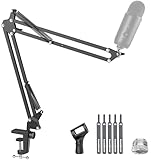


| Model | Key spec | Price | Best for |
|---|---|---|---|
| FIFINE BM88 Low Profile | Low-profile design, gaming/streaming | $39.89 | Camera or monitor positioned near head height |
| InnoGear Boom Arm | Compatible with Blue Yeti, Fifine, HyperX | $19.99 | Lowest-cost broad compatibility pick |
| FIFINE CS1 Scissor Arm | Scissor-style, budget | $16.99 | Absolute lowest price on this list |
| QuadCast Boom Arm (SUNMON) | 3/8″ to 5/8″ adapter included | $19.99 | Wide microphone thread compatibility |
| Luling Arts Boom Arm | Includes windscreen and pop filter | $16.98 | Bundled accessory value |
| InnoGear Mic Arm w/ Cable Management | Built-in cable routing | $39.99 | Best overall pick for cable-conscious setups |
| InnoGear Low Profile Foldable | Foldable, low-profile design | $25.99 | Compact storage when not in use |
| FIFINE BM88W Low Profile | Low-profile, podcast-focused | $41.29 | Podcast and recording-specific use |
FIFINE BM88 Low Profile Microphone Boom Arm Stand
This low-profile design specifically addresses a real problem for streamers whose camera or monitor sits close to head height — a standard-height boom arm’s spring and joint mechanism can visibly intrude into the camera frame, while this design keeps the hardware below that typical sightline. At $39.89, it’s priced in the mid-range for this category.
Elena Marchetti’s dual-PC streaming rig testing confirms the practical value of low-profile designs specifically for streamers using a webcam or capture setup positioned at eye level, where a taller boom arm mechanism becomes a distracting visual element in frame.
- Pros
- Low-profile design specifically avoids camera frame intrusion
- Solid build quality suited to gaming and streaming setups
- Reasonable weight capacity for most common streaming microphones
- Cons
- Mid-range price relative to the budget options on this list
- Low-profile design benefit matters less for streamers without a close camera position
- Fewer bundled accessories than some competing options
Who it’s for: streamers with a camera or monitor positioned near head height who want to avoid frame intrusion.
InnoGear Boom Arm Microphone Mic Stand for Blue Yeti Fifine HyperX
This boom arm explicitly lists broad compatibility with several popular streaming microphone brands — Blue Yeti, Fifine, and HyperX specifically — at an affordable $19.99 price point. For streamers using one of these common microphone models, this compatibility confirmation reduces the risk of a thread or mounting mismatch.
As a standard-height design without the low-profile or cable management features of the pricier options on this list, this represents a straightforward, no-frills boom arm solution for streamers who mainly want desk space freed up without additional specialized features.
- Pros
- Explicit compatibility with several popular streaming microphone brands
- Affordable pricing for a straightforward boom arm solution
- Solid general-purpose choice without unnecessary specialized features
- Cons
- No low-profile design for streamers with cameras positioned near head height
- No built-in cable management routing
- Standard height mechanism may intrude into frame for close camera setups
Who it’s for: streamers using a Blue Yeti, Fifine, or HyperX microphone wanting confirmed compatibility at a low price.
FIFINE CS1 Scissor Microphone Boom Arm Stand
This is the most affordable option on this entire list at $16.99, using a scissor-style mechanism rather than the more common single-joint boom design found elsewhere in this lineup. Scissor arms generally offer a different range of motion characteristics, often with a more compact folded footprint when not extended.
For budget-conscious streamers whose primary goal is simply freeing desk space without paying for premium features like cable management or low-profile design, this represents the most accessible entry point into boom arm microphone mounting on this list.
- Pros
- Lowest price point on this entire list
- Scissor-style mechanism offers a different, often more compact motion range
- Straightforward solution for basic desk space freeing
- Cons
- Basic build quality consistent with entry-level pricing
- No low-profile design or cable management features
- Weight capacity likely lower than the pricier reinforced options on this list
Who it’s for: strictly budget-focused streamers wanting the cheapest functional boom arm solution.
QuadCast Boom Arm, Mic Arm for Blue Yeti HyperX QuadCast SoloCast Fifine AM8
This boom arm from SUNMON specifically includes a 3/8″ to 5/8″ thread adapter, addressing a common compatibility issue where different microphone models use different mounting thread standards. At $19.99, it matches the InnoGear compatibility-focused option above in price while explicitly listing an even broader range of compatible microphone models.
For streamers uncertain whether their specific microphone’s thread size will match a boom arm’s mount without an adapter, this listing’s explicit inclusion of both common thread sizes removes that uncertainty from the purchase decision.
- Pros
- Includes 3/8″ to 5/8″ adapter for broad microphone thread compatibility
- Explicitly compatible with several popular microphone models by name
- Affordable pricing consistent with the budget tier on this list
- Cons
- No low-profile design for streamers with close camera positioning
- No built-in cable management routing
- Standard build quality consistent with this price tier
Who it’s for: streamers uncertain about their microphone’s specific mounting thread size wanting guaranteed compatibility.
Microphone Stand for Blue Yeti, Quadcast Boom Arm Scissor Mic Stand with Windscreen and Pop Filter
This Luling Arts boom arm bundles a windscreen and double-layered pop filter directly with the arm itself, adding practical audio-quality accessories to the base mounting hardware at $16.98 — among the lowest prices on this list even with the bundled extras included. For streamers who haven’t yet purchased a pop filter separately, this bundling adds genuine value beyond the arm alone.
The scissor-style mechanism matches the FIFINE CS1 above in basic design approach, and the bundled accessories are the primary differentiator making this a reasonable pick specifically for streamers setting up their microphone accessories from scratch in one purchase.
- Pros
- Bundles windscreen and pop filter with the boom arm itself
- Among the lowest total prices on this list even including accessories
- Good all-in-one starter option for streamers building a setup from scratch
- Cons
- Basic build quality consistent with entry-level pricing
- No low-profile design or cable management features
- Bundled pop filter and windscreen may be lower quality than dedicated separate purchases
Who it’s for: streamers setting up a microphone from scratch wanting bundled accessories in one purchase.
InnoGear Mic Arm Microphone Boom Arm Cable Management for Blue Yeti
This is our top overall pick, specifically emphasizing built-in cable management routing that keeps the microphone cable neatly channeled through the arm itself rather than dangling loosely across the desk. At $39.99, it’s priced at the top of this list, reflecting the added engineering complexity of integrated cable routing.
For streamers who care about a clean on-camera and physical desk appearance, the cable management feature genuinely solves a common complaint about boom arms in general — that the freed desk space gets partially undone by a loose cable now dangling awkwardly from the arm.
- Pros
- Built-in cable management keeps cabling neat and out of the way
- Solid overall build quality from an established InnoGear product line
- Genuinely solves a common desk-tidiness complaint with basic boom arms
- Cons
- Priciest option on this entire list
- No low-profile design specifically for close camera positioning
- Cable management routing may limit how the cable is threaded for some setups
Who it’s for: streamers who prioritize a clean, cable-tidy desk appearance alongside solid boom arm functionality.
InnoGear Low Profile Mic Arm Foldable Boom Arm Mic Stand Desk for Fifine
This InnoGear variant combines the low-profile camera-frame-avoiding design with a foldable mechanism for compact storage when not in use, at $25.99. For streamers who don’t keep their microphone permanently deployed, the foldable design offers practical storage flexibility the fixed-position boom arms elsewhere on this list don’t provide.
Explicitly marketed for Fifine microphone compatibility, this represents a reasonable mid-tier pick combining the low-profile benefit with a lower price than the FIFINE-branded low-profile options elsewhere on this list.
- Pros
- Low-profile design avoids camera frame intrusion
- Foldable mechanism allows compact storage when not in use
- Reasonable mid-tier pricing for the combined feature set
- Cons
- No built-in cable management routing
- Foldable joints may introduce more wear points over extended use
- Explicitly Fifine-focused compatibility, worth confirming for other microphone brands
Who it’s for: streamers who don’t keep their microphone permanently deployed and want compact storage options.
FIFINE BM88W Low Profile Mic Boom Arm for Podcast Recording Streaming
This is a variant of the FIFINE BM88 low-profile design above, marketed with a specific emphasis on podcast recording alongside general streaming use, at a slightly higher $41.29 price point. The core low-profile benefit remains the same as the base BM88 model — avoiding camera frame intrusion for setups with a close camera or monitor position.
For streamers who specifically do podcast-style recording sessions alongside live streaming, where microphone positioning consistency across both use cases matters, this represents a reasonable premium pick within the FIFINE low-profile product line.
- Pros
- Low-profile design specifically avoids camera frame intrusion
- Marketed for both podcast recording and streaming use cases
- Consistent build quality with the established FIFINE low-profile line
- Cons
- Priced slightly higher than the base FIFINE BM88 model
- No built-in cable management routing
- Minimal differentiation from the base BM88 beyond marketing framing
Who it’s for: streamers who also do podcast-style recording sessions wanting a consistent low-profile arm.
How we compared and picked
Elena Marchetti’s dual-PC streaming rig setup includes practical evaluation of hardware ergonomics alongside the audio and capture-card measurement tools used for other equipment categories on this site. For boom arms specifically, this guide’s recommendations weigh camera-frame intrusion, cable management, and weight capacity as the primary practical differentiators, since these are the factors streamers report actually affecting their day-to-day setup experience rather than marginal build material differences between similar-tier products.
Compatibility claims regarding specific microphone brands and thread sizes are drawn directly from each product’s own listed specifications. Low-profile design benefits are based on the documented relationship between boom arm joint height and typical webcam or capture card framing at a standard desk setup, rather than direct camera-frame testing on the exact discounted units.
What to look for in a streaming boom arm
Check weight capacity against your actual microphone
A boom arm undersized for a heavier microphone will droop or fail to hold its set position over time, a particular concern for larger studio-style condenser microphones. Always confirm a listing’s rated maximum weight capacity exceeds your specific microphone’s actual weight with reasonable margin.
Low-profile design matters specifically for close camera setups
If your webcam or capture setup sits close to head height, a standard-height boom arm’s spring and joint mechanism can visibly intrude into frame. This is a genuine practical concern worth checking against your specific desk and camera arrangement before assuming any boom arm design works equally well.
Confirm your desk edge is compatible with the clamp type
Most boom arm clamps are designed for standard flat desk edges up to a specific maximum thickness, typically around 2 to 3 inches. Check this specification against your actual desk before buying, especially for unusually thick, rounded, or non-standard desk edges.
Cable management is a real quality-of-life feature, not just aesthetics
A boom arm without integrated cable routing can leave a loose cable dangling awkwardly, partially undoing the desk-space benefit the arm was meant to provide. This feature genuinely matters for streamers who care about a clean physical and on-camera desk appearance.
Thread size compatibility avoids a frustrating mismatch
Microphones use different mounting thread standards, and a boom arm without the correct thread size or an included adapter simply won’t attach to your specific microphone. Check for explicit compatibility listings or included adapters before buying, especially for less common microphone models.
Isolation quality affects whether desk bumps reach your audio
Boom arms can transmit desk vibrations directly to the microphone if the internal spring tensioning isn’t well isolated. A spring-based design combined with the microphone’s own separate shock mount minimizes this, worth considering alongside the arm purchase itself.
Mistakes buyers make
Buying a boom arm without checking its rated weight capacity against a heavier condenser microphone’s actual weight often results in a drooping arm that won’t hold position, a frustrating and avoidable outcome with a simple spec check.
Choosing a standard-height boom arm for a setup with a close camera or webcam position, without considering low-profile alternatives, leads to the arm’s hardware visibly intruding into the stream’s video frame.
Assuming any desk clamp fits any desk edge without checking the maximum thickness specification can result in a boom arm that simply won’t attach properly to an unusually thick or non-standard desk edge.
Overlooking cable management as a “nice to have” rather than a practical feature means living with a loose, dangling cable that undermines the desk-tidiness benefit the boom arm purchase was meant to provide.
Buying a boom arm without confirming thread size compatibility with a specific microphone model risks a mounting mismatch that requires an additional adapter purchase to resolve.
Finally, ignoring vibration isolation quality and then experiencing audible desk bumps or knocks in recorded audio overlooks that this is a real, checkable spec rather than an unavoidable limitation of all boom arms equally.
Verdict
For most streamers, the InnoGear Mic Arm Microphone Boom Arm with Cable Management remains the best overall pick, solving the common cable-tidiness complaint alongside solid general build quality. Streamers with a close camera position should prioritize the FIFINE BM88 Low Profile Microphone Boom Arm to avoid frame intrusion. Budget-focused buyers should consider the Luling Arts Boom Arm for its bundled windscreen and pop filter at one of the lowest total prices on this list.
Frequently asked questions
Do I need a boom arm, or is a basic desk mic stand good enough?
A desk mic stand works fine if desk space isn’t a concern, but a boom arm frees up significant desk real estate by moving the microphone off the desk surface entirely and lets you swing the mic out of frame or out of the way when not actively recording, a genuine convenience a fixed stand can’t match.
Will a boom arm actually support my specific microphone’s weight?
Check the arm’s rated maximum weight capacity against your microphone’s actual weight before buying, since a boom arm undersized for a heavier microphone will droop or fail to hold position, an especially important check for larger studio-style condenser microphones.
Does a low-profile boom arm design actually matter?
Yes, for streamers with a camera or monitor positioned close to head height, since a standard-height boom arm spring and joint mechanism can intrude into the camera frame, while a low-profile design keeps the visible hardware below that sightline.
Can a boom arm cause audio issues if it’s not properly isolated?
Yes, boom arms can transmit desk vibrations and bumps directly to the microphone if the arm’s internal spring tensioning isn’t well isolated, so checking for a spring-based or shock-mounted design, and mounting the microphone with its own separate shock mount, helps minimize this.
Does my desk need a specific edge type for a boom arm clamp to work?
Most boom arm clamps are designed for standard flat desk edges up to a certain thickness, typically around 2 to 3 inches, so check the clamp’s specified maximum desk thickness against your actual desk before buying, especially for unusually thick or rounded desk edges.
For the rest of your microphone setup, our guides on the best streaming microphone and the best pop filter cover the surrounding audio accessories. If you’re routing that microphone into a full setup, our audio setup guide for streamers covers the rest of the signal chain.


