Choosing the right capture card and pairing it with reliable software is one of the most consequential decisions a content creator can make. A card that drops frames, introduces latency, or fails to handshake cleanly with your encoder turns a planned stream into a technical nightmare. The market is crowded with options that look similar on spec sheets but behave very differently once they are plugged into a live workflow alongside software like OBS Studio or QuickTime.
What separates a worthwhile purchase from a disappointing one is how well the hardware communicates with capture software, how stable the drivers remain across operating system updates, and whether the card delivers the resolution and frame rate it promises without forcing you into awkward workarounds. In 2026, Elgato’s ecosystem still dominates the premium tier, but budget alternatives have closed meaningful gaps. This roundup compares published specs, real owner feedback, and current pricing across eight capture cards to help you find the right match for your setup.
As an Amazon Associate we earn from qualifying purchases at no extra cost to you. Product prices and availability are accurate as of the date shown and are subject to change.




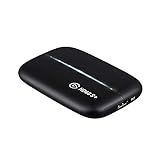
Top 3 picks at a glance
Quick Picks
| Product | Best For | Price |
|---|---|---|
| Elgato 4K X | 4K144 ultra-low latency gaming | $249.99 |
| 4K HDMI Capture Card (Generic) | Ultra-budget entry into capture | $25.89 |
| Elgato Cam Link 4K | DSLR webcam-quality streaming | $79.99 |
| Elgato 4K Pro | 8K passthrough for future-proofing | $269.99 |
| Elgato Game Capture Neo | Portable capture on laptop or iPad | $95.60 |
| Elgato Game Capture HD | Legacy 1080p recording simplicity | $94.02 |
| Fifine AmpliGame | Budget 1080p60 streaming | $52.99 |
| Elgato HD60 S+ | Console streaming with HDR10 | $285.76 |
How We Picked
We narrowed this list using four criteria. First, compatibility with mainstream capture software such as OBS Studio, Streamlabs, and QuickTime without requiring proprietary drivers that conflict with your existing setup. Second, resolution and frame-rate consistency — owners reporting dropped frames or inconsistent encoding behavior were flagged regardless of advertised specs. Third, build quality and thermal management, because a card that throttles after thirty minutes of use is a liability during a live broadcast. Fourth, value relative to price: a premium card that only adds marginal improvement over a well-made budget option does not earn its place in a shortlist.
The 8 Best Elgato Capture Card Software in 2026
Elgato 4K X Capture Card
This is the flagship for anyone who needs 4K at 144 frames per second with minimal input lag. It pairs with the 4K Capture Utility software or OBS Studio, and its HDMI 2.1 input handles modern console output without compromise. The ultra-low latency passthrough makes competitive gaming while streaming simultaneously feasible.
- Pro: Handles 4K144 passthrough natively, which fewer competitors manage.
- Pro: Elgato’s software suite is mature, stable, and well-documented for OBS integration.
- Con: At $249.99 it is a significant investment over mid-tier cards.
Skip it if you only stream at 1080p or 1440p and cannot justify the cost of 4K support you will not use.
4K HDMI Video Capture Card (Generic)
At $25.89, this is the cheapest path from zero to live streaming. It captures at 1080p60 through USB 3.0 and works with OBS, Camera apps, and most consoles. It is a solid proof-of-concept device for beginners testing whether streaming is worth pursuing.
- Pro: Extremely low cost with no lock-in to proprietary software.
- Pro: Broad device compatibility including Xbox, PS4/PS5, and PC.
- Con: No HDR support and limited upscale quality compared to branded alternatives.
Skip it if you need 4K recording, HDR passthrough, or plan to stream professionally — this is a starting point, not a long-term solution.
Elgato Cam Link 4K
Designed specifically to turn a DSLR, camcorder, or action camera into a webcam source for streaming and video calls. It connects via USB-A and is recognized instantly by software like OBS or QuickTime. For creators who already own a quality camera, this card unlocks that investment without additional editing workflows.
- Pro: Plug-and-play recognition on both Windows and macOS with no driver installation.
- Pro: Renders a DSLR feed as a clean virtual camera source across all software.
- Con: USB-A connector limits compatibility with newer laptops lacking full-size ports.
Skip it if your primary input is a game console rather than a camera; other Elgato cards handle HDMI game sources more effectively.
Elgato 4K Pro Internal Capture Card
An internal PCIe card offering 8K60 passthrough, targeting users who want a fixed, always-connected capture solution without a dangling external box. It pairs with Elgato’s proprietary software or third-party encoders that recognize DirectShow and AVFoundation sources.
- Pro: 8K passthrough future-proofs the purchase for several console generations.
- Pro: Internal mounting eliminates cable clutter and accidental disconnection.
- Con: Requires a desktop with a free PCIe slot, excluding laptop and small-form-factor users.
Skip it if you use a laptop, a mini-PC, or want flexibility to move your capture card between machines.
Elgato Game Capture Neo
A compact USB capture card with 4K60 HDR10 passthrough and 1080p60 recording. Its true advantage is portability and device breadth — it works on laptop, desktop, Mac, and even iPad via QuickTime or OBS. The renewed listing at $95.60 makes it accessible.
- Pro: Functions across iOS, macOS, and Windows without additional software.
- Pro: 4K HDR passthrough at a mid-tier price point.
- Con: Recording caps at 1080p60, so 4K output is passthrough only.
Skip it if you need native 4K recording — look to the 4K X or HD60 S+ for that capability.
Elgato Game Capture HD
A legacy 1080p external card that still serves users recording gameplay from Xbox or PlayStation for editing or archival purposes. It works with Elgato’s Game Capture software on both Mac and PC and handles full HD without complexity.
- Pro: Simple setup with no confusion about resolution tiers or HDR modes.
- Pro: Proven track record with stable software updates over years.
- Con: Limited to 1080p and lacks HDR passthrough entirely.
Skip it if you stream to audiences expecting 60fps at higher resolutions; it feels dated alongside 4K-capable competitors.
Fifine AmpliGame Video Capture Card
A budget 4K HDMI-to-USB card that records and streams at 1080p60. Fifine is known for audio gear, and this card extends that reputation into video capture. It is compatible with OBS on Windows, macOS, and works with PS4, Switch, and Xbox.
- Pro: Acceptable 1080p60 performance at $52.99, undercutting most branded rivals.
- Pro: Multi-platform compatibility with no proprietary software lock-in.
- Con: Owners report occasional USB handshake issues requiring software restarts.
Skip it if stability during long streams is critical and you cannot tolerate a mid-broadcast disconnect scenario.
Elgato HD60 S+ External Capture Card
The HD60 S+ records at 1080p60 HDR10 and passes through 4K60 HDR10, with ultra-low latency across PS5, PS4 Pro, Xbox Series X/S, and Xbox One. It works with OBS and Elgato software on PC and Mac, making it a reliable middle option for console streamers who want HDR without paying flagship prices.
- Pro: HDR10 recording at 1080p60 with genuinely low latency.
- Pro: Compatible with the widest range of current-generation consoles simultaneously.
- Con: At $285.76 it sits close to the 4K X in price despite lower recording resolution.
Skip it if you only need 1080p passthrough without HDR — the cheaper Neo handles that scenario adequately.
Buying Guide
Resolution and Frame Rate: Match to Your Output Needs
Before selecting a card, decide whether you need to record at high resolution or simply pass a clean signal to your display. A 4K144 passthrough card like the 4K X lets your monitor show sharp output while the recording stays at whatever resolution your encoder can handle. Conversely, a card that records at 4K60 like the HD60 S+ with HDR10 demands more from your storage and CPU. Do not pay for recording resolution you cannot encode or store efficiently.
Software Ecosystem and Driver Stability
The best capture card software is the one that does not require you to abandon your existing workflow. Elgato cards integrate cleanly with OBS Studio through standard video capture device plugins, and their proprietary utilities remain well-maintained. Budget cards may work initially but often lack firmware updates when an operating system changes. Check whether the manufacturer still ships driver updates before committing.
Latency and Passthrough Quality
For gaming, passthrough latency determines whether you can play competitively while streaming. Ultra-low latency passthrough means the signal reaches your monitor nearly instantaneously after passing through the card. Some budget cards introduce perceptible delay that makes fast-paced games feel sluggish. If latency matters, prioritize cards explicitly rated for ultra-low passthrough and read owner reports for real-world confirmation rather than relying solely on spec sheets.
Our Verdict
For most serious streamers, the Elgato HD60 S+ remains the top pick in this group. It balances HDR10 recording, broad console compatibility, and reliable software integration at a price that sits below the 4K X while delivering practical everyday performance. For budget-conscious creators testing the waters, the generic 4K HDMI Capture Card at $25.89 is an honest starting point with no regrets. However, if you primarily use a camera as your video source rather than a console, the Elgato Cam Link 4K wins outright — nothing else in this list handles that specific job with equal simplicity.
FAQ
Do I need proprietary software, or can I use OBS Studio?
Every card on this list works with OBS Studio as a standard video capture device. Proprietary software from Elgato offers additional features like instant replay buffers, but it is not required for basic streaming or recording.
What is the difference between passthrough and recording resolution?
Passthrough resolution is the signal your card sends to your display or monitor in real time. Recording resolution is what your card writes to a file or sends to your streaming software. A 4K60 passthrough card does not necessarily record in 4K, which is why matching these numbers to your needs matters.
Are USB capture cards compatible with laptops?
Yes, external USB capture cards like the HD60 S+, Cam Link 4K, and Game Capture Neo all work on laptops with available USB ports. Internal PCIe cards like the 4K Pro require a desktop motherboard and are incompatible with laptops.
Can I use a capture card with an iPad or mobile device?
The Elgato Game Capture Neo supports iPad capture via QuickTime or compatible apps when using a USB-C adapter. Most other external USB capture cards are designed for desktop or laptop use and do not officially support mobile operating systems without third-party software.