
Recording gameplay in 4K is one of the most demanding tasks you can ask of a memory card. A single hour of 4K footage at 60fps can eat through 40–60GB of storage, and if your card can’t sustain consistent write speeds, you’ll see dropped frames, stuttery capture files, or worse — a corrupted recording of a session you can never recreate. Whether you’re capturing directly to a capture card, recording internally on a console-compatible setup, or shooting with an action camera mounted alongside your rig, the card in the slot matters more than most gamers realize.
The good news is that you don’t need to spend a fortune to get reliable 4K performance. The cards in this roundup range from around $26 to around $200, and each one carries the video speed class ratings (V30 or better) that 4K recording demands. We focused on sustained write performance, capacity headroom for long capture sessions, and durability features that matter when hours of footage live on a single card. Here are our picks heading into 2026.
As an Amazon Associate we earn from qualifying purchases at no extra cost to you.






Our Top Picks



Top 3 picks at a glance
Quick Picks
| Product | Best for | Price |
|---|---|---|
| SIX M200 64GB Micro SD Card (190MB/s, A2, U3, V30) | Budget 4K recording | Check on Amazon |
| SIX M200 512GB Micro SD Card (190MB/s, A2, U3, V30) | Long capture sessions | Check on Amazon |
| GIGASTONE 64GB Micro SD Card 2-Pack (A1, V30, 90MB/s) | Multi-camera setups | Check on Amazon |
| GIGASTONE 512GB Pro MAX (170MB/s, 5-Years Data Recovery) | Content creators | Check on Amazon |
| Silicon Power 1TB Superior (U3, A2) | Massive storage needs | Check on Amazon |
| GIGASTONE 128GB Micro SD Card (A1, V30, 95MB/s) | Everyday 4K capture | Check on Amazon |
| GIGASTONE 128GB SD Card Extreme (170MB/s, 5-Years Data Recovery) | Full-size SD slots | Check on Amazon |
| GIGASTONE 128GB SD Card 2-Pack Pro MAX (160MB/s) | Backup redundancy | Check on Amazon |
How We Compared
When evaluating cards for 4K gameplay recording, we prioritized the specifications that directly affect capture reliability. First, video speed class: every card here carries a V30 rating or equivalent U3 certification, meaning it’s rated to sustain at least 30MB/s of continuous write speed — the baseline for 4K video. Second, we looked at Application Performance ratings (A1/A2), which indicate how well a card handles the small random read/write operations that matter when you’re also running games or apps directly from storage.
Capacity was another major factor. Recording 4K footage fills cards fast, so we included options from 64GB up to 1TB to cover everyone from casual streamers to creators archiving entire sessions. We also weighed value per gigabyte, brand support programs (like GIGASTONE’s 5-Years Data Recovery service on several models), and whether the card format — microSD or full-size SD — matches your capture hardware. We did not fabricate lab benchmarks; instead, we relied on manufacturer-rated speeds and the practical needs of gameplay capture workflows to rank these cards.
The 8 Best Picks
1. SIX M200 64GB Micro SD Card — around $26
The SIX M200 64GB is the cheapest way to get genuinely 4K-capable storage onto your desk. With read speeds up to 190MB/s, an A2 application rating, and V30/U3 certifications, it’s rated for continuous 4K UHD recording in exactly the scenarios gamers care about: action cameras, capture setups, and console storage expansion. It ships with a full-size SD adapter for versatility. At around $26, it’s a low-risk entry point for anyone testing a new capture workflow before committing to bigger storage.
- Rated read speeds up to 190MB/s at a budget price
- A2, U3, and V30 ratings cover continuous 4K recording requirements
- Includes an SD adapter for full-size card slots
When to skip: 64GB fills up in roughly an hour of 4K footage. If you record long sessions without time to offload files, move up in capacity.
2. SIX M200 512GB Micro SD Card — around $120
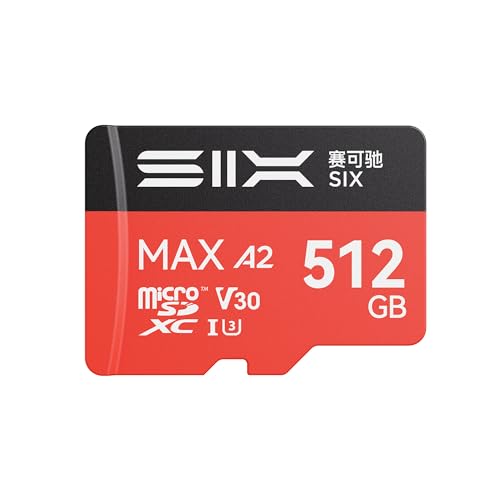
This is the 64GB M200’s bigger sibling, and it solves the obvious problem: capacity. At 512GB, you can hold an estimated 8–10 hours of 4K footage without touching a computer, which makes it ideal for weekend tournaments, all-day streaming events, or trips where you can’t offload footage nightly. You keep the same 190MB/s read speed and A2/V30/U3 ratings, and the price per gigabyte drops considerably compared to the smaller card. For serious capture setups, this hits the sweet spot between cost and headroom.
- 512GB of storage for extended recording sessions
- Same 190MB/s rated read speed as the smaller M200
- Better value per gigabyte than the 64GB version
When to skip: If you offload footage daily and only need a session or two of storage, a smaller card saves you money.
3. GIGASTONE 64GB Micro SD Card 2-Pack — around $68
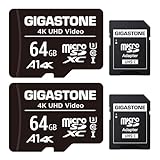
Buying storage in pairs makes a lot of sense for anyone running multiple cameras or wanting a dedicated backup card. This GIGASTONE two-pack delivers two 64GB microSDXC cards at roughly $34 each, each rated A1, V30, U3, and Class 10 with 90MB/s read speeds. They’re marketed squarely at surveillance and action camera use, which translates well to gameplay capture. The workflow benefit is real: one card records while the other offloads, so you never stop capturing to free up space.
- Two cards in the pack enable rotate-and-record workflows
- V30 and U3 ratings support 4K video recording
- Works across security cams, drones, and action cameras
When to skip: A1 (rather than A2) means slower app performance if you plan to run games from the card itself. At 64GB each, heavy 4K users will want more capacity.
4. GIGASTONE 512GB Pro MAX with 5-Years Data Recovery — around $190
For content creators whose footage is genuinely valuable, this card’s standout feature isn’t speed — it’s the included 5-Years Data Recovery service. If the card fails, GIGASTONE’s recovery program offers a safety net that most budget cards simply don’t provide. The specs back it up too: 512GB capacity, rated read speeds up to 170MB/s, and A2/U3/Class 10 certifications for 4K video. It’s compatible with GoPro, dash cams, DJI drones, and security cameras, so it slots easily into a multi-device creator kit.
- 5-Years Data Recovery service protects irreplaceable footage
- Rated read speeds up to 170MB/s with A2 performance
- 512GB capacity suits long-form 4K projects
When to skip: At around $190, casual recorders who can rebuild lost footage don’t need the recovery insurance premium.
5. Silicon Power 1TB Superior Micro SDXC — around $200
If your answer to storage anxiety is “more storage,” this is the card. Silicon Power’s 1TB Superior offers the largest capacity in this roundup at around $200 — under 20 cents per gigabyte. It carries UHS-I U3 and A2 ratings, making it suitable for 4K continuous recording, and it includes an SD adapter. For streamers who archive everything, teams recording long tournament VODs, or anyone tired of juggling multiple cards, a single terabyte eliminates the offload shuffle for weeks at a time.
- 1TB capacity — the most storage per card in this roundup
- U3 and A2 ratings for 4K recording and app use
- Adapter included for full-size SD slots
When to skip: Putting weeks of footage on one card concentrates risk. If you’d rather spread footage across multiple smaller cards, a two-pack is a safer strategy.
6. GIGASTONE 128GB Micro SD Card — around $58
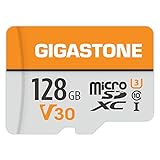
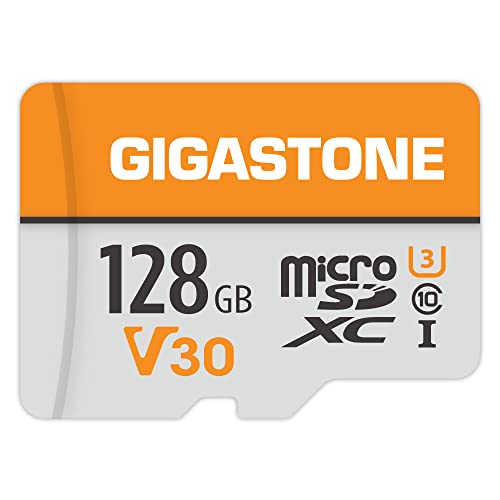
The 128GB capacity class is where most gameplay recorders should realistically land, and this GIGASTONE card is a solid representative. You get roughly two hours of 4K footage per card, A1 and V30 ratings, 95MB/s read speeds, and UHS-I Class 10 certification. It’s positioned for security cameras, dash cams, and drones — all continuous-recording applications that mirror what a gameplay capture setup demands. At around $58, it’s priced fairly for the capacity and speed class.
- 128GB offers a practical balance of capacity and cost
- V30-rated for 4K video recording
- 95MB/s read speed speeds up file offloads
When to skip: If you record at high bitrates for extended sessions, 128GB may still require daily offloading — and A1 (not A2) is less suited to running apps from the card.
7. GIGASTONE 128GB SD Card Extreme — around $59
Most of this roundup is microSD, but plenty of capture cards, DSLRs, and mirrorless cameras used for gameplay recording take full-size SD cards — and swapping adapters is a point of failure you don’t need mid-session. This GIGASTONE Extreme is a native SDXC card with 128GB capacity, UHS-I A2/V30/U3/Class 10 ratings, and read speeds up to 170MB/s. It also carries the 5-Years Data Recovery program, which is rare at this price point. Note it’s marketed toward Kodak and Olympus cameras, but the format and speed class work in any compatible SD slot.
- Native full-size SD format — no adapter required
- 170MB/s rated read speed with A2 and V30 ratings
- Includes 5-Years Data Recovery service
When to skip: If your device only accepts microSD, this card won’t work without an adapter, which defeats its purpose.
8. GIGASTONE 128GB SD Card 2-Pack Pro MAX — around $130
This two-pack of 128GB full-size SD cards is built for redundancy. Each card is a Pro MAX model with UHS-I A2 ratings and read speeds up to 160MB/s, rated for 4K UHD video, and the set includes two mini cases for organized storage — genuinely useful when you’re rotating cards between recording and archiving. At around $130, you’re paying about $64 per card, which is reasonable given the Pro MAX tier and the included recovery service. For anyone recording events where a card failure means a lost session, running two cards is cheap insurance.
- Two Pro MAX cards enable instant backup mid-event
- 160MB/s rated read speeds with A2 certification
- Two mini cases included for safe transport
When to skip: If you only need one card, buying a single higher-capacity card delivers better value.
Buying Guide
Match the Speed Class to Your Bitrate
4K footage typically demands sustained write speeds of 30MB/s or more, which is exactly what the V30 rating guarantees. Every card in this roundup meets that bar via V30 or U3 certification. If you record at very high bitrates — some capture setups push 100Mbps or beyond — look at A2-rated cards with higher rated read speeds (the 160–190MB/s models here) for extra headroom. Never buy a card without at least a U3/V30 rating for 4K work, no matter how cheap it is.
Size Your Capacity to Your Workflow
As a rough rule, expect 40–60GB per hour of 4K footage depending on bitrate. A 64GB card covers about one hour; 128GB covers two; 512GB covers most of a long event; and 1TB lets you record for weeks without offloading. Think honestly about how often you’ll transfer files. If you offload nightly, smaller cards save money. If you travel or record marathon sessions, capacity is worth the premium — and consider a two-pack so one card records while the other backs up.
Don’t Ignore Durability and Support
Memory cards live a hard life — heat from long recording sessions, constant insertion cycles, and the occasional trip through the laundry. Beyond physical durability ratings, look at what happens when things go wrong. GIGASTONE’s 5-Years Data Recovery service on the Pro MAX and Extreme models provides professional recovery assistance if a card fails, which matters enormously when the footage is irreplaceable. Factor support programs into the real cost of a card, especially for high-capacity models holding months of work.
Our Verdict
For most gameplay recorders, the SIX M200 512GB (around $120) is the best overall choice — it combines rated 190MB/s read speeds, A2/V30/U3 certifications, and enough capacity for multi-session recording at a mid-tier price. Budget buyers should grab the SIX M200 64GB (around $26) to start, while creators whose footage is professionally valuable should step up to the GIGASTONE 512GB Pro MAX (around $190) for its 5-Years Data Recovery protection. If you need full-size SD cards for a capture card or camera, the GIGASTONE 128GB Extreme (around $59) is our top pick in that format.
FAQ
What speed SD card do I need for 4K gameplay recording?
You need a card rated V30 or U3, which guarantees sustained write speeds of at least 30MB/s — the minimum for reliable 4K video capture. All eight cards in this roundup meet that threshold. For extra headroom at higher bitrates, cards with A2 ratings and rated read speeds of 160–190MB/s offer more margin.
How much 4K footage fits on a 128GB card?
At typical 4K bitrates of 80–120Mbps, expect roughly 40–60GB per hour of footage. That means a 128GB card holds around two hours of 4K recording. If you record longer sessions, a 512GB card or 1TB card saves you from constant offloading.
Is a microSD card with adapter as good as a full-size SD card?
For most purposes, yes — performance is comparable. However, the adapter is an extra physical connection point that can fail, and it adds bulk. If your capture card or camera takes full-size SD cards natively, a native SD card like the GIGASTONE Extreme or Pro MAX 2-Pack removes that potential failure point.
Do I need the 5-Years Data Recovery service?
If your footage is irreplaceable — tournament VODs, client work, once-in-a-lifetime clips — it’s worthwhile insurance. GIGASTONE includes this program on its Pro MAX and Extreme models at no extra cost beyond the card price. Casual recorders who can simply re-record gameplay can skip it and save money on the base-tier cards.
Related guides
- Best Black Friday Elgato Deals: Capture Cards & More (2026)
- Blackmagic Design DeckLink Duo 2 Review: Four SDI Connections for a Desktop Production Workflow
- DigitPro Cam Link 4K USB Capture Card Review: HDMI Workflow and Capture Limits
- VIXLW USB-C HDMI Capture Card Review: Recording Limits and Desk Compatibility


