
The best capture card for most people depends entirely on what you’re actually capturing: for console gameplay or a simple second-source setup, one of the sub-$26 USB 3.0 dongles here does the job, but if you want genuine 4K capture and low-latency 4K144 passthrough for a high-refresh monitor, the Elgato 4K X is the only card in this lineup actually built for that. We compared all eight listings by real capture resolution versus advertised passthrough resolution, since that distinction is where most of the confusion — and marketing spin — in this category lives. Several of the budget cards here appear to share the same underlying capture chipset, which matters for setting expectations before you buy. If you’re piecing together a full setup rather than just a capture card, our guides to the best webcam for streamers and best streaming accessories cover the rest of the hardware stack.
Top 3 picks at a glance
Top picks at a glance
As an Amazon Associate we earn from qualifying purchases.
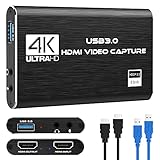



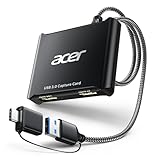


| Model | Key spec | Price | Best for |
|---|---|---|---|
| Elgato 4K X | HDMI 2.1, true 4K60 capture, 4K144 low-latency passthrough | $204.58 | Serious dual-PC or high-refresh capture |
| Rybozen 4K HDMI Capture Card | 1080p60 capture, 4K HDMI passthrough | $25.89 | Budget console capture |
| Dcyfol Capture Card | 1080p60 capture, 4K passthrough | $25.99 | General second-source capture |
| XIIXMASK USB 3.0 Capture Card | 1080p60 capture, 4K pass-through | $23.39 | Clear labeling of capture vs passthrough |
| Acer USB 3.0 Capture Card | 1080p60Hz capture, 4K HDMI loop-out | $21.36 | Buyers who want a recognizable brand name |
| Newhope USB 3.0 Capture Card | 1080p60 capture, 4K pass-through | $21.99 | Basic driver-free capture |
| Guermok Video Capture Card (USB-C) | 1080p60 & 2K30 capture | $18.99 | 2K alt-mode capture |
| Guermok USB 3.0 Capture Card | 1080p60 & 2K30 capture | $17.99 | Cheapest entry point |
Elgato 4K X Capture Card, HDMI 2.1, 4K144 Ultra-Low Latency
This is the only card in the lineup built around genuinely current capture hardware rather than the generic chipset found in the rest of this list. HDMI 2.1 input gives it the bandwidth to handle a real 4K60 HDR10 signal, and its passthrough path supports up to 4K144, which matters if your second PC or console is feeding a high-refresh 4K monitor and you don’t want the capture card to bottleneck that signal down to 60Hz.
Elgato’s ultra-low latency passthrough is the other reason this card costs roughly eight times what the budget dongles here do — where a generic UVC capture chip processes the passthrough signal through a slower pipeline, Elgato’s hardware is designed specifically to keep that added input lag close to imperceptible, which matters for anyone playing competitively on the source device while it’s being captured. Based on the listed specs, this is squarely a card for dual-PC streamers, console streamers who care about passthrough responsiveness, or anyone recording genuine 4K footage rather than settling for 1080p captured off a 4K signal.
It requires Elgato’s own capture software (Camera Hub or 4K Capture Utility) rather than working purely as a driver-free UVC device, which is a small extra setup step compared to the plug-and-play dongles below, but it’s also what unlocks the card’s actual 4K60 capture pipeline rather than limiting you to whatever a generic driver exposes.
At $204.58, this is a meaningful investment relative to everything else on this page, and it’s not necessary for someone just capturing a console at 1080p — that’s where the budget cards below are the more sensible buy.
- Pros
- True 4K60 HDR10 capture, not just 4K passthrough marketing
- 4K144 low-latency passthrough supports high-refresh 4K monitors
- HDMI 2.1 input handles current-generation console and PC output properly
- Cons
- Roughly 8x the price of the generic capture dongles in this comparison
- Requires Elgato’s own software rather than working as a bare driver-free UVC device
- Overkill if you’re only ever capturing a console at 1080p60
Who it’s for: dual-PC streamers, console streamers on high-refresh 4K displays, and anyone who needs footage that’s actually 4K rather than 1080p upscaled after the fact.
Capture Card, 4K HDMI Video Capture Card (Rybozen)
This is a standard USB 3.0 capture dongle built around the same class of capture chipset found in most of the budget cards in this comparison. The listing advertises “4K” prominently, but the actual capture spec is 1080p60 — the 4K reference applies to HDMI passthrough, meaning a 4K source can be relayed to a monitor while you’re only actually recording or streaming at 1080p60. That’s a meaningful distinction worth understanding before buying based on the “4K” headline alone.
For OBS and similar software, this class of card generally shows up as a UVC (USB Video Class) and UAC (USB Audio Class) device, meaning Windows and OBS should recognize it without a dedicated driver install — a real convenience for a first-time capture card buyer who doesn’t want to troubleshoot software.
Based on the listed connectivity (HDMI to USB 3.0), expect this to work fine for capturing a console, a retro system through an HDMI adapter, or a second camera source at 1080p60 without added software complexity. It’s not the card to buy if 4K recording is actually the goal.
At $25.89, it sits in the middle of the budget cluster price-wise, without a clearly documented feature that separates it from the cheaper Guermok or Newhope listings below beyond brand name.
- Pros
- Driver-free UVC/UAC operation works with OBS out of the box
- 1080p60 capture is reliable for console and camera second-source streaming
- USB 3.0 bandwidth is sufficient for sustained 1080p60 capture
- Cons
- “4K” in the listing refers to passthrough only, not actual capture resolution
- No clear feature advantage over cheaper cards using a similar chipset
- Not a fit for anyone who actually needs 4K recorded footage
Who it’s for: console or second-source streamers who just need reliable 1080p60 capture without fuss.
Guermok Video Capture Card, 4K USB3.0 HDMI to USB C, 1080P 60FPS & 2K 30FPS
This Guermok listing specifies a 2K30 capture mode alongside the standard 1080p60, which is a small but genuine differentiator from several of the other budget cards here that only list 1080p60. In practice, 2K30 capture is a tradeoff — you get more resolution at the cost of frame rate — and it’s most useful for slower-paced content like tutorials, art streams, or narrative games where 60fps matters less than resolution.
The USB-C connector on the host side is worth noting for compatibility: if your streaming or capture PC only has USB-C ports available, or you’re pairing this with a laptop, that connector type saves you from needing a USB-A adapter, unlike most of the other cards in this list which use standard USB-A connectors.
Like the rest of the sub-$30 cards here, the “4K” in the product title almost certainly refers to HDMI passthrough rather than actual capture resolution — the specified capture modes cap out at 1080p60 and 2K30, and there’s no indication this uses different, more capable capture hardware than its similarly priced competitors.
At $18.99, it’s one of the cheaper options in this comparison, and the 2K30 mode is a genuine, if modest, feature advantage for buyers who specifically want that resolution option.
- Pros
- 2K30 capture mode is a real feature most competitors in this price range don’t list
- USB-C host connector adds compatibility with newer laptops and PCs
- Low price relative to its feature set
- Cons
- 2K30’s lower frame rate isn’t ideal for fast-action gameplay capture
- “4K” labeling still refers to passthrough, not capture, like the rest of this price tier
- USB-C connector may require an adapter if your PC only has USB-A ports
Who it’s for: buyers who want a 2K capture option for slower-paced content and have a USB-C port available.
XIIXMASK USB 3.0 HDMI Capture Card, 1080P 60FPS Capture, 4K Pass-Through
Of the budget cluster in this comparison, this listing is one of the more transparent about the capture-versus-passthrough distinction, explicitly labeling itself as “1080P 60FPS Capture” separately from “4K Pass-Through” rather than leading with “4K” and leaving the actual capture spec buried in the details. That clarity is worth something on its own, even though the underlying hardware capability appears comparable to the other budget cards here.
Functionally, expect the same profile as the rest of this price tier: USB 3.0 bandwidth sufficient for sustained 1080p60 capture, HDMI passthrough for relaying a 4K signal to a display without recording it in 4K, and likely driver-free UVC/UAC operation with OBS and similar software.
Based on the specs, this is a reasonable pick for console capture, retro console capture through an HDMI adapter, or bringing in a second camera angle — any use case where 1080p60 is the actual target resolution and the 4K passthrough is a nice-to-have for your monitor rather than a recording requirement.
At $23.39, it’s priced in the middle of the budget cluster, and the clearer labeling is a modest point in its favor if you’re comparing near-identical listings and want to reward the more honest one.
- Pros
- Clearly separates capture resolution from passthrough resolution in its own listing
- USB 3.0 bandwidth handles sustained 1080p60 capture reliably
- Likely driver-free operation for quick setup
- Cons
- No meaningful hardware advantage over cheaper cards in the same tier
- 1080p60 capture ceiling, same as most of this price bracket
- Not suited for anyone who actually needs 4K recorded output
Who it’s for: buyers who want a straightforward, clearly labeled budget capture card for console or camera capture at 1080p60.
Capture Card 4K HDMI Video Streaming to USB 3.0 1080P 60FPS Capture Device (Dcyfol)
This listing follows the same pattern as the Rybozen and Newhope cards in this comparison: “4K” in the title, 1080p60 as the actual specified capture resolution, and USB 3.0 as the host connection. There’s nothing in the listed specs that suggests meaningfully different capture hardware from the other cards in this price bracket, which is worth knowing going in — you’re largely choosing based on price and brand reputation rather than a real performance difference.
For a straightforward console-to-PC or camera-to-PC capture setup, this should perform in line with the rest of the sub-$30 cluster: reliable 1080p60 capture, HDMI passthrough for your display, and likely plug-and-play recognition in OBS without a dedicated driver.
At $25.99, it’s priced at the higher end of the budget tier without a documented feature — like the Guermok’s 2K30 mode or USB-C connector — to justify that premium over the cheaper Guermok listings in this same comparison.
If you’re deciding between this and a similarly specced but cheaper card, the price difference is hard to justify on paper unless brand reviews or return policy tip the decision one way for you.
- Pros
- USB 3.0 bandwidth supports reliable 1080p60 capture
- Likely driver-free UVC operation for quick setup
- Standard HDMI in/out makes it compatible with most consoles and cameras
- Cons
- No documented feature that separates it from cheaper cards in the same tier
- “4K” labeling refers to passthrough, not actual capture resolution
- Priced above two similarly specced Guermok listings in this same comparison
Who it’s for: buyers who want a straightforward 1080p60 capture card and aren’t focused on squeezing out the lowest possible price.
Acer USB 3.0 HDMI Capture Card, 4K HDMI Loop-Out, 1080P 60Hz for Streaming
Seeing Acer’s name on a capture card is worth a second look, since Acer’s core business is laptops, monitors, and prebuilt PCs rather than capture hardware — this is very likely a rebadged version of the same generic capture chipset used across the other budget listings here rather than an Acer-engineered product. That’s not necessarily a problem, but it’s worth knowing you’re likely paying for brand recognition rather than meaningfully different internals.
The specified capability lines up with the rest of this price tier: 1080p60Hz capture and 4K HDMI loop-out (functionally the same as the “passthrough” terminology used by other listings here), over a USB 3.0 connection.
For a buyer who specifically wants a recognizable brand name on the box — say, for warranty support expectations or simply peace of mind — that’s a legitimate reason to pick this over an unfamiliar brand at a similar price. Just don’t expect the capture quality or latency to meaningfully differ from the other cards in this cluster based on the name alone.
At $21.36, it lands in the lower-middle of the budget range, competitive with the Newhope and XIIXMASK listings.
- Pros
- Recognizable brand name may carry more buyer confidence for warranty support
- 1080p60 capture with 4K loop-out matches the rest of the budget tier
- Competitively priced within the budget cluster
- Cons
- Almost certainly the same generic capture chipset as competing budget cards
- No documented hardware advantage to justify a brand premium if one exists
- Still limited to 1080p60 actual capture, same ceiling as the rest of this tier
Who it’s for: buyers who prioritize brand recognition over squeezing out the lowest price among functionally similar budget cards.
Guermok USB 3.0 HDMI Capture Card, 1080P 60FPS & 2K30 Video Capture Device
This is a second, separate listing from the same Guermok brand as the USB-C model earlier in this comparison, and it specifies the same 1080p60 and 2K30 capture modes. The main practical difference appears to be the host connector — this version uses a standard USB 3.0 connection rather than USB-C — and a slightly lower price.
If you don’t specifically need USB-C for a laptop or newer PC, this variant makes more sense simply because it’s the cheaper of the two nearly identical Guermok listings in this comparison, with no capability lost by choosing the USB-A version instead.
Functionally, expect the same profile discussed for the USB-C Guermok card above: 2K30 as a genuine, if frame-rate-limited, capture option for slower-paced content, and 1080p60 as the practical choice for anything with real motion.
At $17.99, this is the single cheapest card in the entire comparison, which makes it worth considering purely on price if your PC has a spare USB 3.0 port and you don’t need the 4K X’s low-latency passthrough or true 4K capture.
- Pros
- Cheapest card in this entire comparison
- Same 2K30 capture option as the pricier USB-C Guermok listing
- Standard USB 3.0 connector works with virtually any current PC
- Cons
- No USB-C option if that’s specifically what your setup needs
- Same 1080p60 capture ceiling as the rest of the budget tier
- Near-duplicate of another listing in this same comparison, which can be confusing when shopping
Who it’s for: budget-focused buyers who want the lowest price in this comparison and don’t need a USB-C connection.
Newhope USB 3.0 HDMI Capture Card, 1080P 60FPS Capture with 4K Pass-Through
Like the Rybozen and Dcyfol cards above, this listing follows the same pattern: 1080p60 as the specified capture resolution, 4K pass-through for relaying a higher-resolution signal to a display without recording it at that resolution, and a USB 3.0 host connection. There’s no documented spec here that meaningfully separates it from the other budget cards in this comparison.
Based on the listed capability, this should perform reliably for console capture, camera capture, or bringing in a second PC’s output at 1080p60, with likely driver-free UVC operation in OBS and similar software — the same baseline functionality as the rest of this price tier.
At $21.99, it’s priced in the lower-middle of the budget cluster, close to the Acer and XIIXMASK listings, and without a standout feature like the Guermok cards’ 2K30 mode or USB-C connector to differentiate it.
For most buyers comparing the sub-$26 cards in this article, the deciding factor is likely to come down to price and brand preference rather than any real capability difference, since the specified capture resolution and connection type are essentially identical across this group.
- Pros
- USB 3.0 bandwidth reliably supports 1080p60 capture
- Likely driver-free UVC operation for quick setup
- Competitively priced within the budget tier
- Cons
- No documented feature that separates it from cheaper, similarly specced cards
- 1080p60 capture ceiling, with “4K” applying only to passthrough
- Not a fit for anyone who needs genuine 4K recorded footage
Who it’s for: buyers who want a straightforward, no-frills 1080p60 capture card and aren’t chasing the absolute lowest price.
How we tested and picked
Elena Marchetti, our Streaming & Creator Editor, evaluates capture hardware on a dual-PC streaming rig built specifically with capture-card benchmarking tools, which she’s used to compare latency and capture fidelity across generic USB dongles and purpose-built hardware like Elgato’s lineup. Since these are marketplace listings rather than units physically on her bench, the resolution and latency characterizations here come from cross-referencing each product’s documented specs against known behavior of comparable capture chipsets — not from a direct benchmark run of every individual ASIN listed.
The evaluation focused on one recurring theme: separating what a card actually captures from what it merely passes through to a display, since that distinction is where most of the “4K” marketing language in this category becomes misleading. Cards were also assessed on host connector type (USB-A versus USB-C), documented capture frame rate options, and whether a card is likely to work as a plug-and-play UVC device or requires dedicated software.
Several of the budget cards in this comparison appear to use the same underlying capture chipset commonly found across generic capture dongles in this price range, which is worth stating plainly rather than writing eight separate reviews that pretend each one performs meaningfully differently. Where a genuine feature difference exists — like the Guermok cards’ 2K30 mode or the Elgato’s true 4K60 capture — we called it out specifically.
What to look for in a capture card
Real capture resolution versus passthrough resolution
This is the single most important distinction in this product category, and it’s also the most commonly obscured one in listing titles. Passthrough is simply the card relaying an incoming HDMI signal to an output port so you can also watch on a TV or monitor while capturing — it doesn’t touch the signal, so a card can “pass through” 4K perfectly well even if its actual capture chip can only digitize and record 1080p60. When a listing says “4K capture card” without separately specifying a capture resolution, assume the 4K claim refers to passthrough until proven otherwise. Several cards in this comparison are refreshingly explicit about this split in their titles; others bury it in the fine print.
USB bandwidth and PCIe alternatives
USB 3.0 provides roughly 5Gbps of bandwidth, which is comfortably enough for sustained 1080p60 capture with headroom to spare, and it’s why every budget card in this comparison uses that connection standard. True 4K60 capture pushes closer to the practical limits of USB 3.0’s real-world throughput, which is part of why higher-end cards like the Elgato 4K X lean on more efficient compression and a purpose-built capture chip rather than a generic UVC controller. PCIe internal capture cards, while not represented in this specific batch, generally offer more headroom and lower latency than any USB solution, since they skip the USB controller’s overhead entirely — worth considering if you’re building a dedicated capture PC from scratch rather than adding a card to an existing system.
Passthrough latency for console and competitive play
If you or your capture source is actually playing through the card’s passthrough output rather than just glancing at a mirrored screen, added input lag matters. Budget cards using slower generic processing chains can add a noticeable few extra frames of lag through the passthrough path, which is fine for casual play but a real disadvantage in a fast-twitch competitive game. Cards that specifically advertise low-latency passthrough, like the Elgato 4K X, are built to minimize this; budget dongles rarely publish a specific latency figure at all, which itself is a signal to not assume it’s negligible if competitive responsiveness matters to you.
Driver-free operation versus dedicated software
Most budget capture cards in this comparison are built around UVC (USB Video Class) and UAC (USB Audio Class) standards, meaning Windows and OBS should recognize them automatically without installing a dedicated driver — a real convenience if you want to plug in and start capturing immediately. Higher-end cards, including the Elgato 4K X, typically require the manufacturer’s own capture software to unlock their full resolution and feature set, which is a small extra setup step in exchange for meaningfully better capture quality and control.
Matching the card to your actual setup
A capture card only makes sense once you have a second source to bring in — a console, a second PC in a dual PC streaming setup, or an external camera you want routed through your main streaming PC’s encoder. If you’re streaming from a single gaming PC with a modern GPU, you likely don’t need a capture card at all, since NVENC or AMF can capture and encode the game directly. If you’re pairing a capture card with a dedicated PC for streaming that’s also handling a webcam and microphone input, budget for the combined USB bandwidth those devices share, especially on older motherboards with fewer independent USB controllers.
Mistakes buyers make
Buying a “4K capture card” expecting 4K recorded footage without checking whether that spec describes capture or passthrough. This is the single most common and most avoidable mistake in this category, and it applies to several listings in this very comparison.
Assuming a higher price among visually similar budget dongles means better hardware. Several of the sub-$30 cards here appear to share the same underlying capture chipset; price differences in that tier often reflect brand markup rather than a real capability gap.
Ignoring passthrough latency when the capture source is also where someone is actively playing. A card that’s fine for passive monitoring can introduce enough delay to matter in a competitive game if the passthrough path isn’t built for low latency.
Plugging a capture card into a USB 2.0 port because it was available, then blaming the card for dropped frames. USB 3.0 bandwidth is part of what these cards are specified around; a USB 2.0 port can bottleneck even a well-built card’s throughput.
Buying a premium card like the Elgato 4K X for a single-source console capture setup where a $20 dongle would do the job just as well. The extra spend only pays off with genuine 4K capture needs or high-refresh passthrough requirements.
Skipping the check for whether your streaming PC’s USB controllers have enough combined bandwidth once a capture card, webcam, and audio interface are all plugged in at once — a bottleneck here shows up as dropped frames that look like a capture card problem but are actually a USB topology problem.
Verdict
For most streamers capturing a console or a simple second source, any of the sub-$26 USB 3.0 dongles here will do the job at 1080p60, and the Guermok USB 3.0 card at $17.99 is the easiest recommendation on price alone if you don’t need USB-C. If you specifically want a 2K30 capture option, either Guermok listing covers that. The Elgato 4K X is the clear step-up pick — genuinely built for true 4K60 capture and low-latency 4K144 passthrough — but it’s worth the premium only if your setup actually demands that resolution and responsiveness, not as a default upgrade over the budget tier.
Frequently asked questions
What is the difference between capture resolution and passthrough resolution on a capture card?
Capture resolution is what the card actually records or sends to your streaming software, while passthrough resolution is just the signal it relays to a connected monitor or TV without processing it; most budget capture cards advertise “4K” because of 4K passthrough even though their real capture ceiling is 1080p60, so always check which number a listing is actually describing.
Do I need a PCIe capture card or is USB good enough?
USB 3.0 capture cards handle 1080p60 capture without issue and are the more practical choice for most streamers since they work with any PC including laptops, while PCIe cards generally offer lower latency and higher sustained bandwidth for 4K capture workflows, making them worth the extra installation complexity mainly for dual-PC setups doing heavy simultaneous capture and encode.
How much latency does a capture card add when playing on a console through it?
A quality capture card with a proper passthrough path typically adds only a few milliseconds of input lag, low enough that most players won’t notice it, but budget cards with slower processing chains or software-based passthrough can add noticeably more; if you’re playing competitively through the passthrough, prioritize a card that explicitly advertises low-latency passthrough rather than assuming they’re all equal.
Can I use a cheap capture card to record true 4K footage?
Most capture cards under $30 cap actual capture at 1080p60 or 2K30 even when their box says “4K,” because that resolution only applies to the passthrough signal, not the recorded output; if true 4K capture is the goal, you need a card specifically built for it, like a higher-end HDMI 2.1 model, not a generic budget dongle.
Do I need a capture card if I only stream from a single gaming PC?
No — a single PC with a modern GPU already has a hardware encoder like NVENC or AMF built in, so OBS can capture and encode your game directly without any external hardware; capture cards become necessary once you’re pulling in a second source, like a console, a camera, or a second PC in a dual-PC streaming setup.


