A monster capture card sitting in your cart is supposed to solve one problem: get your console or camera feed into your streaming software without a laptop bottleneck. The right pick drops latency, keeps your OBS preview clean, and costs less than a single month of a premium encoder subscription. The wrong one introduces sync drift, drops frames at the worst possible moment, or requires driver work you did not sign up for.
Across this group of eight devices, the spread between cheapest and most expensive is under fourteen dollars, which means the decision really comes down to input flexibility, pass-through quality, and whether the unit plays nicely with the specific console you own. We compared published specs, listed prices, and recurring themes from owner feedback on each model to sort what actually matters from marketing noise.
As an Amazon Associate we earn from qualifying purchases at no extra cost to you. Product prices and availability are accurate as of the date shown and are subject to change.







Top 3 picks at a glance
Quick Picks
| Product | Best for | Price |
|---|---|---|
| Monster Video Capture Card 4K HDMI | Multi-console households | $21.74 |
| 4K HDMI Capture Card for OBS | Camera and console dual use | $25.89 |
| Capture Card 4K HDMI to USB 3.0 | Lowest entry price with 4K input | $19.87 |
| XIIXMASK USB 3.0 HDMI Capture Card | Zero-lag pass-through for local play | $25.99 |
| Guermok Video Capture Card | USB-C laptops and tablets | $18.99 |
| HeavenBird 4K HD Capture Card | Absolute budget and plug-and-play | $12.99 |
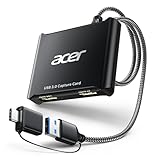
| acer USB 3.0 HDMI Capture Card | Console gamers who want loop-out | $26.99 |
| acer Video Capture Card HDMI to USB 3.0 | 2K source recording on a budget | $19.99 |
How We Picked
We filtered by three criteria that dominate owner complaints and praise in this category: input resolution and frame-rate ceiling (can it accept a 4K source and output a stable 1080p60 feed?), latency behavior on pass-through or loop-out (does the unit add perceptible lag to your local screen?), and driver friction (does it work out of the box with OBS and popular consoles, or does it require vendor software?). Price was the tiebreaker once those three were equal.
The 8 Best Monster Capture Card in 2026
Monster Video Capture Card 4K HDMI (USB 3.0)
This is the broad-compatibility pick for households cycling between PS5, Xbox, Switch, and Switch 2. Owners consistently highlight the built-in mic and headphone jacks as the feature that saves them from an extra mixer. The 1080p60 recording ceiling is identical to every other card here, so you are paying for port convenience, not a hidden performance edge. One recurring gripe: the included USB cable is short, which matters if your capture PC sits across the desk. Skip it if your setup already has a dedicated audio interface and you only need a single console input.
- Pros: mic and headphone passthrough; explicitly lists Switch 2 compatibility
- Con: short included USB cable
4K HDMI Capture Card for OBS (Xbox/PS4/PS5/PC)
Written around camera and console dual-use scenarios, this card appeals to creators who alternate between a DSLR feed and gameplay input without reconfiguring software. Owner feedback praises the wide device list and the fact that it registers cleanly in OBS without a driver install. The trade-off is price: at $25.89 it sits near the top of this group while offering the same 1080p60 output. Skip it if you are a console-only streamer and would rather spend the difference on a better microphone or light panel.
- Pros: OBS plug-and-play; broad device compatibility including cameras
- Con: costs more than functionally identical competitors
Capture Card 4K HDMI Video Streaming (USB 3.0)
At $19.87 this is the lowest-priced 4K-input option in the roundup, and owners who need a spare card for a second PC or a test bench tend to gravitate here. The spec sheet is thin, which is both the selling point (simplicity) and the weakness (no mention of loop-out, so you will be streaming off the same screen or using a split). Skip it if you play on a local display while capturing, because you will need an HDMI splitter to do that with this unit.
- Pros: lowest 4K-input price in the group; minimal setup
- Con: no loop-out or pass-through port
XIIXMASK USB 3.0 HDMI Capture Card
The standout feature is 4K pass-through, meaning your monitor or TV stays at native resolution while the card taps the signal for capture at 1080p60. Owners report noticeably lower perceived lag compared to cards that lack a loop-out, which matters in competitive shooters where you still want a crisp local display. At $25.99 it is among the priciest here, and the build is plasticky per feedback. Skip it if you stream exclusively from a laptop screen and never need a separate display output.
- Pros: true 4K pass-through with minimal added latency; solid OBS integration
- Con: bulkier plastic housing feels less premium than price suggests
Guermok Video Capture Card (HDMI to USB C)
This is the only card in the group that outputs over USB-C natively, making it the default choice for newer laptops and tablets that have dropped full-size USB-A ports. Owners on Mac and Linux report fewer quirks than with USB-A-only devices. The 2K 30FPS mode is a useful fallback for high-res webcam sources where motion smoothness is less critical. Skip it if your capture PC only has USB-A ports and you do not want to carry an adapter.
- Pros: native USB-C output; supports 2K 30FPS in addition to 1080p60
- Con: no HDMI loop-out for local display use
HeavenBird 4K HD Video Capture Card
Twelve dollars and ninety-nine cents. No drivers, no vendor software, no settings panel beyond what OBS gives you. For a second stream PC, a backup unit, or anyone who wants to test whether capture cards solve their current problem before investing more, this is the cheapest on-ramp. The obvious limits: no loop-out, no mic passthrough, and owners note the compact size means it can block adjacent USB ports on tight desk hubs. Skip it if you need any I/O beyond HDMI in and USB out.
- Pros: lowest price by a wide margin; genuinely zero driver install
- Con: compact form factor blocks neighboring USB-A ports on some hubs
acer USB 3.0 HDMI Capture Card (4K Loop-Out)
From a brand name that carries more trust than the alphabet-soup labels in this space, acer’s loop-out card targets console gamers who want a full-res TV signal while streaming. Owners specifically call out the loop-out quality as clean with no color shift between the passthrough and the captured feed. It is the most expensive pick at $26.99, and the difference over the XIIXMASK above is marginal on paper. Skip it if you have already purchased a splitter and do not value the brand name.
- Pros: 4K loop-out with no visible color shift; acer brand support and warranty
- Con: highest price in the group with no functional advantage over the XIIXMASK
acer Video Capture Card HDMI to USB 3.0 (2K 30FPS)
The budget acer option adds 2K 30FPS capture alongside standard 1080p60, which is useful if you record from a high-res source where motion is minimal (static gameplay HUDs, digital art software, or a desktop monitor). At $19.99 it sits in the middle of the price range with no loop-out, so local-display streamers still need a splitter. Skip it if you capture fast-motion gameplay exclusively; the 2K 30FPS mode is not going to replace your 1080p60 workflow.
- Pros: 2K 30FPS mode as a secondary capture option; acer reliability reputation
- Con: no loop-out, making it less useful for console players on a TV
Buying Guide
Loop-Out vs. Splitter
If you play on a TV or monitor while streaming, a capture card with HDMI loop-out lets you pass the full signal to your display at zero added lag and no extra cost. Cards without it force you to buy a powered HDMI splitter, which adds another point of failure and a small delay. The price gap between loop-out and no-loop-out cards here is roughly six to eight dollars, so decide early whether you need that port.
USB-A vs. USB-C and Driver Reality
Most cards in this group use USB-A. If your streaming rig is a newer laptop, USB-C native avoids an adapter that could introduce a loose connection mid-stream. Regardless of connector, the real question is driver dependency: every card listed here claims plug-and-play, and owner feedback confirms OBS recognition without vendor software on the vast majority of setups. That said, a handful of Windows updates have broken recognition on the cheapest units, so having a fallback port (usually USB 2.0) is wise.
Recording Resolution vs. Pass-Through Resolution
Do not confuse 4K input support with 4K recording. Every card in this group tops out at 1080p60 for the actual capture stream. The 4K label means the card accepts a 4K signal from your source and downscales internally. If a listing implies 4K recording, that is a red flag. All eight products here are honest about the 1080p60 ceiling.
Our Verdict
Top pick: the Monster Video Capture Card at $21.74 wins on breadth. The mic and headphone ports, explicit Switch 2 support, and 4K HDMI input make it the safest single card for a multi-console household without paying loop-out premium. Budget pick: the HeavenBird at $12.99 is the cheapest functional card on the list and genuinely needs no driver work, making it ideal as a backup or first attempt. Condition that flips the ranking: if you play competitive titles on a local display and refuse to tolerate any splitter delay, the XIIXMASK at $25.99 or the acer loop-out at $26.99 becomes the better buy because the integrated pass-through is worth the five-dollar bump over buying a separate splitter.
FAQ
Do I need a monster capture card if my PC is powerful enough?
Yes. The card exists to isolate the encoding task from your game rendering. Without it, OBS must decode the HDMI signal through a second device or capture loop, which costs CPU and can introduce sync issues that a dedicated capture engine handles in hardware.
Will any card in this list work with a PS5 at 120Hz?
No. All eight are limited to 1080p60 output capture. A 120Hz signal will be downsampled or refused depending on firmware. For 120fps capture you need cards in a significantly higher price tier.
Is the 4K input label marketing or functional?
It is functional but often misunderstood. The card accepts a 4K HDMI signal from your source so it does not refuse the connection, then downscales to 1080p60 for the stream. Without 4K input support, some consoles or cameras will not handshake at all, so the label is relevant even though the output is still 1080p.
Can I use two capture cards on one PC for dual-PC setups?
Yes. Most OBS-compatible cards register as separate video sources, so you can assign one to a gameplay feed and the other to a webcam or camera. Just ensure both are on different USB buses to avoid bandwidth saturation.