
As an Amazon Associate we earn from qualifying purchases at no extra cost to you.




Designing a highly functional home workspace, gaming corner, or streaming studio involves balancing aesthetic appeal with technological capability. The modern home is no longer just a place to relax; it is a creative hub where professional-grade production values must coexist with everyday living. When setting up a dedicated broadcasting space, the core of your video pipeline relies on a crucial decision: choosing between an HDMI capture card and an SDI capture card for your stream.
This decision is not merely about video resolutions or frame rates. It is about spatial design, physical safety for your equipment, cable management, and how well your technology integrates into your home’s layout. A nest of thick, fragile cables spilling off a mid-century modern desk can ruin the visual flow of a room, while choosing the wrong connection type can lead to signal dropouts every time a pet nudges a loose wire.
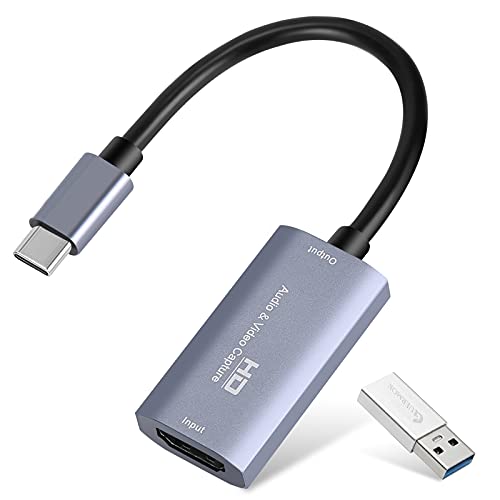
As you plan your setup, you will encounter consumer-friendly options like the compact Guermok Video Capture Card, 4K USB3.0 HDMI to USB C (around $18) or a standard Capture Card, 4K HDMI Video Capture Card, Game Capture Card, 1080P 60FPS Video Capture Device (around $25). On the other hand, professional-grade systems rely on robust hardware like the AVMATRIX UC2018 Video Capture Card SDI&HDMI to USB 3.0 ($199) or versatile hybrid options like the HDSUNWSTD HDMI SDI to USB Capture Card USB3.0 1080P60fps SDI to HDMI Converter (around $79). Understanding how these technologies impact your domestic environment will help you make the right investment.
Our Top Picks

Top 3 picks at a glance
Quick Verdict
For the vast majority of home streamers, the HDMI capture card is the most practical choice. It offers unmatched plug-and-play simplicity, direct compatibility with consumer cameras and gaming consoles, and a tiny physical footprint that keeps desk surfaces clean.
However, if you are building a permanent, multi-room home studio, routing cables through walls, or require absolute protection against accidental cord disconnects from pets or children, the SDI capture card is the superior structural choice.
Side by Side
| Feature | HDMI Capture Card | SDI Capture Card |
|---|---|---|
| Comfort & Ergonomics | Highly flexible, lightweight cables that drape easily behind desks. | Stiff, heavy cables; requires sturdy cable tracks and mounts. |
| Durability | Moderate; friction-fit connectors can wear down or bend over time. | Exceptional; locking BNC metal connectors resist pull-out and damage. |
| Price Range | $15 to $150 for most consumer-grade models. | $80 to $400+ due to professional internal components. |
| Maintenance | Virtually none; easy to wipe down, small dust footprint. | Low; connectors may require occasional dust capping. |
| Space Needed | Minimal; dongles can hang behind a PC without taking up desk space. | Moderate to high; cards are larger and cables require a wider bend radius. |
| Look & Aesthetics | Clean and unobtrusive, but prone to tangling if cables are too long. | Industrial and professional; requires deliberate cable management. |
| Resale Value | Depreciates quickly as consumer standards evolve. | Holds value well due to the slow-changing nature of broadcast standards. |
| Best For | Single-desk setups, console gamers, and casual lifestyle creators. | Multi-camera home studios, long-distance cable routing, and permanent installations. |
Where Hdmi Capture Card Wins
The HDMI capture card is the undisputed champion of accessibility and compact design. Because HDMI is the universal standard for consumer electronics, these devices do not require specialized adapters or expensive converters to connect to your PlayStation, Xbox, Nintendo Switch, or mirrorless camera.
From an interior design standpoint, HDMI capture cards keep your workspace looking light and minimalist. Devices like the budget-friendly Guermok USB-C capture card weigh less than two ounces and measure only a few inches in length. They can easily be tucked out of sight behind a monitor arm or inside a cable management box under your desk.
Additionally, HDMI cables are highly flexible. They can navigate tight corners, run behind thin floating shelves, and tuck neatly into adhesive cable channels along your baseboards. For creators who stream from a multi-purpose room—such as a bedroom corner or a living room alcove—the ability to quickly pack away your gear is essential. HDMI cards plug in and detach in seconds, letting you transition your space from a high-energy broadcast studio back to a serene home environment with minimal effort.
Where Sdi Capture Card for Stream Wins
Where SDI (Serial Digital Interface) capture cards excel is in structural reliability, signal integrity, and long-term architectural integration. SDI is the broadcast industry standard for a reason: it uses robust coaxial cables with locking BNC (Bayonet Neill–Concelman) connectors. Instead of relying on a simple friction fit like HDMI, an SDI cable twists and locks firmly into place on both the camera and the capture card.
For home environments, this locking mechanism is a major line of defense. If you share your home with curious cats, energetic dogs, or young children, a stray paw or foot catching a cable will not interrupt your stream or damage the internal port of an expensive camera. The connection remains rock-solid.
Furthermore, SDI is designed for incredibly long cable runs. Standard HDMI signals begin to degrade and lose frames after about 25 to 30 feet without expensive active boosters. SDI cables can easily carry uncompressed, zero-latency video over 300 feet. This technical advantage opens up unique architectural possibilities for your home. You can place your noisy, heat-generating desktop PC in a distant closet, basement, or utility room, while running a single, durable SDI cable through your walls to your quiet, beautifully styled studio space. This keeps your immediate workspace completely free of computer fan noise, dust, and heat.
Cost Over 5 Years
When calculating the true cost of ownership for your streaming infrastructure, looking ahead to 2026 and the years beyond reveals a clear contrast between short-term savings and long-term durability.
An HDMI setup is highly affordable upfront. A basic HDMI capture card, paired with two standard 10-foot HDMI cables, will typically cost between $40 and $100. However, HDMI cables and ports are prone to physical wear. The internal pins inside an HDMI connector are delicate; repeated plugging and unplugging can cause the connection to loosen, leading to intermittent signal dropouts. Over a five-year period, a busy content creator can expect to replace worn-out HDMI cables three to four times, and potentially replace a budget capture card once or twice due to port wear. The estimated five-year cost for an HDMI setup ranges from $150 to $350.
An SDI setup requires a more substantial initial investment. Professional capture cards, such as the AVMATRIX UC2018 or hybrid SDI-to-HDMI models like the HDSUNWSTD capture card, range from $80 to $200. High-quality coaxial SDI cables cost slightly more than standard HDMI cables, bringing the initial setup cost to around $150 to $300. However, the physical durability of SDI equipment is unmatched. Coaxial cables are heavily shielded, crush-resistant, and the solid metal BNC connectors do not degrade from repeated use. Over five years, an SDI system rarely requires replacement parts. The estimated five-year cost remains stable at $200 to $350, making it a highly cost-effective choice for permanent home installations.
Which One for Your Home
Small Apartment
In a compact apartment or studio flat, space is your most valuable asset. Multi-functional furniture and clean, uncluttered surfaces are essential for maintaining a relaxing living environment. Here, an HDMI capture card is the ideal choice. Its tiny footprint means you do not need to dedicate drawer space to bulky gear. You can easily run a thin HDMI cable from a camera mounted on your monitor arm down to a small USB capture card hidden behind your computer, keeping your desk looking sleek and tidy.
Family with Kids or Pets
If your home is filled with the lively energy of children or pets, your tech setup faces constant physical hazards. A running dog catching a loose cable can pull a camera off its tripod, resulting in expensive damage. In this scenario, an SDI capture card is a lifesaver. The locking BNC connectors ensure that even if a cable is tugged, it will not slip out or snap. Additionally, SDI coaxial cables feature thick outer jackets that can easily withstand the occasional pinch or pet bite without losing signal quality.
Rental Home
Living in a rental property means you must design your streaming space without making permanent structural changes, such as drilling large holes through walls. Since you cannot route cables through the drywall, your cords must run along baseboards or under rugs. HDMI capture cards are excellent for rentals because thin, flat HDMI cables can easily hide beneath low-profile rug runners or stick to baseboards using damage-free adhesive clips, allowing you to set up a high-quality stream without risking your security deposit.
Long-Term Home
For homeowners who are designing a permanent, dedicated home office or creative studio, an SDI-based infrastructure offers incredible design freedom. You can install professional SDI wall plates, running high-grade coaxial cables directly through your walls to a centralized media closet. This allows you to keep your actual desk completely free of clutter, black boxes, and excess heat. You get a clean, high-end architectural look while enjoying the absolute signal reliability of a professional television broadcast studio.
FAQ
Can I convert HDMI to SDI (and vice versa) for my home stream?
Yes. Many creators use active converters to get the best of both worlds. For example, you can convert your camera’s HDMI output into an SDI signal to run it safely over a long distance through your home, and then convert it back to HDMI at your computer. Hybrid capture devices like the HDSUNWSTD converter make this process seamless by offering both input types in a single unit.
How far can I run an HDMI cable versus an SDI cable before losing signal?
Standard passive HDMI cables generally experience signal degradation, latency, or black screens at distances greater than 25 to 30 feet. SDI cables, by contrast, can easily carry high-definition 1080p video up to 300 feet (and sometimes more, depending on the cable grade) without any loss in visual quality or added latency.
Do SDI capture cards support high-resolution gaming consoles?
Most modern gaming consoles, such as the PlayStation 5 and Xbox Series X, output exclusively via HDMI to support high-bandwidth features like HDR and high refresh rates. While you can convert these signals to SDI, doing so often strips away those specialized gaming features. For console gaming streams, a dedicated HDMI capture card is highly recommended.
Which setup keeps my desk looking cleaner and more organized?
For a single-desk setup, an HDMI capture card is much easier to keep clean and hidden due to its tiny size and flexible cables. However, for complex setups involving multiple cameras or computers, SDI allows you to route all your heavy cabling through walls or floors, resulting in a completely cord-free desk aesthetic that is impossible to achieve with standard HDMI cables.
Related guides
- Best Black Friday Elgato Deals: Capture Cards & More (2026)
- Blackmagic Design DeckLink Duo 2 Review: Four SDI Connections for a Desktop Production Workflow
- DigitPro Cam Link 4K USB Capture Card Review: HDMI Workflow and Capture Limits
- VIXLW USB-C HDMI Capture Card Review: Recording Limits and Desk Compatibility


